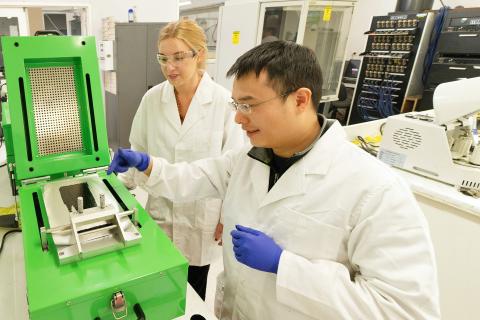
Perth-based Lithium Australia looks to have its eyes set on systematically progressing its battery production expertise with its wholly owned subsidiary, VSPC rubber stamping a three-way deal with the Australian Research Council and the University of Technology Sydney, to conduct research and development for solid-state lithium metal battery technology. The company says the technology will spearhead the next generation of lithium batteries.
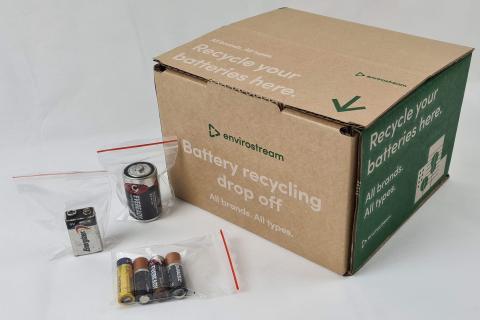
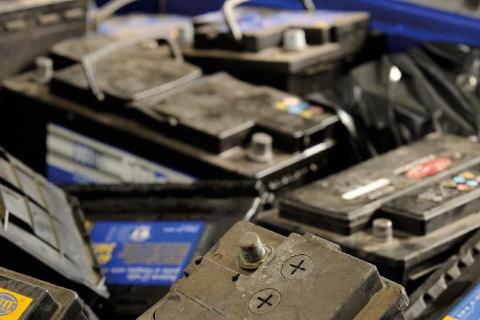
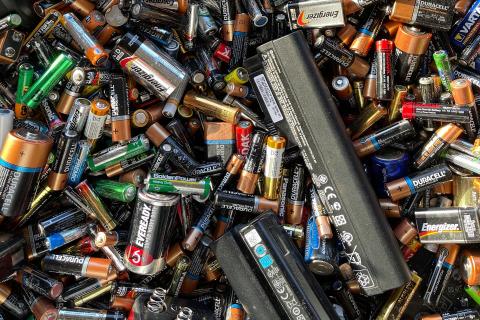
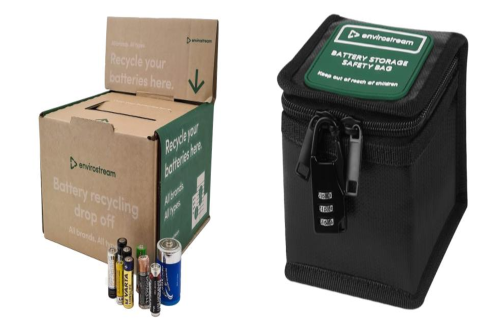
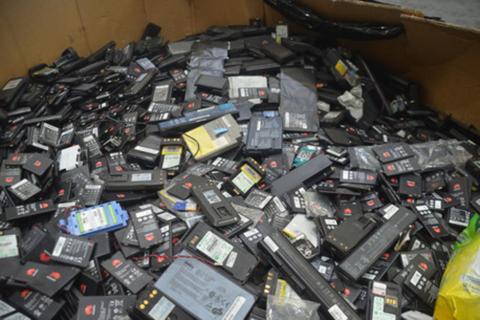
ASX-listed Lithium Australia is continuing to carve out an envious position in the white-hot lithium market after its 90 per cent owned subsidiary Envirostream, rubber-stamped a deal with Bunnings to collect spent batteries from its all its Australian stores and selected stores in New Zealand.
The company says the agreement was reached in anticipation of the Battery Stewardship Council's Battery Stewardship Scheme.
Perth-based Lithium Australia's wholly owned subsidiary, VSPC is now producing commercial quality lithium titanium oxide lithium battery anode powder. VSPC says its LTO exceeds industry performance benchmarks and that further research and development, including work on niobium-based anode powders, is underway. Lithium Australia is building an armoury of lithium battery technology in readiness for the lithium boom.
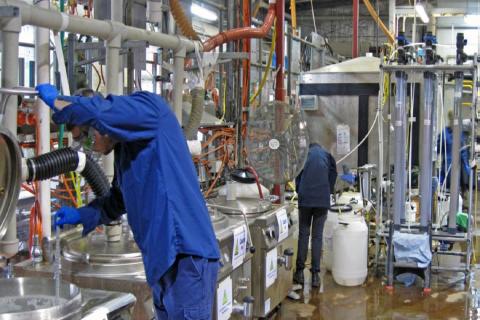
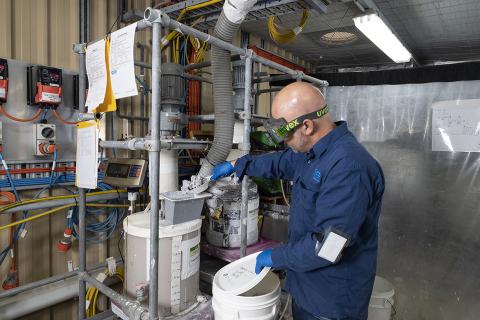
The Victorian Environmental Protection Agency has issued Lithium Australia with a 99-year operating licence that provides the environmental and legal framework for its subsidiary company, Envirostream Australia to continue lithium and other battery recycling activities at its premises in Campbellfield, Victoria. The licence permits Envirostream to process more than 500 tonnes of specified electronic waste annually.
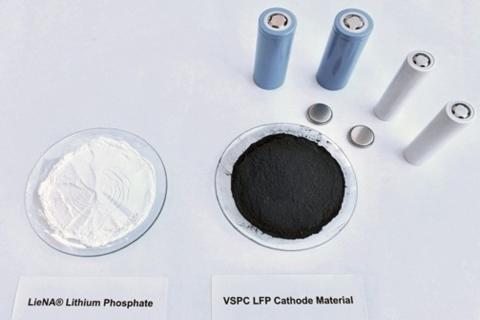
ASX-listed Lithium Australia is seeking to carve out a niche position as one of the only providers of nickel-free and cobalt-free cathode materials outside of China. The company says the reliance on China for the materials is of “great concern” and Lithium Australia's wholly owned subsidiary is well positioned to establish a strategic stake in the lithium-ion battery market.
Lithium Australia is looking to patent the proprietary lithium battery recycling technology developed by its subsidiary, Envirostream. One of the two Australian patent applications relates to its process for recovering battery electrode material from end-of-life lithium-ion batteries. The second application encompasses the process for the selective recovery of mixed metal sulphates from a metal sulphate process liquor following leaching of mixed metal material recovered from lithium-ion batteries.
ASX-listed Lithium Australia's wholly owned subsidiary VSPC has been granted an Australian patent for its proprietary nanotechnology process of manufacturing phosphate-based battery cathode materials for use in lithium-ion batteries. Perth-based Lithium Australia says the cost of producing nickel-free and cobalt-free battery cathode powders can potentially be significantly reduced by using VSPC's technology.
Lithium Australia, through its 90 per cent owned recycling division Envirostream Australia, has filed a patent application related to its alkaline battery separation process used in fertiliser micronutrients, as it looks to secure intellectual property protection for its battery recycling technology. The company recently launched an expanded field trial using the process to generate samples for manganese-deficient soils across four sites in WA and one in SA.
Lithium Australia has gained admission to the coveted Global Battery Alliance, an international collaboration between public and private organisations dedicated to ensuring sustainability in the battery value chain. The company will now have direct access to experts and key participants in the global battery recycling industry, enhancing its aspirations to vertically integrate lithium extraction, production of battery materials and battery recycling.
Lithium Australia appears to have taken a key step to commercialising its lithium manganese ferro phosphate or “LMFP” cathode powder used in lithium-ion batteries with the product now available for consumer testing. The company says LMFP-type batteries are cheaper, safer and longer lasting than traditional nickel-based alternatives with the likes of Tesla transitioning to phosphate-based batteries to power its electric vehicles.
Lithium Australia has confirmed exploration asset sale and joint venture terms with fledgling base and precious metal explorer Charger Metals, which has obtained conditional approval to list on the ASX after its $6 million IPO closed oversubscribed. Lithium Australia will retain 30 per cent of three JV exploration projects in Western Australia and the Northern Territory.
Lithium Australia has announced that it has been granted a European patent for its in-house LieNA lithium processing technology, said to significantly improve metallurgical recovery of lithium from fine and low-grade spodumene for use in the production of lithium-ion batteries. Improved lithium recoveries boost profit and can reduce both the footprint and environmental impact of mining to enhance sustainability.
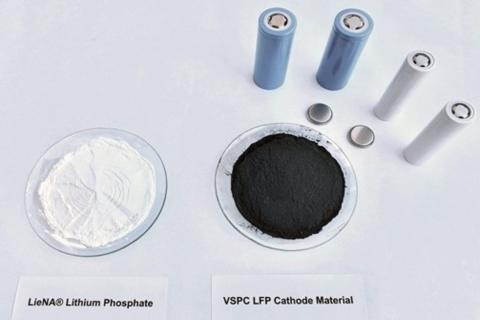
Lithium Australia has taken an important step towards becoming a key player in lithium ferro phosphate battery, or “LFP” supply chains, securing an Australian patent for its innovative SiLeach technology. SiLeach is used to recover lithium from micas and clays to produce lithium phosphate, a vital ingredient in LFP batteries that will power Tesla 3 electric vehicles.
Following successful field trials last year ASX-listed Lithium Australia, through its 90 per cent owned recycling division, Envirostream Australia, has launched into an expanded trial program to test the use of recycled alkaline battery material as fertiliser micronutrient across sites in Western Australia and South Australia. Two products are being evaluated for use in manganese-deficient soils across the four WA sites and one in SA.
Lithium Australia says it will maintain exposure to a triumvirate of quality exploration projects via a joint venture with Charger Metals, which plans to list on the ASX in July on the back of a $6 million IPO set to open this week. The lithium battery player will also emerge as the major shareholder in the new company post-capital raise.
ASX-listed Lithium Australia says its wholly owned subsidiary and cathode powders developer, VSPC has produced lithium manganese ferro phosphate cathode powder of “advanced and consistent quality” for use in lithium-ion batteries. Some of the lithium manganese ferro phosphate product will be made available next month to battery manufacturers for commercial testing focused on the electric vehicle market.
Lithium Australia's 90 per cent-owned subsidiary, Envirostream Australia looks likely to be a major beneficiary from the introduction of an accredited process for the collection and recycling of spent, or end-of life batteries with the launch of the Battery Stewardship Council's national battery collection network early next year. Under the Battery Stewardship Council's scheme, approved entities will be paid to collect and recycle hazardous and toxic spent batteries.
Our board moves wrap includes Margaret Hall, Paul Say, Shannan Bamforth, Phil Thick, Stuart Tarrant, Barry Woodhouse, Nick Marinelli, Natasha Santi, and Ryan Woodhouse.
Lithium Australia's advancing suite of lithium-related projects has prompted the company to beef up its board and senior management. The company has appointed veteran resources industry player and lithium specialist, Phil Thick as a Non-Executive Director and Stuart Tarrant as its Chief Financial Officer. Thick was previously General Manager of the part owner of the largest hard-rock lithium mining operation in the world at Greenbushes in WA.
ASX-listed Lithium Australia has inked an exclusive licensing agreement covering Europe with a Germany-based resources group that paves the way for its proprietary “LieNA” fine-spodumene conversion technology to be commercialised. Under the terms of the exclusive licence agreement, Deutsche Rohstoff AG has indicated it intends building a LieNA pilot plant in Europe.
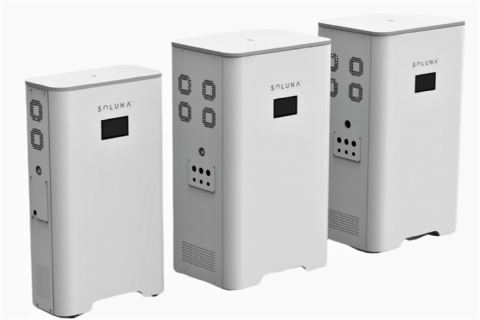
ASX-listed Lithium Australia's 50 per cent-owned household lithium battery supplier, Soluna Australia has received Clean Energy Council approval for another of its battery packs, the 10K Pack HV, expanding its range of energy storage offerings for residential applications. Soluna says the 10K or 10-kilowatt Pack HV is a “premium quality” residential battery module that stores solar power.
ASX-listed Lithium Australia is looking to secure another place in the burgeoning battery metals business as it plans to spin out its non-core assets into a new IPO to be known as Charger Metals. The company will retain a 30 per cent stake in Charger ahead of its proposed listing on the ASX.
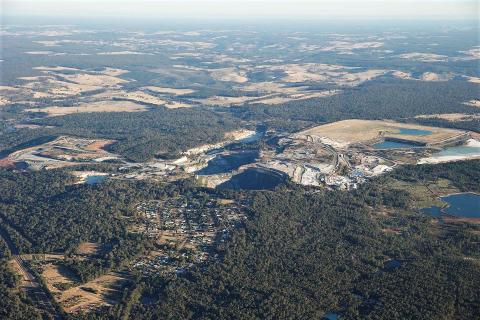
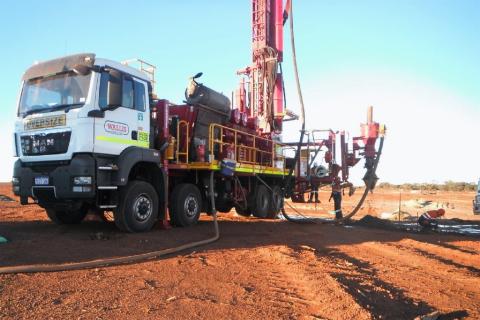
Lithium Australia's joint venture partner, Galan Lithium has completed a review of historical data that it says enhances the prospectivity of the JV's Greenbushes South lithium project in WA. Greenbushes South lies less than 5km south of the giant Greenbushes lithium and tin mining and processing operation in the South West. The old data suggests a strong tin-tantalum anomaly over the existing Greenbushes deposit may extend south onto Lithium Australia and Galan's ground.
ASX-listed Lithium Australia's wholly owned subsidiary, VSPC has pinned its commercialisation hopes on India as the preferred jurisdiction for the proposed development of its lithium ferro phosphate cathode powder production facility. Perth-based Lithium Australia has just tabled an impressive pre-feasibility study that it says points to robust project economics for the manufacture of advanced LFP cathode powders using VSPC's proprietary processing technology.
Lithium Australia subsidiary, VSPC has secured an Australian patent in support of its proprietary process for producing phosphate-based battery cathode materials for lithium-ion batteries that it says can be achieved at a considerably reduced cost. VSPC has simplified its processing technology for the manufacturing of lithium metal phosphate battery cathode powders over the past two years, paving the way for the use of a wider range of raw materials as feedstock.
Construction of ASX-listed Lithium Australia's planned pilot plant showcasing and testing its proprietary “LieNa” fine-spodumene conversion process has begun. Development of the pilot plant, a major component of the Perth-based company's $3.6 million LieNA lithium recovery technology research and development program, was hampered last year by travel restrictions that came courtesy of COVID-19.
Lithium Australia's application for a US patent for one of its proprietary lithium extraction technologies, SiLeach, has been approved by the US Patent and Trademark Office. The Perth-based company also received a notice of acceptance from IP Australia for the same patent application, which is expected to be granted at the end of April.
Lithium Australia is confident an evolution in the global electric vehicle industry will underpin a 500 per cent expansion in the lithium-ferro-phosphate type, lithium-ion battery market within the next 10 years and is preparing to reap the windfall. The company's subsidiary, VSPC has successfully developed new lithium-ion battery cells using lithium ferro phosphate, under its patented processing technology developing advanced cathode powders.
Lithium Australia has entered into a joint venture with Galan Lithium that sees the latter pick up an 80 per cent stake in the Greenbushes South lithium project from Lithium Australia. As a result of the JV deal, Lithium Australia retains a 20 per cent free carried exposure to the lithium commodity while also freeing up cash to advance its downstream and battery technology projects.
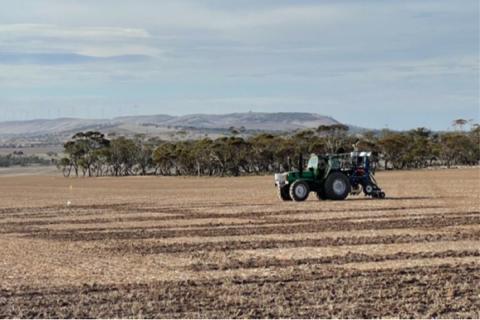
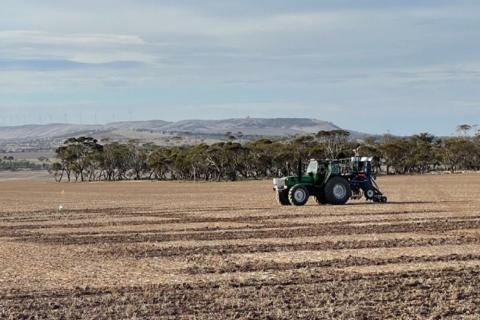
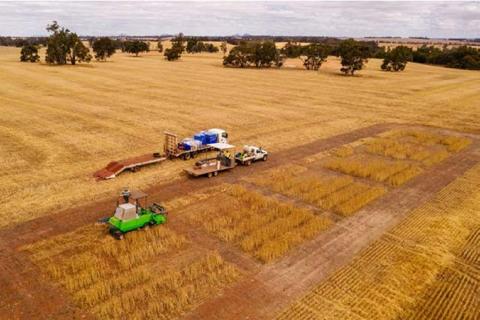
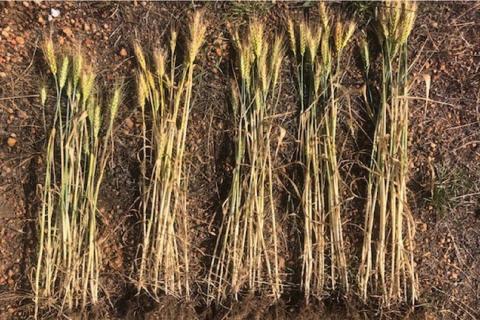
Lithium Australia's 90 per cent-owned subsidiary, Envirostream Australia, has harvested the grain from its test site in WA's Wheatbelt, completing its trial of zinc and manganese derived from recycled alkaline battery waste as a source of fertiliser micronutrients. Envirostream will now move on with the statistical analysis of the grain and overall yield to assess the performance of the micronutrients.
ASX-listed Lithium Australia continues to kick goals with its unique approach to lithium-ion battery innovation with its latest modelling demonstrating improved cost efficiencies from its proprietary lithium-ferro-phosphate technology. The company now believes it has overcome all the significant cost, safety and performance hurdles it needs to produce a better product than its competitors in the expanding global electric vehicle battery market.
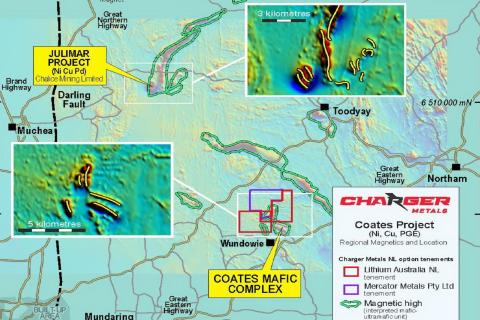
Lithium Australia has granted privateer, Charger Metals, an option to acquire a suite of its projects in WA and the NT. The option will see Charger pick up the Coates and Lake Johnson polymetallic projects in southern WA and the Bynoe lithium-gold project south of Darwin. Charger will pay $100,000 and issue Lithium 8.8 million shares in the new entity to take a 70 per cent stake in the project positions.
Lithium Australia has successfully developed a new lithium-ion cell by introducing manganese into its lithium ferro-phosphate battery technology which results in a 25 per cent energy density increase and subsequent output. According to the company, the addition of manganese gives the energy output density a boost without compromising the batteries superior attributes.
Lithium Australia's 90 per cent-owned subsidiary, Envirostream Australia has applied for permission from the Environmental Protection Agency Victoria to allow one of its Melbourne battery recycling premises to operate above 500 tonnes per annum as it targets future volume growth in end-of-life battery collection. Envirostream has operated below 500tpa of specified e-waste at its Victorian sites so was not previously required to hold an EPA license to operate.
Lithium Australia has recorded positive plant uptake of micronutrients in controlled field tests for its spent alkaline battery waste fertiliser blends by Western Australia's broadacre pastoralists. The company's 90 per cent-owned subsidiary, Envirostream Australia is incorporating slow-release zinc and manganese into conventional mono-ammonium phosphate fertilisers used in WA's Wheatbelt.
ASX-listed Lithium Australia's 90 per cent-owned subsidiary, Envirostream Australia, has been allocated just over $200,000 in grant funding from the Victorian State Government for the further development of its “electrolyte management in rechargeable battery recycling” project. The battery recycling company's electrolyte management process safely captures electrolyte components in liquid form from the recycling of spent lithium-ion batteries.
ASX-listed Lithium Australia has succeeded in securing critical protection for the intellectual property around its revolutionary lithium recovery technology after scoring a US patent for its proprietary extraction process. The US Patent and Trademark Office has approved an application for “SiLeach”, a low-energy process for the recovery of lithium from micas and clays.
ASX-listed Lithium Australia has maintained exposure to gold and base metals through joint ventures it has recently struck over various projects in WA while at the same time retaining the rights to 100 per cent of the landholdings' lithium mineralisation. The company has farmed out the mineral rights to JV partner Okapi Resources in an agreement that will see exploration resume at the Lake Johnston and Medcalf projects about 120km west of Norseman.