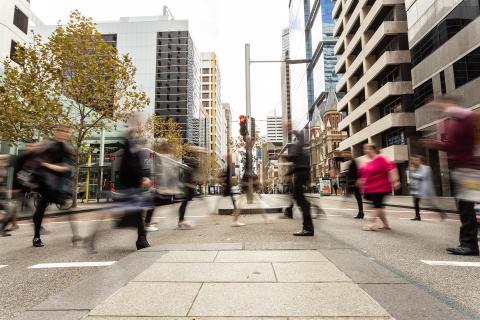
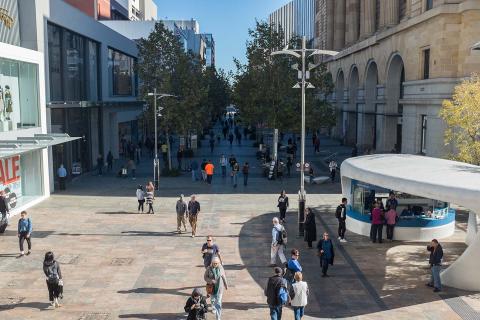
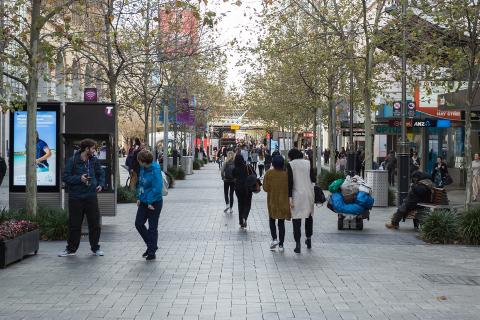
A rebound in the local retail sector may be on the horizon, after Western Australia recorded the second largest rise in retail spending among states and territories, according the latest Australian Bureau of Statistics data.
June quarter Inflation has narrowly beaten expectations with a rise to 0.6 per cent, which likely postpones a third consecutive rate cut next month but is not enough to ward off a further reduction by the end of the year.
The seasonally adjusted unemployment rate in Western Australia has bucked the national trend and fallen 0.5 percentage points to 5.8 per cent on the back of a 13,800 increase in the total number of people holding a job.
Australia's monetary expansion during the past decade has been among the most substantial in the developed world, according to recent data, with the Reserve Bank today continuing an easing policy.
Western Australia was the only state in the country to record both a decrease in employment numbers and an increase in its seasonally adjusted unemployment rate for May.
Opinion: While politicians are showering favoured industries in cash this federal election, voters should remember the recent train wreck of Carnegie Clean Energy as a reminder that subsidies for businesses can flop badly.
The number of dwellings approved in Western Australia have bucked the national trend and risen by 3.8 per cent in trend terms to reach its highest point since July, according to the Australian Bureau of Statistics' latest data.
Western Australia's unemployment rate has increased by 0.1 per cent taking it to 6 per cent in March, making it 1 per cent higher than the national average of 5 per cent.
Western Australia's resources industry experienced record sales in 2018, up 16 per cent from the year prior, thanks largely to a rise in liquefied natural gas (LNG) exports.
Western Australia has recorded the largest percentage increase in net overseas migration in Australia, but its population growth was the third lowest in the country.
Perth is shaking off its reputation as an expensive place to live, dropping 18 positions to be 64th of 133 cities surveyed in a new report by The Economist magazine.
Australia's trade surplus increased to $4.5 billion in January, the second largest surplus on record, as the value of gold exports exceeded expectations.
The Reserve Bank of Australia's stance on rates may be getting a little less neutral after Australian economic growth fell well short of the central bank's own downgraded forecast.
Australia's current account deficit has narrowed 33 per cent to $7.2 billion in the three months to December as higher commodity prices boosted the value of exports.
Western Australia's unemployment rate has spiked to a 17-year high, at 6.8 per cent in seasonally adjusted terms, while the national numbers held steady.
Perth's subdued inflation rate has continued, coming in at just 1.3 per cent in 2018, trailing only Darwin for the lowest price increase out of Australia's eight capital cities.
The total number of home loans rose by 2.4 per cent in Western Australia last November, against a 0.9 per cent fall nationally, according to the Australian Bureau of Statistics.
New data out today reveals population growth in Western Australia remains subdued, with only a slight rise recorded in the year to June, while nationally the population increased 1.6 per cent.
Wages growth in Western Australia is lagging the country, with ABS data showing the state's wages increased just 1.6 per cent year on year, compared with a national increase of 2.3 per cent.
ANNIVERSARY SPECIAL: The growth in household disposable income provides a graphic illustration of the effect of 25 years of technological change and investment in WA. This article is part of a special series to mark Business News' 25-year anniversary.
Perth's annual inflation rate has hit its highest mark in nearly three years, driven by rising electricity prices in the September quarter, according to the latest data from the Australian Bureau of Statistics.
The McGowan government is facing renewed pressure to reconsider its proposed foreign investor surcharge, and its removal of the $5,000 first homebuyers boost.
Full-time employment in Western Australia has hit a three-year high, as the latest data from the Australian Bureau of Statistics revealed a decline in the state's jobless rate to 6 per cent in September.
Job vacancies in Western Australia have reached their highest level in more than five years, while the state's mining industry has hit a record level of employment.
Western Australia's population increased by just 0.8 per cent in the year to March, continuing its recent trend of soft growth, while nationally population growth slumped to a two-year low, new data out today shows.
Western Australia's unemployment was steady in August at 6.2 per cent in trend terms, despite a small rise in the number of people employed, although the level was much lower for women than men.
The state's unemployment rate has declined for a fourth straight month, after the economy added about 13,000 full-time jobs in July, according to the latest figures from the Australian Bureau of Statistics.
Western Australia continues to have the slowest nominal wages growth in Australia, with the latest data showing growth of 1.5 per cent, slightly ahead of local inflation at 1.1 per cent.
Western Australia registered its largest net population loss from interstate migration on record in the 2016-17 financial year, after nearly 14,000 departed to other parts of the country.
After reaching a 16-year high in March, Western Australia's unemployment rate has enjoyed its third straight month of decline, with nearly 3,000 jobs added across the state in June.
Western Australia was among the states leading a rise in job vacancies, which lifted 5.7 per cent between February and May driven by with growth in both the private and public sectors.
Western Australia's population growth remains subdued, with the state recording a 0.8 per cent increase for the 12 months to December, according to the latest data from the Australian Bureau of Statistics.