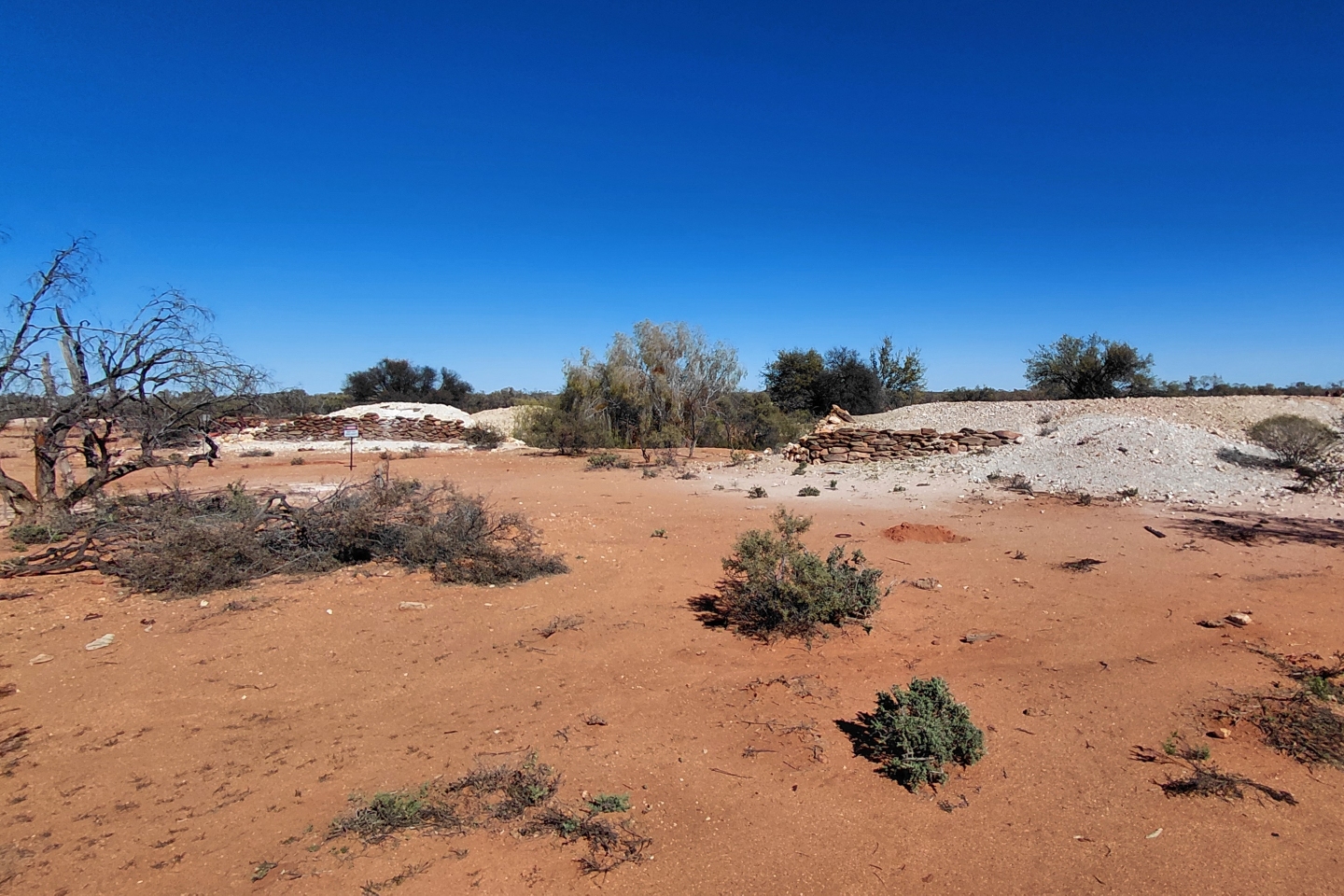
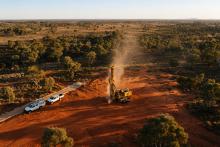
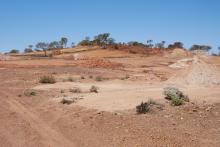
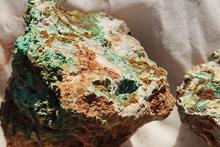
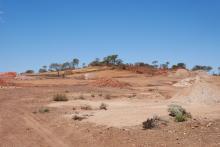
Neometals has fired up the diamond rig at its 100 per cent-owned Barrambie gold and copper project in Western Australia, where the drill bit will be pointed at two very different prizes: deeper high-grade gold beneath its emerging Ironclad deposit and a potentially significant geophysical copper target at Rinaldi.
The company has launched a three-hole program comprising two diamond tails and one hole from surface, with drilling expected to wrap up within two weeks.
At Ironclad, the drill bit is heading underneath some enticing numbers. Previous reverse-circulation (RC) drilling returned a standout 12 metres grading 5.99 grams per tonne (g/t) gold from 116m, including 4m at a hefty 10.13g/t from 118m. Neometals says it now wants to probe the interpreted higher-grade plunging corridor beyond its existing resource.
The first diamond tail will extend an earlier hole that was abandoned after water ingress stopped it short of the target zone. A second hole drilled from surface has been designed to intersect the mineralised zone another 50m down-plunge.
Ironclad already hosts an indicated and inferred resource of 285,000 tonnes at 1.6g/t gold for 15,000 ounces. A March scoping study outlined the potential to produce between 10,000 and 11,000 ounces from a planned open pit.
Neometals is working with mining services group BML Ventures to get Ironclad into production, subject to conditions including a positive final investment decision. Management says the latest diamond core should sharpen its structural model ahead of an updated resource and final investment decision in 2027.
Meanwhile, the company is also throwing a diamond tail at an intriguing copper target 700m northeast of the historic Rinaldi workings. An existing Rinaldi hole will be extended by 50m to punch through the heart of a strong coincident chargeability and resistivity anomaly known as T2. The original hole terminated at 124m before fully probing the core of the anomaly.
Neometals Limited managing director Chris Reed said: “The assay results confirm that primary copper sulphide mineralisation continues at depth beneath the historic Rinaldi workings, with encouraging grades and widths reported from the completed holes. We are also encouraged by the preliminary observations from the T2 drilling, which was terminated prematurely due to water ingress. We plan to return with a diamond rig in September to properly test this exciting target.”
Adding some serious geological spice to the modest program, Neometals' Rinaldi prospect sits within the same stratigraphic host in the Barrambie greenstone belt and is along strike from Solstice Minerals’ Nanadie copper project.
Solstice's ground comprises 130 square kilometres of granted mining lease and exploration licence tenure and hosts an inferred resource of 40.4 million tonnes grading 0.4 per cent copper and 0.1 g/t gold, for 162,000 tonnes of contained copper and 130,000 ounces of gold.
The Barrambie greenstone belt offers plenty of room to move. Neometals controls 357 square kilometres covering 40km along the general strike of the belt, where gold exploration has been relatively sparse since the 1990's, even though historical mines across the belt produced at a combined average grade of 24.8g/t gold.
The company has previously outlined a conceptual Barrambie exploration target spanning most of the 40 kilometres of strike within its tenure along the greenstone belt. That target sits in a range between eight million and 10.5 million tonnes at grades ranging from 1.3g/t to 2.3g/t gold, implying between 335,000 and 775,000 ounces of gold. However, the company is keen to emphasise that the target remains a hypothetical indication of prospectivity on incomplete data and it does not comprise a mineral resource.
With Ironclad potentially heading towards a development decision and Rinaldi offering a copper wildcard nearby, the next fortnight of drilling could give Neometals plenty more to chew on at Barrambie.
Is your ASX-listed company doing something interesting? Contact: matt.birney@businessnews.com.au