Neometals has landed on the big stage in the US, defining a maiden exploration target for both lithium and potash at its Utah brine project.
In a show of its potential scale, the company has outlined a JORC-compliant initial projection ranging from 1.9 million to 6.5 million tonnes of contained lithium carbonate equivalent (LCE), alongside a bonus 94 million to 325 million tonnes of muriate of potash (MOP).
The sprawling 80,000-acre project is held within joint venture company Utah Brine Corp, in which Neometals holds a 51 per cent controlling interest.
Neometals says it has heavily leveraged a wealth of historical data from the region through decades of oil and gas exploration in the area to define the big geological play, a savvy and low-cost approach to outline a target of this magnitude.
The mineralisation in Utah is hosted in typically low-cost lithium brines within three main geological units: the Paradox Formation clastic zones, the McCracken Formation, and the Leadville Limestones.
These porous rock layers, which were historically targeted for their hydrocarbon potential, are now being viewed through a new lens for their ability to hold vast quantities of valuable, mineral-rich brines.
The company’s modelling appears to back this up, pointing to a total brine volume of between 5.66 billion and 10.5 billion cubic metres of water.
The old data indicate the Paradox’s lower clastic zone is particularly prospective, showing the highest porosity and brine storage potential of the units, with effective porosity ranging from 8.7 per cent up to 16.2 per cent.
Having defined the scale of the prize, Neometals is now moving to prove it up.
The company says it will look to sample existing wells, from the middle of this year, ahead of metallurgical test work in the second half, to assess recovery pathways, including the use of the new-age Direct Lithium Extraction (DLE).
DLE is a process that removes lithium directly from brine using specialised filters, beads or membranes, often faster and with a smaller footprint than evaporation ponds.
Neometals Limited managing director Chris Reed said: “(The target) highlights the large-scale potential and quality of the Utah Brine Project. Combined with exclusive access rights to established wells and data infrastructure in the Paradox Basin, this represents a strategically attractive and low-cost entry point for Neometals to evaluate a new lithium-potash brine development opportunity.”
Neometals has put a serious flag in the ground in a Tier-1 mining jurisdiction at a time when the US is desperately seeking to secure domestic supply chains for critical minerals such as lithium.
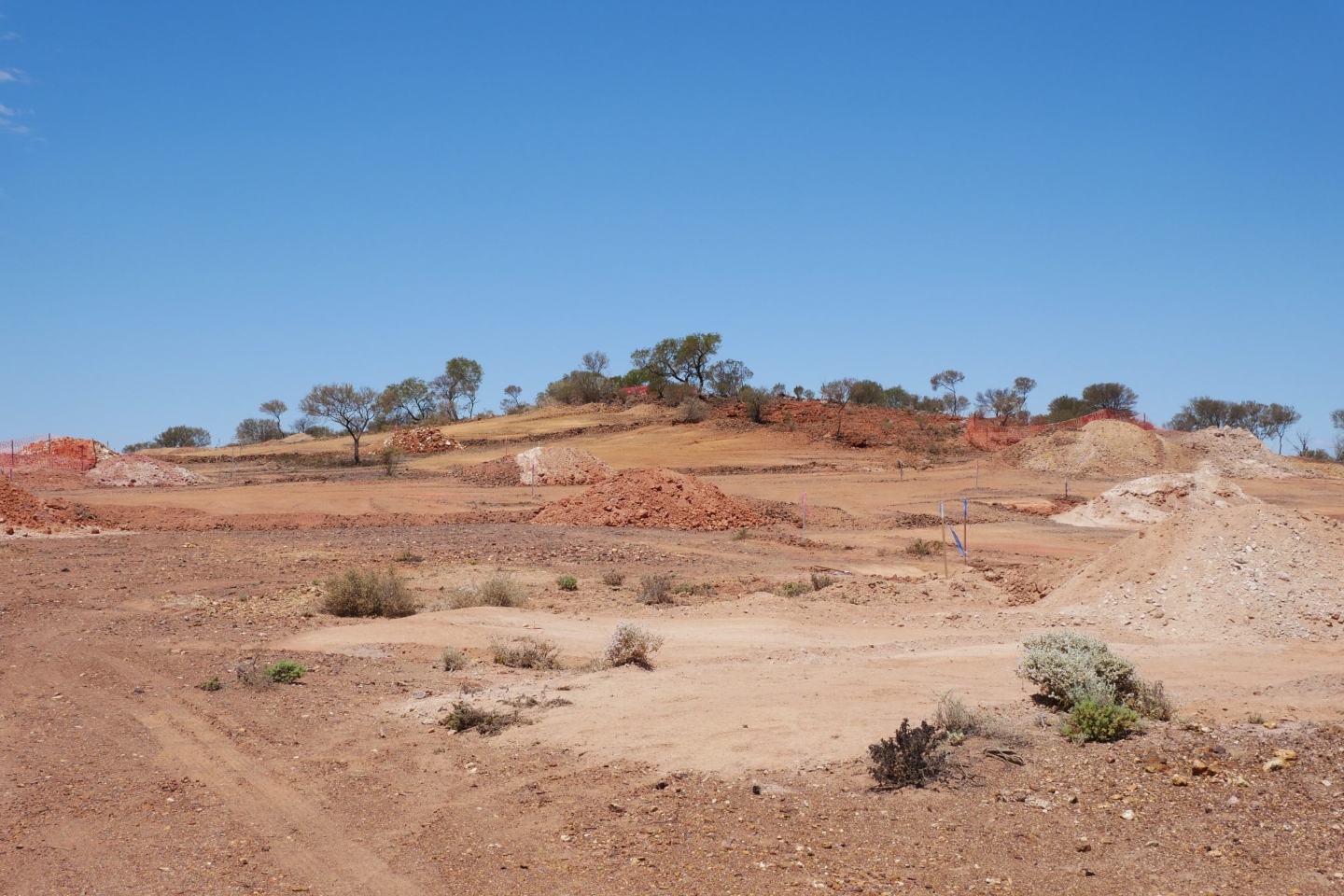
Momentum has also been steadily building for the company at it Barrambie copper-gold project in Western Australia, where recent drilling and modelling has defined a 285,000-tonne resource grading 1.6 grams per tonne (g/t) for a handy 15,000 ounces of gold.
The resource sits at surface, with higher-grade domains hosted in an open pit shell, running up to 2g/t gold, offering early-mining sweet spots that could boost economics for a potentially quick payback.
Previous scoping work also flagged the potential for rapid production from toll treatment, a well-worn West Australian playbook and one becoming much more commonplace in the region.
While an exploration target is conceptual in nature, the sheer scale of the Neometals’ Utah lithium project appears too compelling to ignore.
And, with a clear funding path following a recent $13 million in ongoing fundraising initiatives, the company looks more than ready to put its concept to the test.
Is your ASX-listed company doing something interesting? Contact: matt.birney@businessnews.com.au


 By Andrew Todd