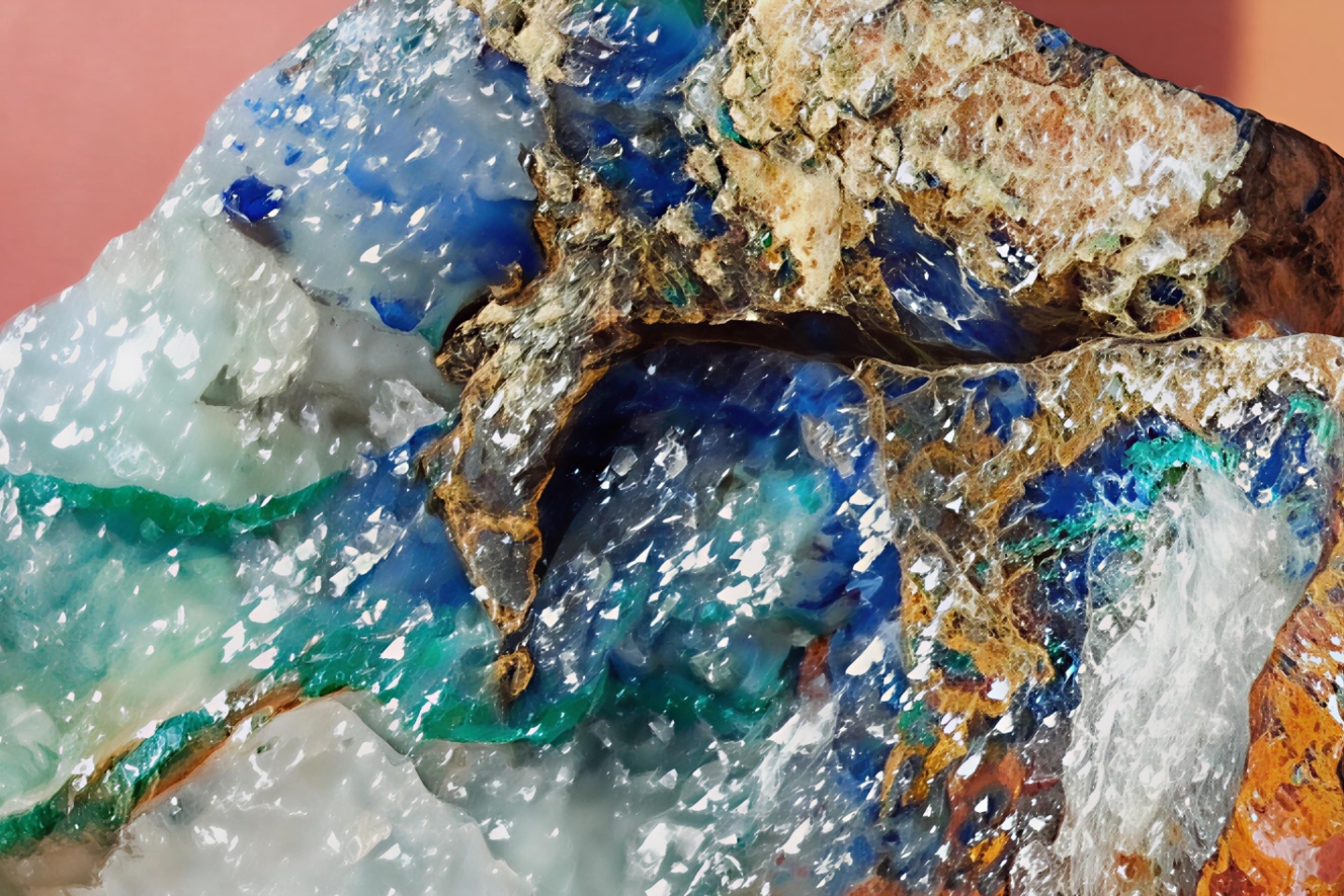
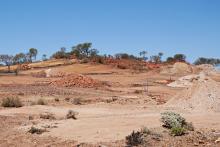
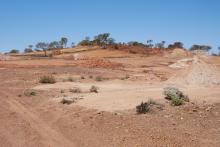
Neometals has put some fresh bite into its Barrambie gold project in WA, knocking over a first-pass reverse-circulation (RC) drilling program at the historic Rinaldi copper prospect. The results have effectively confirmed primary copper sulphides lurking beneath the old workings, which were previously exploited for high-grade and predominantly secondary copper mineralisation.
Through March, the company drilled five holes for a total of 495 metres, aiming directly beneath the old shallow open-pit and also stepping out short distances along strike to the north and south.
So far, analytical results for 50 of the 526 single-metre drill samples have been returned, with Neometals fast-tracking selected samples for initial laboratory determinations based on visual evidence of copper in the drill intervals.
Standout hits from the expedited batch include 7m at 1.72 per cent copper from 82m, featuring 1m at 5.06 per cent copper, while a second hole delivered 5m at 1.26 per cent copper from 75m, with a 1-metre slice running at 2.43 per cent copper.
The two holes lie in the same section and pierce the same zone at the same depth near the base of oxidation, from opposing directions in the time-honoured scissor-style strategy of crossing intercepts.
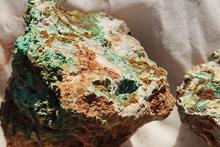
The drill logs highlighted copper transitioning from its oxide minerals near the redox front - with chrysocolla and malachite - into its primary sulphides - bornite and chalcopyrite - in fresh rock, at an estimated vertical depth of 70m beneath the old pit.
Neometals Limited managing director Chris Reed said: “This initial drilling programme has successfully confirmed the presence of primary copper sulphide mineralisation beneath the historic Rinaldi workings, which we consider a key step-change in understanding the prospect’s potential.”
As an old copper show, Rinaldi has some pedigree. Historical records indicate 1407 tonnes of ore were mined at site in 1944 and between 1956 to 1961, yielding138 tonnes of copper metal. The ore came from shallow open pit and underground workings down to just 30m depth and averaged 9.8 per cent copper.
Prior to the recent drilling, Neometals reported a handful of punchy surface rock-chip and grab sample results from 5.4 per cent up to 24.4 per cent copper in February, with some samples carrying anomalous gold and silver to a maximum of 2.1 grams per tonne (g/t) gold and 65g/t silver.
However, the company’s latest drilling is the first real look at what sits below the weathered zone. Neometals says the laminated quartz vein hosting the intercepted mineralisation has logged a consistent 7m downhole thickness in the vicinity of 70m below surface.
Early reports indicated the copper was hosted in veined quartz, up to four metres thick. However, Neometals’ deeper logging has now hinted the mineralised zone is actually thickening with depth. Adding weight to the story, logging has identified sulphides alongside the host veining, stretching the quartz-sulphide envelope to up to 15m downhole in places.
While it’s still early days for the Rinaldi prospect, the company says the presence of fresh sulphides provides a clear exploration focus for chasing extensions and potentially higher-grade primary copper zones at greater depth and along strike.
Laboratory analysis of the remaining samples for copper, gold and silver continues, with full results expected once the dataset is complete.
To help map the sulphide footprint ahead of follow-up drilling, Neometals has lined up a dipole-dipole induced polarisation (IP) geophysical survey over a 2km by 1km area centred on Rinaldi to track down chargeability anomalies associated with sulphide mineralisation for follow-up drilling. The survey is slated to kick off in April.
This story gets a dash more spice, too, with Neometals’ latest desktop review zeroing in on the favourable gabbro host and the structural controls that could be steering copper mineralisation.
The company says the study has identified three target zones north and south along strike from Rinaldi that might reward further copper exploration.
With copper now showing its hand in Rinaldi’s primary zone, assays still pending, geophysics on the way and three new targets emerging, Neometals is building a serious head of steam.
Armed with another round of drilling in the wings, the company has plenty to keep it busy as it looks to turn a forgotten shallow high-grade pit into a modern copper discovery.
Is your ASX-listed company doing something interesting? Contact: matt.birney@businessnews.com.au






 24 Sep 2026
 04 Sep 2026
 17 Aug 2026
 17 Jul 2026
 12 Jun 2026
 19 May 2026