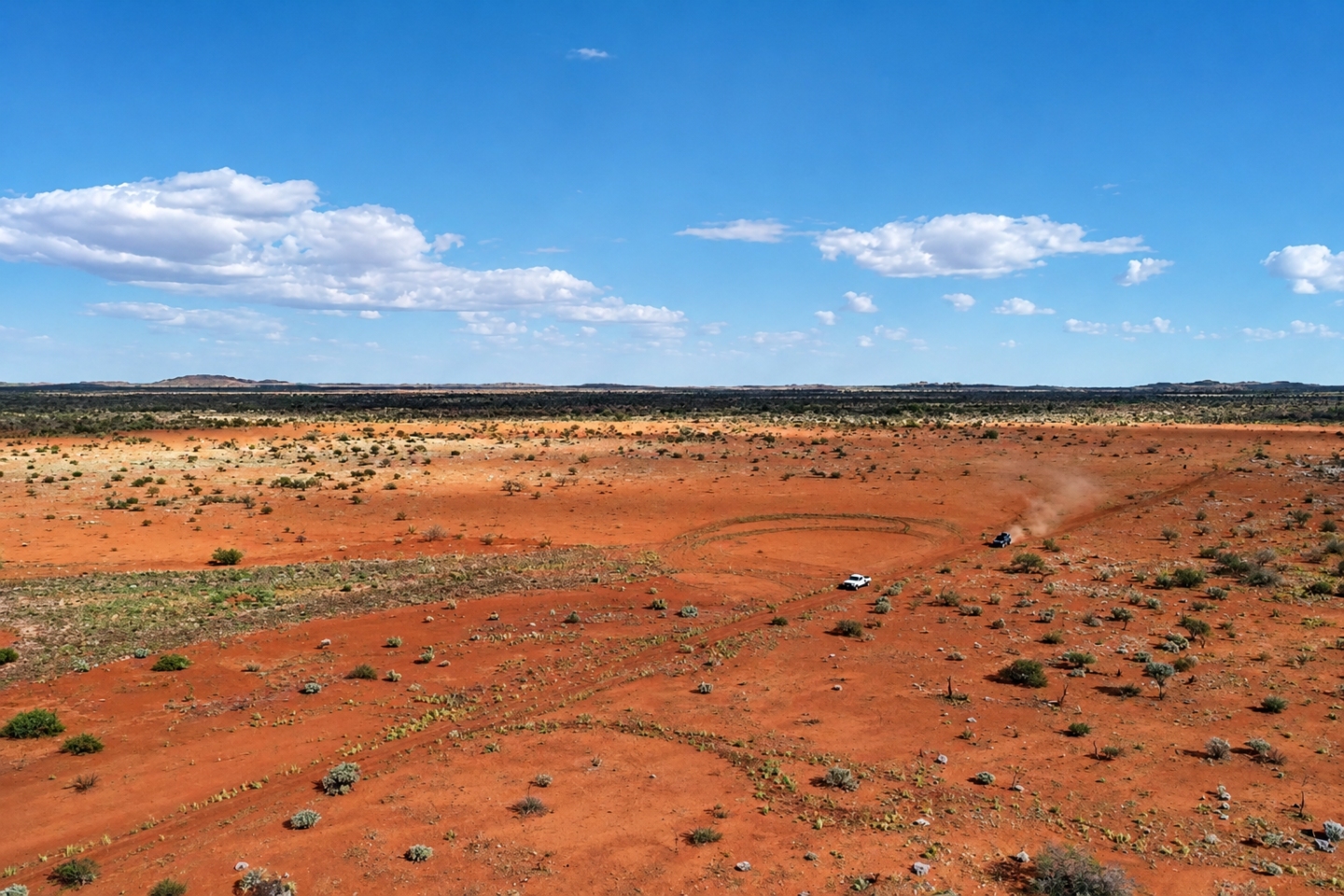
Octava Minerals has put some serious numbers on the board at its 100 per cent-owned Byro critical minerals project in Western Australia's Gascoyne region, unveiling a mammoth exploration target of between 4.9 billion and 7.4 billion tonnes of mineralised black shale.
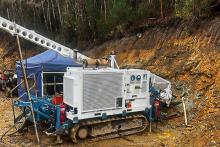
A first-pass 16-hole aircore drilling program for 870 metres confirmed widespread mineralised black shale across the project area. Drilling targeted the basal Coyrie Formation, historically identified as the most prospective unit for rare earths, lithium and vanadium.
The conceptual target spans an 11km by 10km area to a depth of 50m, providing the first indication of Byro's potentially vast scale. Further drilling will be required before a JORC-compliant mineral resource can be defined.
Grades for the exploration target range from 207 to 431 parts per million (ppm) total rare earth oxide (TREO), 159 to 331ppm lithium oxide and 173 to 359ppm vanadium oxide. While those numbers may seem modest, the real story here is the jaw-dropping scale and potentially game-changing processing route.
For enormous, lower-grade black shale deposits such as Byro, the commercial question always circles back to whether the metals can be extracted economically. However, Byro's real appeal lies in its ability to potentially produce three critical minerals from the same orebody, opening the door to multiple revenue streams from a single mining operation rather than relying on a single commodity.
Recognising that opportunity, Octava has fast-tracked metallurgical testing alongside exploration rather than waiting until after defining a resource. The company is aiming to prove that bioleaching - using naturally occurring microorganisms to release metals from the ore - can economically unlock enormous volumes of mineralisation.
Importantly, this isn't just a theory on paper. Independent testwork by Australia's CSIRO and biotechnology specialist BiotaTec has already demonstrated 70–80 per cent recoveries of critical minerals from Byro's black shale during a 21-day bioleaching period.
If those results can be replicated at larger scale, heap bioleaching could reduce energy use, chemical reagent consumption and operating costs, potentially transforming a huge, lower-grade deposit into a commercially attractive bulk-tonnage project.
Octava Minerals managing director Bevan Wakelam said: "Byro has had two world-class, independent experts confirming 70-80 per cent recoveries of critical minerals using bioleaching on the Byro black shale within a 21-day leaching period. The potential for heap-based processing routes, if demonstrated, could ultimately position Byro extremely favourably from a capital and operating cost perspective."
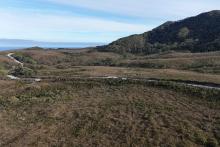
Byro covers 555 square kilometres within an already recognised basin-scale mineral system. Historical regional geochemistry has outlined a 40km geochemical footprint enriched in rare earths and lithium. Within that broader footprint, the company's prospective black shale sequence extends for about 35km of strike. The current exploration target, however, is based on drilling over only a small part of that prospective strike, leaving considerable upside to expand an already enormous, mineralised inventory through further exploration.
Byro's location in WA's Gascoyne region provides access to the port of Geraldton and proximity to power supplied via the North West gas pipeline for future mining operations. Native title agreements are also already in place, removing an important early-stage development hurdle.
Growing demand across Western economies for secure supplies of critical minerals used in permanent magnets, batteries and other strategic technologies further strengthens the project's long-term development potential.
With both geological scale and an emerging processing pathway now established, Octava's next task is to prove both can work commercially. The company will undertake laboratory heap-bioleaching and continuous-column testwork under simulated industrial conditions before progressing to potential site-based heap trials. Further drilling is planned to convert more of the conceptual exploration target into a maiden JORC-compliant mineral resource.
If the company can successfully scale its bioleaching process while continuing to prove the project's scale, Byro has all the ingredients to evolve from a giant exploration target into one of Australia's larger emerging critical minerals developments.
Is your ASX-listed company doing something interesting? Contact: matt.birney@businessnews.com.au






 28 Sep 2026
 29 Apr 2026
 29 Jan 2026
 28 Jan 2026
 04 Dec 2025
 25 Nov 2025