Octava Minerals has delivered a strong start to the first drilling campaign in nearly 50 years at its Federation project in western Tasmania, returning a suite of encouraging polymetallic intercepts that are already reshaping the company’s geological understanding of the historic field.
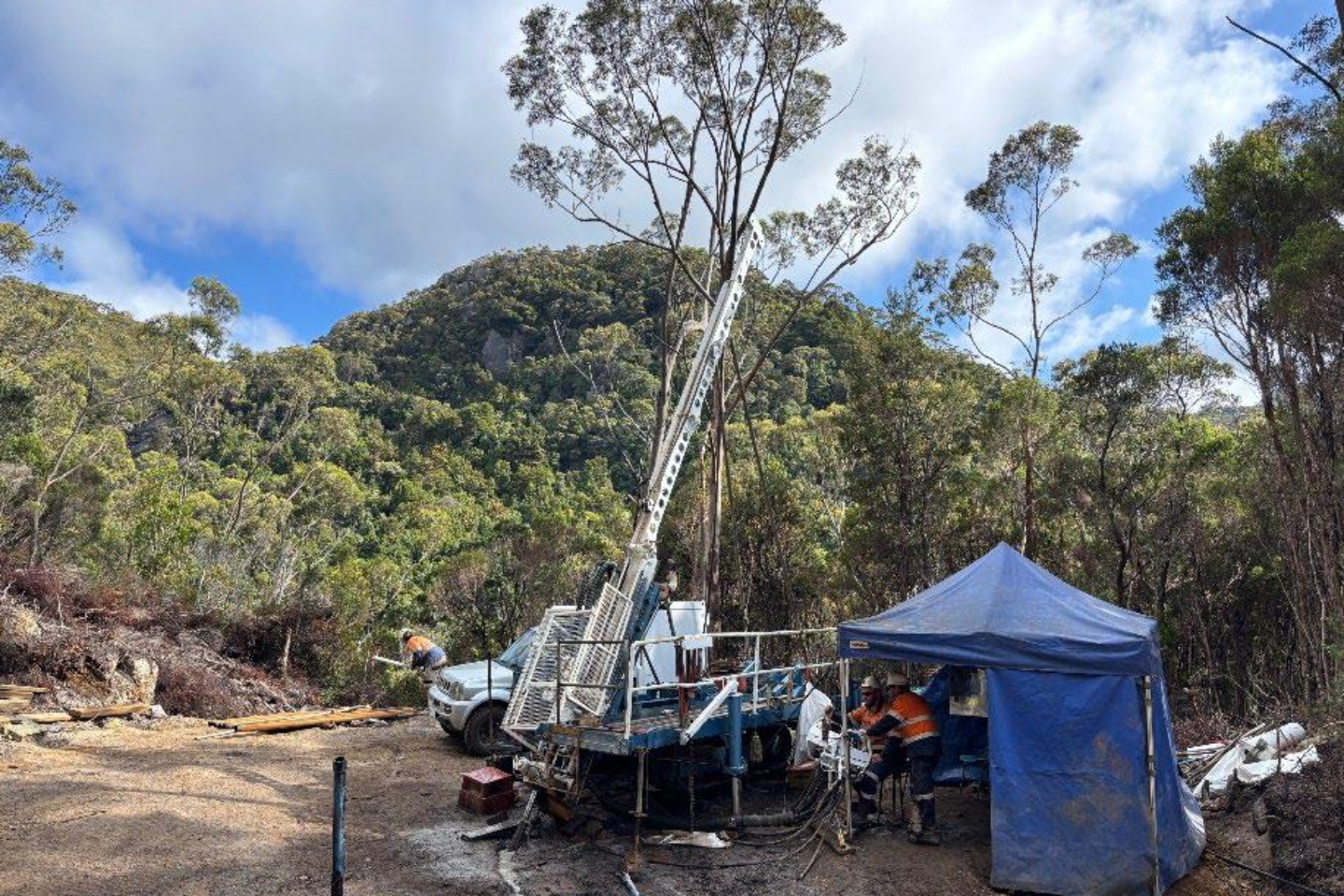
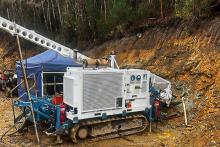
The maiden diamond drilling program targeted the Sweeney’s and Anomaly 1 prospects, which are separated by a largely untested 750m corridor, completing eight holes for 1460m.
Assay results received for six of those holes confirmed multiple styles of copper, zinc, tin and silver mineralisation, along with elevated indium and the discovery of a new antimony‑zinc lode.
Standout results include 6m at 0.79 per cent copper, 336.7 parts per million (ppm) indium, 0.094 grams per tonne (g/t) silver and 0.59 per cent tin from 130m downhole depth in one hole at Sweeney’s.
A second hole at Sweeney’s returned 1.65m assaying 0.86 per cent copper, 336.9ppm indium, 0.098g/t silver and 0.76 per cent tin from 138.35m downhole depth, highlighting the potential scale of the mineralised system at depth.
Notably, Octava also identified a previously unrecognised antimony‑zinc lode in another hole at Sweeney’s, intersecting 2m at 1.85 per cent antimony, 2.38 per cent lead and 7.95 per cent zinc from 137m depth. The company says the new lode remains open in all directions and represents a compelling new exploration target.
Overall, the drilling program so far has confirmed three distinct mineralisation styles at Sweeney’s, including near‑surface vein‑hosted tin‑rich zones, a deeper feeder‑style sulphide breccia pipe and the newly defined antimony‑zinc lode. Downhole electromagnetic surveys support a model pointing to a steeply plunging, pipe‑like feeder system that remains open down-plunge.
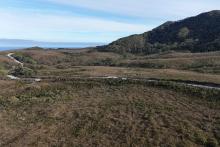
The Federation project sits on Tasmania’s west coast, 12 kilometres west of the town of Zeehan. Its two contiguous granted exploration licences enclose an area of 121 square kilometres. It’s set in a well‑established mining district with existing infrastructure and processing facilities nearby.
Octava believes the initial drilling has only tested a small portion of its Federation landholding and sees strong potential for further discoveries, particularly along the 750‑metre underexplored corridor between Sweeney’s and Anomaly 1.
Octava Minerals managing director Bevan Wakelam said: “We are very pleased to have completed initial drilling at the Federation project and to have encountered significant mineralised intercepts. The company commenced a program of expanding the mineralisation footprint at Federation in December 2025, the first drilling in over 50 years.”
The company says drilling results from Sweeney’s and Anomaly 1 are pointing to three key mineralisation styles: shallow vein and disseminated zones, a deeper sulphide breccia “feeder” body that plunges to the south-southeast and a separate antimony-zinc lode sitting just west of that feeder.
In other words, it is shaping up as a more complex, multi-layered or multi-phase system, offering several separate shots at scale.
With the first-pass drilling now in the bag, the company says there is plenty of scope for the story to grow, with follow-up work set to pursue extensions and new targets.
Those targets include following up the sulphide breccia “feeder” mineralisation, which remains open down-plunge and stepping out on the newly-recognised antimony-zinc lode, which remains open in all directions.
Other work will test for potential parallel lodes that could be blind at surface beyond the initial drilling area. The drill bit will also target the 750m-long zone between Sweeney’s and Anomaly 1, which has yet to see modern testing.
Additionally, a new round of follow-up downhole electromagnetic geophysical surveys will peer through the drill hole walls to search for conductive “off-hole” targets that might indicate additional sulphide zones.
With assays still pending from two drill holes and follow‑up geophysics planned to refine deeper and off-hole targets, Octava appears well-placed to keep building momentum at Federation as it advances one of Tasmania’s more intriguing polymetallic revival stories.
Is your ASX-listed company doing something interesting? Contact: matt.birney@businessnews.com.au


 By Doug Bright