Western Australia’s commercial energy landscape is undergoing a significant shift, driven by rising energy costs, fuel price volatility and increasing regulatory and sustainability pressures.
For many businesses, energy is no longer an administrative overhead – it is becoming a critical operational and cost consideration.
According to EnergyTec’s head of operations and technology Champ Phetiam, organisations are now being forced to rethink how energy is generated, managed and used across their assets.
“We’re seeing businesses being squeezed from multiple directions,” Mr Phetiam said. “There’s the rising cost of energy, increasing complexity of the grid, and growing expectations from tenants around transparency and sustainability reporting.
“Building owners are dealing with multiple competing requirements across cost, sustainability, electrification and tariffs.”
As a result, businesses are shifting from reactive energy management to more strategic, data-driven approaches, focusing on solar, EV infrastructure, battery storage and tariff optimisation.
No one-size-fits-all approach
According to EnergyTec technical services and operations manager Rob Rye, the sector is navigating an increasingly complex landscape. “There’s no one-size-fits-all solution anymore,” he said.
He explained that every property presents a different set of variables – from tenant mix and operating hours to infrastructure constraints and energy demand patterns. “Every site needs its own strategy based on how it operates,” Mr Rye said.
Understanding how and when energy is used is essential – not only to optimise costs, but to determine whether a site can support technologies such as EV charging or battery storage.
Without that insight, businesses risk investing in solutions that unexpectedly drive costs up and fail to deliver expected returns.
“You need a strategy that considers how energy is generated, distributed and consumed across the entire asset,” Mr Rye said.
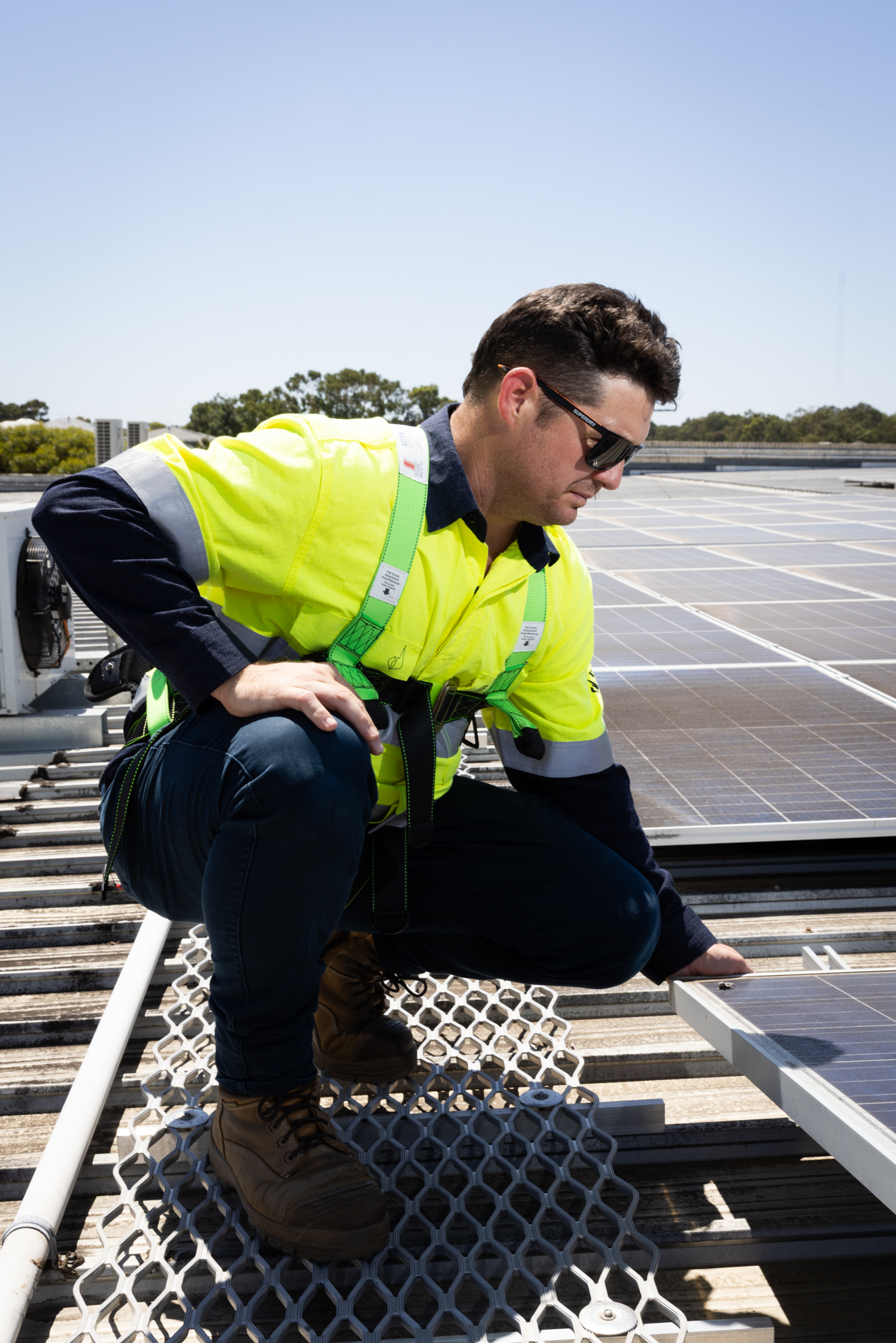
Unlocking rooftop solar
Across WA, commercial and industrial buildings represent one of the largest untapped opportunities for renewable energy generation.
Retail centres, warehouses and office buildings often have significant unused roof space, making them well suited to solar PV systems. However, uptake in the mid-scale commercial sector has lagged.
“A lot of building owners don’t fully understand what size system they need, how the energy will be allocated, or how it integrates with the rest of the site,” Mr Rye said.
Solar is no longer a simple installation decision – it requires careful planning around tenant allocation, excess generation and system performance.
“It’s not just about installing solar or EV chargers and assuming everything will work,” Mr Rye said. “Accurate data is critical to unlocking that potential.”
He said that without proper metering and load data, designing a system that performs as expected becomes significantly more difficult.
As battery storage becomes more viable, it is also expected to enable greater uptake of large rooftop solar systems, particularly at sites with low daytime demand and limited capacity to export energy back to the grid.
EV uptake adds pressure
As EV adoption accelerates, commercial properties are increasingly expected to provide charging infrastructure. “EV uptake is accelerating faster than expected,” Mr Phetiam said.
However, integration is complex. “EV charging looks simple on the surface, but it fundamentally changes your load profile,” he said.
Charging patterns vary, with evening peaks in residential settings and daytime demand in commercial environments. Without appropriate planning, this increase in peak demand can significantly push up costs.
“If you don’t understand when you’re using energy, you can get hit with significant demand charges,” Mr Phetiam said.
This is driving a more integrated approach, with EV infrastructure increasingly designed alongside solar, battery storage and load management systems.
“It’s all part of a bigger ecosystem,” Mr Phetiam said. “You need to look at the whole picture.”
Batteries and tariffs reshape costs
Battery storage is emerging as a key tool in managing energy costs, allowing businesses to store excess solar generation and use it during peak pricing periods.
However, returns are highly dependent on site-specific factors. Tariffs are also playing a growing role in costs.
“It comes down to load profile, tariff structure and system design,” Mr Phetiam said.
“Cost is no longer just about how much energy you use – it’s about when you use it.”
Many businesses remain on legacy tariffs that don’t reflect usage patterns, limiting the benefits of energy investments.
“There’s a real opportunity to reduce costs just by being on the right tariff, but most businesses don’t have the data to know,” he said.
Data becomes critical
Underlying these shifts is a growing reliance on accurate, real-time data.
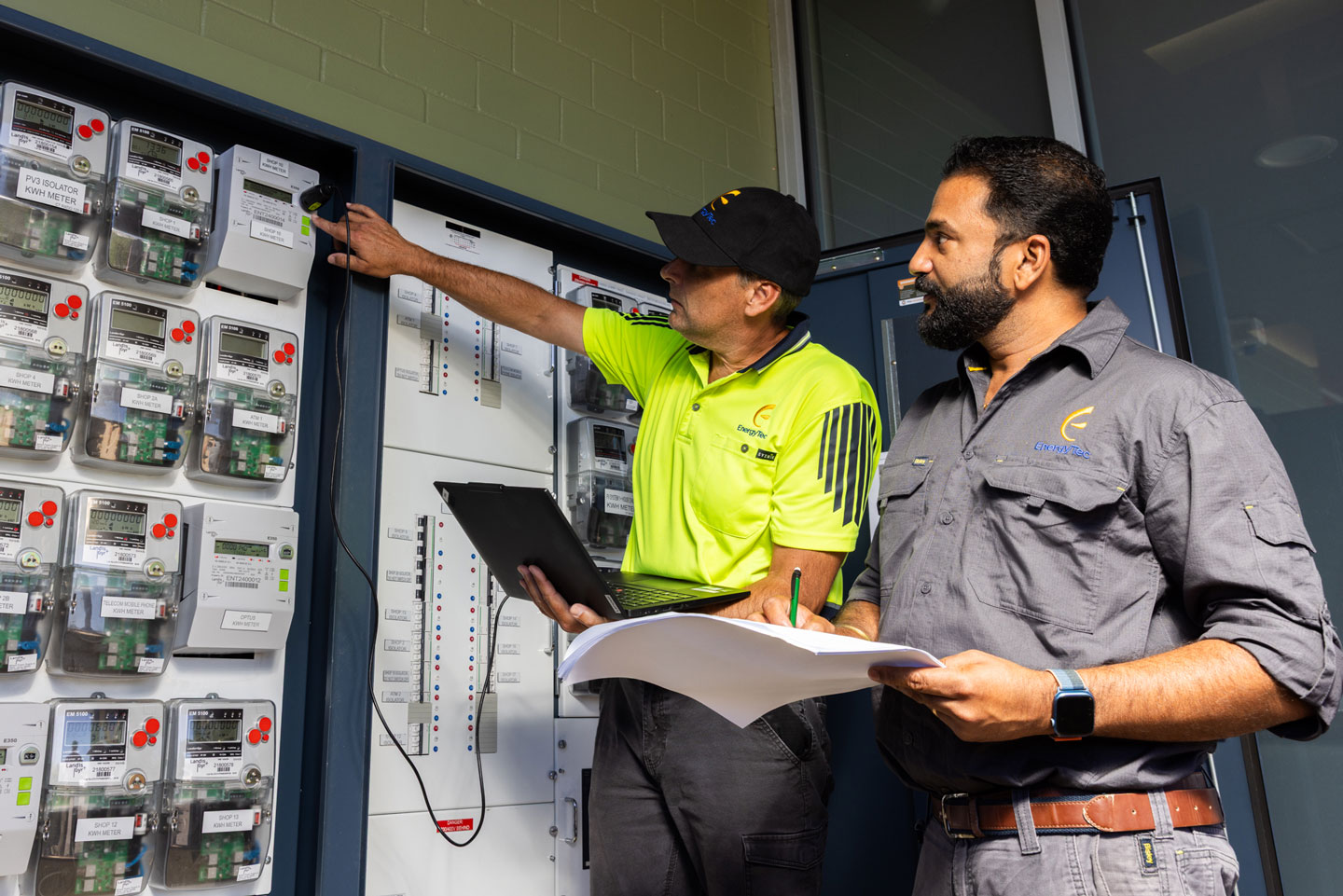
“You can’t make any decisions around solar, EV or battery without understanding your load profile and that starts with advanced metering,” Mr Rye said.
Traditional reporting – often static and delayed – is no longer sufficient.
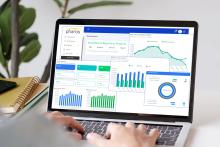
EnergyTec’s platform, Pharos, integrates metering, billing and compliance data into one system, providing portfolio-wide visibility and supporting more informed decision-making.
“It’s not just about having data – it’s about having the right data and the experience to interpret it,” Mr Phetiam said.
Access to long-term data also improves modelling and forecasting, helping businesses to reduce costs, manage risk and meet compliance and ESG requirements.
A strategic approach
As energy systems become more complex, the risks of poor planning are increasing. From infrastructure constraints to demand charges and grid limitations, missteps can carry significant financial implications.
“A lot of sites simply don’t have the electrical capacity to support new technologies without upgrades,” Mr Rye said.
Energy decisions must now account for broader network constraints and on-site performance.
“Energy is now a complex ecosystem,” Mr Phetiam said. “It’s not as simple as putting solar on the roof anymore. If you don’t understand the full ecosystem – metering, tariffs, infrastructure – you can end up creating more problems than you solve.”
For WA businesses, future-proofing energy is no longer about a single solution, but a coordinated, data-driven strategy.
The businesses that take an integrated approach will be better positioned to manage rising costs, meet sustainability expectations and navigate an increasingly complex energy landscape.