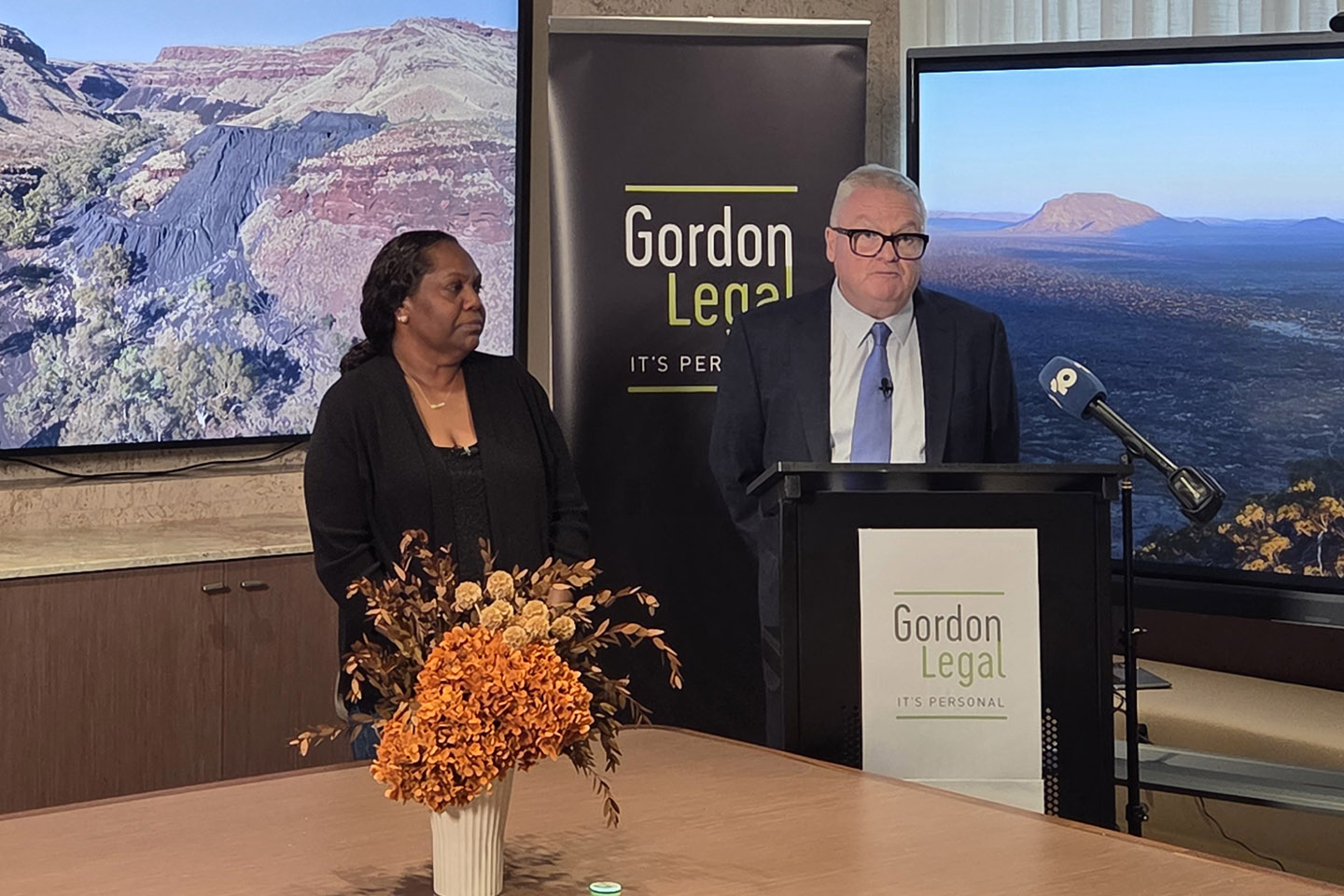
Prominent class action lawyer Peter Gordon has vowed to bring decades of indecision to an end as the Banjima people launch a $1.5 billion case to clean up Wittenoom against the state government.
Acting on behalf of the Banjima Native Title Aboriginal Corporation, Gordon Legal on Tuesday afternoon filed an anticipated case with the Federal Court of Australia in Melbourne.
Gordon Legal is seeking the earliest possible court date to begin proceedings into what could shape up as a case with wide-ranging ramifications for the mining industry, governments, and traditional owners.
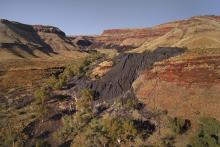
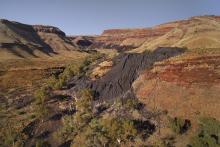
The Banjima people are seeking an order to remediate Wittenoom’s asbestos tailings, mines and contaminated zone on their Country, and reparations for the deadly health implications of the tailings.
Mr Gordon said it was his hope the court case would put an end to four decades of governments putting the issue in the too hard basket.
Mr Gordon said he believed WA Premier Roger Cook and his ministers did want to fix the problem.
“My concern… is successive governments have looked at this, looked at how hard it is, looked at how expensive it is, it goes down into endless bureaucracies, and what happens is you get 32 years where nothing has actually happened,” he said.
“We have to bring that process to an end.
“The Western Australian government now knows that we are willing and eager to talk to it, but it also knows that if there are no discussions, if the process and the inside government discussions about this remain as opaque to us as they have always been, at some stage they are going to have to explain that to a judge.”
Mr Gordon said the current government had promised to look at it but had given no assurances they would act any different to predecessors.
The Banjima people and Gordon Legal have been engaging directly with WA Premier Roger Cook’s office for the past year in an effort to avoid heading to court.
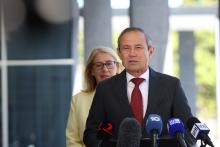
Mr Cook said he was eager to keep working through the Banjima peoples’ concerns while his government was getting sued.
“I would prefer a negotiated outcome, but I absolutely and fundamentally respect their right to seek justice for what they believe are health impacts in relation to their population, but also the damage that has been done to their country,” he said.
“I think we are all struck by the fact that Wittenoom is a very dreadful part of our history, and whatever role we can play to fix that, we will obviously be very happy to do so.
“I respect the processes and I respect the court action, and I will continue to work with the Banjima with regards to their concerns and issues
“Our legal team's job is to defend the state's legal position.”
Mr Cook said the case would be complex, noting longstanding questions about who was legally liable for the tailings.
That conversation has revolved around the state government as regulator, CSR which produced almost all of the tailings, and Hancock Prospecting and Wright Prospecting which started the industry and bought the mines back after CSR left.
Some $70b in mining royalties have come from the Pilbara in the past decade, much of which has come from Banjima country.
BNTAC deputy chairwoman Johnell Parker said Banjima people had pleaded for support for too long.
“I am the fifth or sixth generation standing here asking on behalf of my people, my elders that have passed, who have contracted this disease,” she said.
“I have lost loved ones to this disease through no fault of their own, so we want to be able to do something in this generation.
“Out of sight, out of mind is no longer good enough for us.”
The $1.5b figure is the latest estimate on how much remediation of Wittenoom could cost.
That figure would represent more than half of the state government’s forecast $2.5b surplus for the 2026-27 financial year and would likely have to be factored in as a potential risk in budget forecasts while the case was underway – a process which could take years.
The last estimate of $153m was provided in 2013.
The case could also set a legal precedent for the clean-up of more than 50,000 abandoned mine sites littering Australia.
That could prove especially problematic for Western Australia, where old goldmining shafts are scattered far across the outback.
Mr Gordon said the state’s infrastructure priorities could not be prioritised ahead of the health of its people.
“Whilst the Western Australian government may have really good projects that it wants to prioritise; roads and football stadiums, nothing is more important and nothing is a greater priority for the Western Australian government than – in the immortal words of Elvis Presley – to clean up your own backyard, because this is a huge, growing, lethal, toxic waste dump,” he said.
“We seek to say to the government, you may find it hard, you might find it complex, and you may find it expensive, but none of that derogates from the responsibility that you have to your own people for their health and their safety.
“But the time for deferral of this, the time for putting it off to another generation, whilst more and more young Banjima people get exposed to the most toxic form of asbestos in the world, that time is over.”
Mr Gordon said he was still prepared to meet with the government to resolve the matter outside of court.