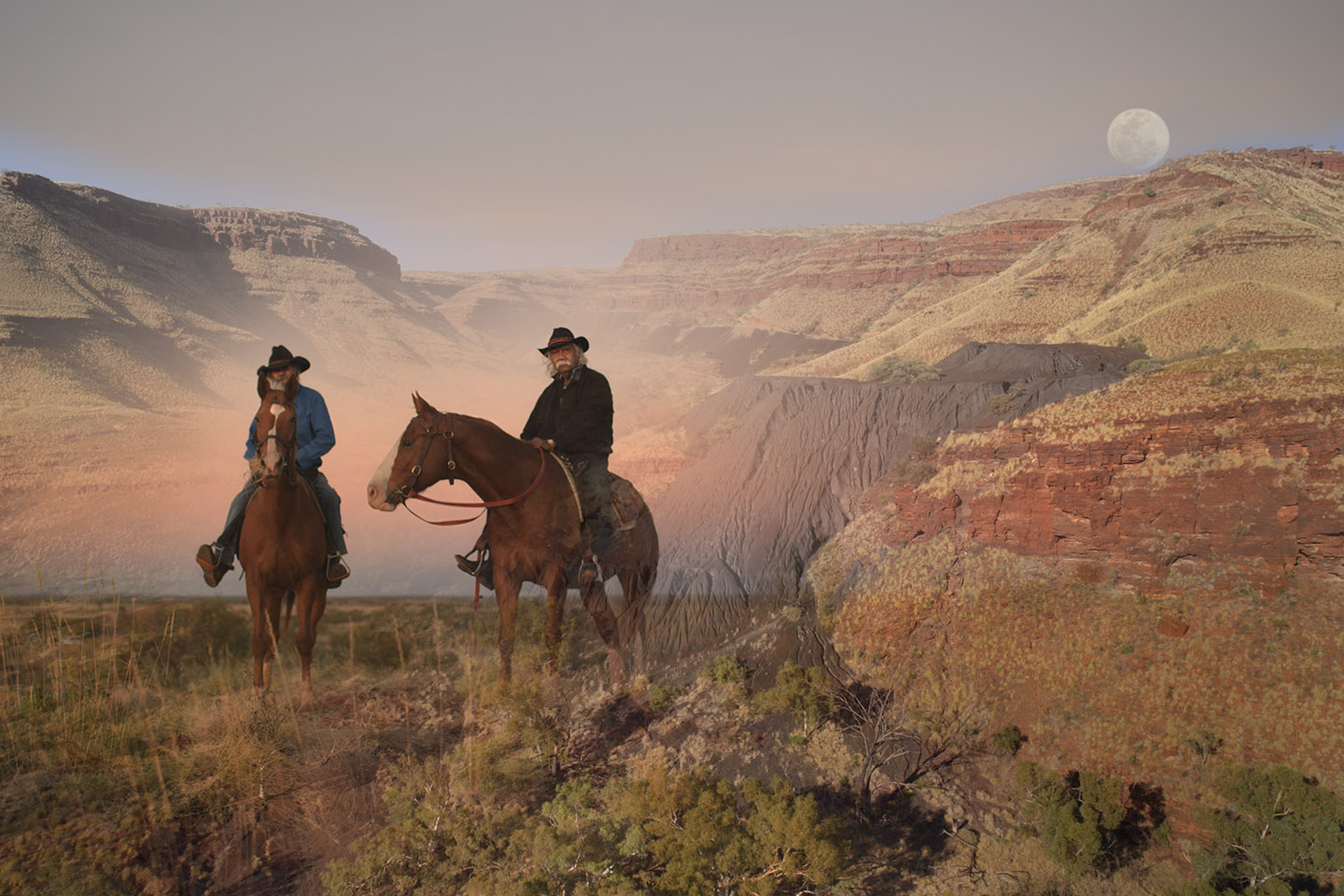
IT is a balmy October evening in the shadow of Jarndunmunha, the rocky behemoth that towers over the Pilbara mining town of Tom Price.
The arrival of darkness provides reprieve from the sticky heat of muthangga, the build-up to the wet season.
The respectful silence that sits over the town’s drive-in theatre – one of the last in the state – is pierced by the unmistakable voice of a loved and lost community champion.
For one hour, those gathered watch late Banjima elder Maitland Parker on the big screen in Yurlu | Country, as he delivers an emotive call to arms to rid his country of its toxic wasteland.
It is a story that hits close to home for Banjima traditional owner Johnell Parker, Mr Parker’s niece, who grew up swimming in Wittenoom’s gorges.
“You didn’t really associate sickness with Wittenoom when you were going in there as kids,” Ms Parker told Business News.
“Me and my brothers and sisters grew up in Karijini National Park when our dad was a park ranger with Maitland before we moved into Tom Price, and we still have a lot to do with the park.
“Something that needs to come through this film is the plight for the next generation, because our kids still go out to country, they still connect with country.
“The risk is still there, and it is an unknown risk that we take.”
Mr Parker died in March 2024 after a seven-year battle with mesothelioma, which he contracted from Wittenoom’s toxic tailings.
He achieved a lot in his life but never got to see his country healed of its biggest scar.
Mr Parker’s dying wish was to clean-up Wittenoom.
Banjima Native Title Aboriginal Corporation has set about a mission to achieve this.
The group is thrusting Wittenoom back into the public consciousness via the movie and an online campaign.
BNTAC is also taking its fight to the courtroom, having engaged Gordon Legal to represent them.
Senior partner Peter Gordon has been involved in Wittenoom’s legal legacy for decades, having negotiated compensation for victims in 1989.
Traditional owners are seeking remediation and compensation through mediation or, failing that, litigation.
The pursuit of those ends won’t be easy, however, with those who enabled the mining unable to agree: who is responsible for the tailings; who should foot the bill to clean it up; and is a cleanup possible?
After 60 years, the Banjima people’s patience has finally worn out.
Follow the fibre
The story of how we got to this point is bookended by two legendary mining pioneers on one end, and the dying wish of a trailblazing Banjima elder on the other.
The fathers of asbestos mining in the Hamersley ranges are Lang Hancock and Peter Wright; names that need no introduction in Western Australia.
The business partners started carting asbestos out of Wittenoom Gorge in 1938 and continued this cottage business until 1943, when they sold a majority stake in the project to Colonial Sugar Refining Company.
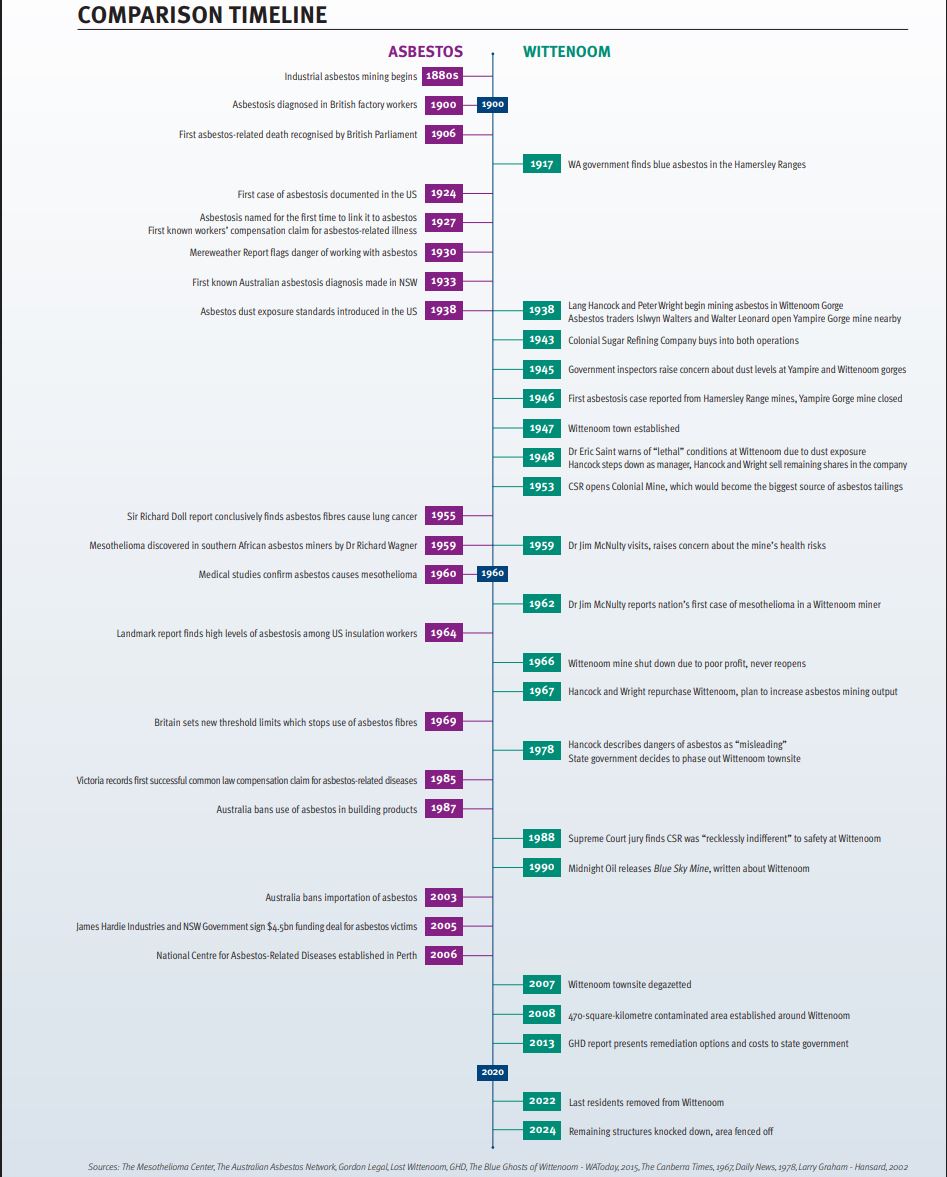
CSR bought the remaining stake in 1948 and scaled the operation up, opening the Colonial asbestos mine, which ran until 1966.
That mine would support the establishment of the Wittenoom township and was responsible for most of the deaths and tailings associated with this tragic story.
CSR’s practices at the mine were widely condemned at the time and in the decades since.
The town emptied out after the mine closed in 1966, despite efforts from Messrs Hancock and Wright to revive the industry and use it as a base for a fledgling iron ore sector.
The final residents were forced out by the state government in 2022, and remaining buildings were demolished.
But the tailings have always been an occupational hazard for workers traversing the area, and for tourists drawn by the curiosity of the Wittenoom story.
Duty-bound to look after country and keep their songlines alive, the Banjima were the worst affected.
Mr Parker was emblematic of this. He was a park ranger – the first Indigenous head ranger at Karijini, no less – and came into contact with the tailings through this work.
He was diagnosed with mesothelioma in 2016.
For most, that’s a death sentence within a year.
But Mr Parker lived for seven more years: time he dedicated to pressing the case for a cleanup of his country.
Banjima people have worked with government and industry stakeholders for more than two decades to find a solution to Wittenoom.
By late 2023, as Mr Parker’s health worsened, the BNTAC board voted to force the state government’s hand.
“They have buried the buildings so it is a bit out of sight out of mind, but the tailings are still there,” Ms Parker said.
“There is wind, there is rain, there is water. Those elements we cannot control.
“We need to bring this to light to say, ‘Hey, it has been 60 years; someone has to ask the questions as to who cleans it’.”
To further their case and raise awareness, Mr Parker’s daughters, Ms Parker and fellow BNTAC directors lobbied on a global scale.
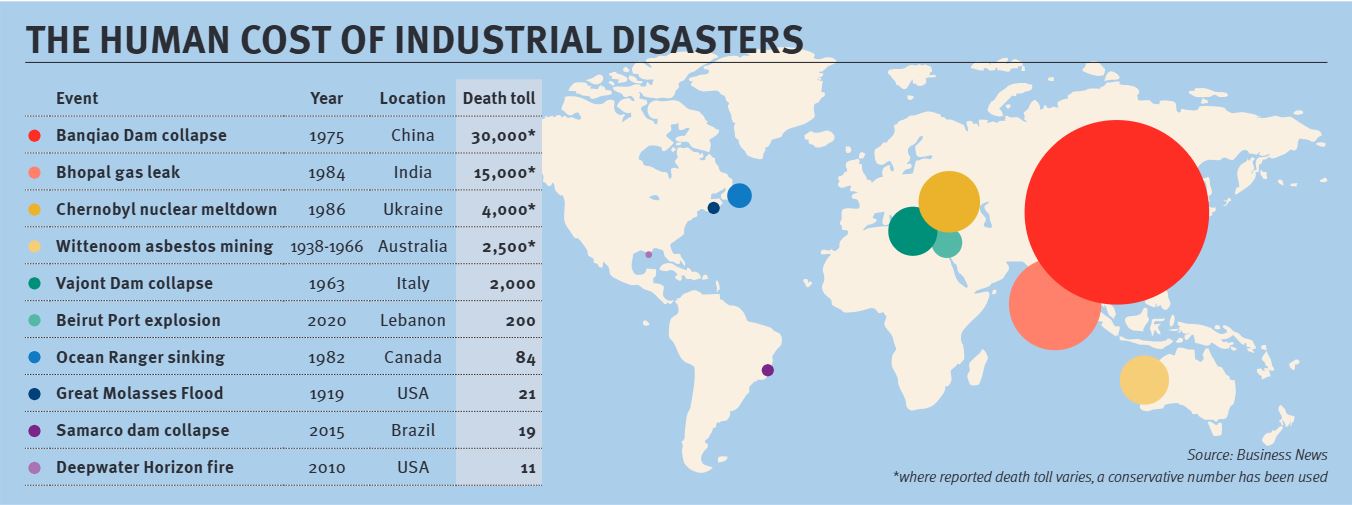
How Wittenoom compares to other industrial disasters.
They saw the Chernobyl disaster as an obvious parallel to help the world understand the scale of the tragedy.
“While toxic sites around the world like Chernobyl or Fukushima have been contained, the Wittenoom site has not been capped or controlled,” BNTAC chief executive Ed Armstrong said.
“It is arguably the largest uncontained contaminated site in the world.”
As BNTAC built the legal case behind the scenes, the publicity machine gathered a head of steam.
News of a one-hour documentary following Mr Parker’s final years emerged in mid-2024.
That film – Yurlu | Country – took to the awards circuit and private screenings in mid-2025 and will be released nationwide this month.
At the Tom Price screening last month, BNTAC revealed it had given the state government two choices, and a one-month deadline to make it: enter mediation with BNTAC to figure out how to remediate Wittenoom or face the Banjima people in court.
That deadline has passed.
The Banjima people are patient, although that patience is unlikely to last.
BNTAC wants to move while the issue is in the limelight.
A state government spokesperson said the matter was being reviewed, and that recent discussions with BNTAC had been productive.
“This is a complex matter that will require time to consider,” they said.
And that is where we are today.
Responsibility
The state government, CSR Limited, Shire of Ashburton, Hancock Prospecting and Wright Prospecting are the names that arise most often in discussions about who should pay.
Hancock Prospecting is supportive of Wittenoom’s remediation but argued it has no legal or operational link to the tailings.
“The small mine operated by Mr Hancock and Mr Wright was in a more remote area far from the town and public access,” a Hancock Prospecting spokesperson said.
“Importantly, Hancock did not mine the asbestos that created the tailings site near CSR’s former mine and processing plant. Hancock and Wright had no equity in CSR’s expanded operations.
“The unrehabilitated tailings in and around Wittenoom are not connected to Hancock’s earlier activities. They are the result of actions by other organisations, including the local shire.”
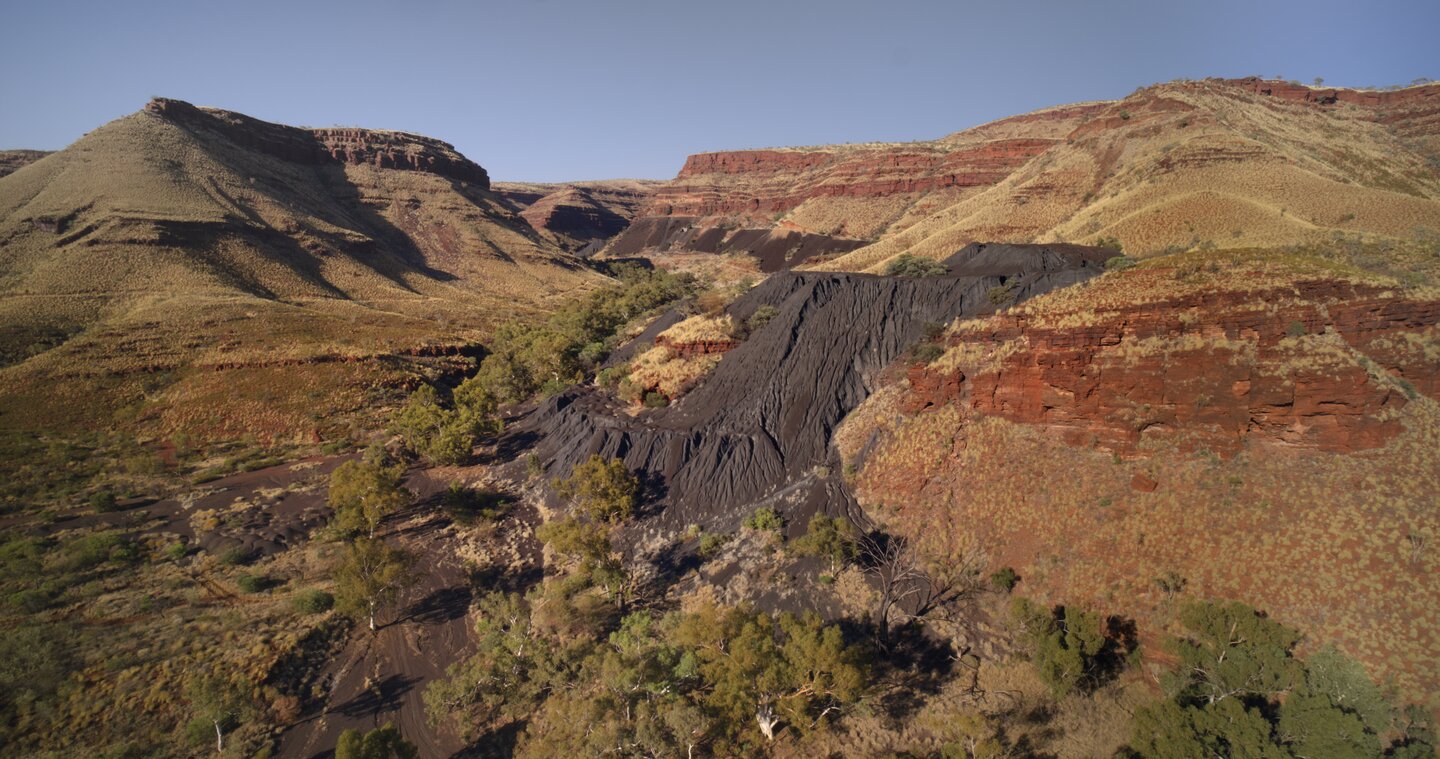
Asbestos tailings in Wittenoom Gorge. Photo: Illuminate Films.
The spokesperson said primary responsibility to remediate Wittenoom rested with CSR.
“Total production under Hancock and Wright’s control is estimated at just 50 tonnes, a tiny fraction of CSR’s total Wittenoom output,” the Hancock spokesperson said.
“CSR, which owned and managed the large Wittenoom mine over the long term, extracted around 161,000 tonnes of asbestos between 1943 and 1966.”
A Wright Prospecting spokesperson said the company had not been involved in asbestos mining at Wittenoom since 1948.
“The company did assist with the management and funding of a clean up of the Wittenoom townsite in 2003 to the satisfaction of the WA government,” the spokesperson said.
A complicating element is the fact that Messrs Hancock and Wright repurchased the leases from CSR in 1967.
They did not create the mess, but they were the last owners of it.
The case for taxpayers to foot the bill hinges on the fact government agencies allowed the mines to operate, used asbestos tailings in public works in the area, and inherited the mess when Hancock and Wright’s leases were extinguished in 1979.
Most fingers in the debate are pointed at CSR, which carried out the bulk of the mining and produced the toxic tailings.
It also used tailings as a building material through the Wittenoom townsite.
CSR Limited did not respond to requests for comment, while the state government declined to nominate any specific party as being responsible.
Can it be done?
In 2013, the state government-led Wittenoom Steering Committee agreed encapsulation would be the best way to remediate the tailings piles.
That would involve placing the tailings inside excavations in the gorge walls and capping it.
Engineering and professional services company GHD put a $153 million price tag on the work (about $200 million in today’s money) and suggested doing so would take eight years.
In 2015, GHD advised the committee it had found two sites in Wittenoom Gorge that could accommodate such a project.
In a presentation to a national conference 2019, The Department of Planning, Lands and Heritage noted cost was a sticking point for remediation efforts.
Building armoured levees over the tailings was raised as another remediation option in that presentation.
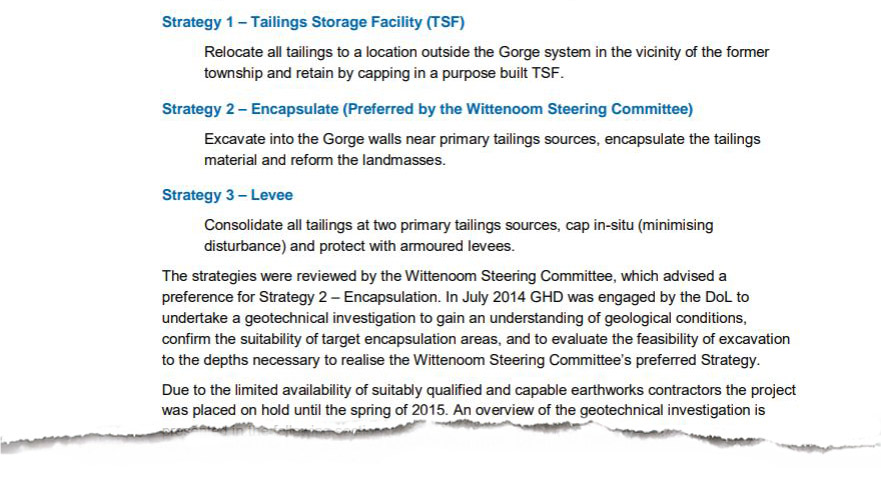
Excerpt from the 2015 GHD report showing preferred remediation method for Wittenoom.
BNTAC’s Mr Armstrong said removing or containing the tailings piles would be the main objective of litigation.
“We know the clean-up of country will be huge but at the bare minimum, the WA government can stop the spread of the contamination,” he said.
“The WA government has already costed out the options to stabilise the more than three million tonnes of dumped asbestos mining waste at Wittenoom.
“It was warned that if it doesn’t do that, the asbestos waste will spread for hundreds of years.
“This is starting to happen with asbestos detected outside the contamination zone, [which] is unacceptable not just to Banjima, but surely to all Australians.”
Stakeholders involved in Wittenoom expect the true remediation price to be north of $600 million.
It is a big number, but the figures in the accounts of those in Wittenoom’s orbit are bigger.
For example, the state government received $6.3 billion in iron ore royalty payments in 2024-25, with about 40 per cent of that from Banjima country.
Meanwhile, CSR Limited was bought by private French construction firm Saint-Gobain for $4.3 billion last year.
And the heirs of Messrs Hancock and Wright occupy four of the top 10 spots in the Rich 100 (released by Business News in November).
The state government declined to answer what its latest advice about cost and preferred remediation methods were.
Hearts and minds
And that takes us back to the film, Yurlu | Country.
Filmmaker Yaara Bou Melham set out to make a documentary about Australia’s 60,000-plus unrehabilitated mine sites.
Ultimately, she was captivated by the singular story of Maitland Parker and Wittenoom.
“I came across Maitland’s story and thought it was the most insane story I’d never heard of here in our backyard,” Ms Melham told Business News.
“Speaking to a lot of people on the east coast of Australia, [and] even in Perth, people didn’t know about Wittenoom.
“I don’t blame people for not knowing about it, because whether it was deliberate or not, there has been this kind of systematic attempt to erase Wittenoom.”
The film delves into the weight on Mr Parker’s shoulders, both in carrying on culture as a senior lawman and raising his voice about Wittenoom as a man bearing the scars of its toxic legacy.

Yurlu | Country screening in Tom Price. Photo: Tom Zaunmayr.
Over the course of an hour during the screening, the audience watches Mr Parker live his life and lobby for change as his body deteriorates from the effects of mesothelioma.
Ms Melham said she wanted to capture Mr Parker’s complexity.
“Maitland was a real gentleman, and he had a great sense of humour,” she said.
“But he also felt the weight of the responsibility of Wittenoom quite heavily.
“At its core, this is a story about a man who loved his home and was willing to fight for it. What is more Australian than that?
“His story provides this morally undeniable argument as to why this site should be cleaned up.”
Ms Melham’s team was granted access to some extremely intimate moments of Mr Parker’s final years.
Death and grieving is usually a private affair for traditional owners, with names, faces and voices no longer used after death due to cultural sensitivities.
But Mr Parker knew his story was crucial for his people.
“We were in the room when he received a devastating diagnosis from his doctor,” Ms Melham said.
“We were in the room by his side in hospital when he was in palliative care, when he asked us to record his last messages, his last wishes.
“These were all really intimate and confronting moments.
“He made this decision with his family that he would give us the film, this access and also permissions to use his voice, name and image after his passing, because he believed his story and his name had power.
“He wanted Banjima people to be able to use it to advocate for a clean-up.”
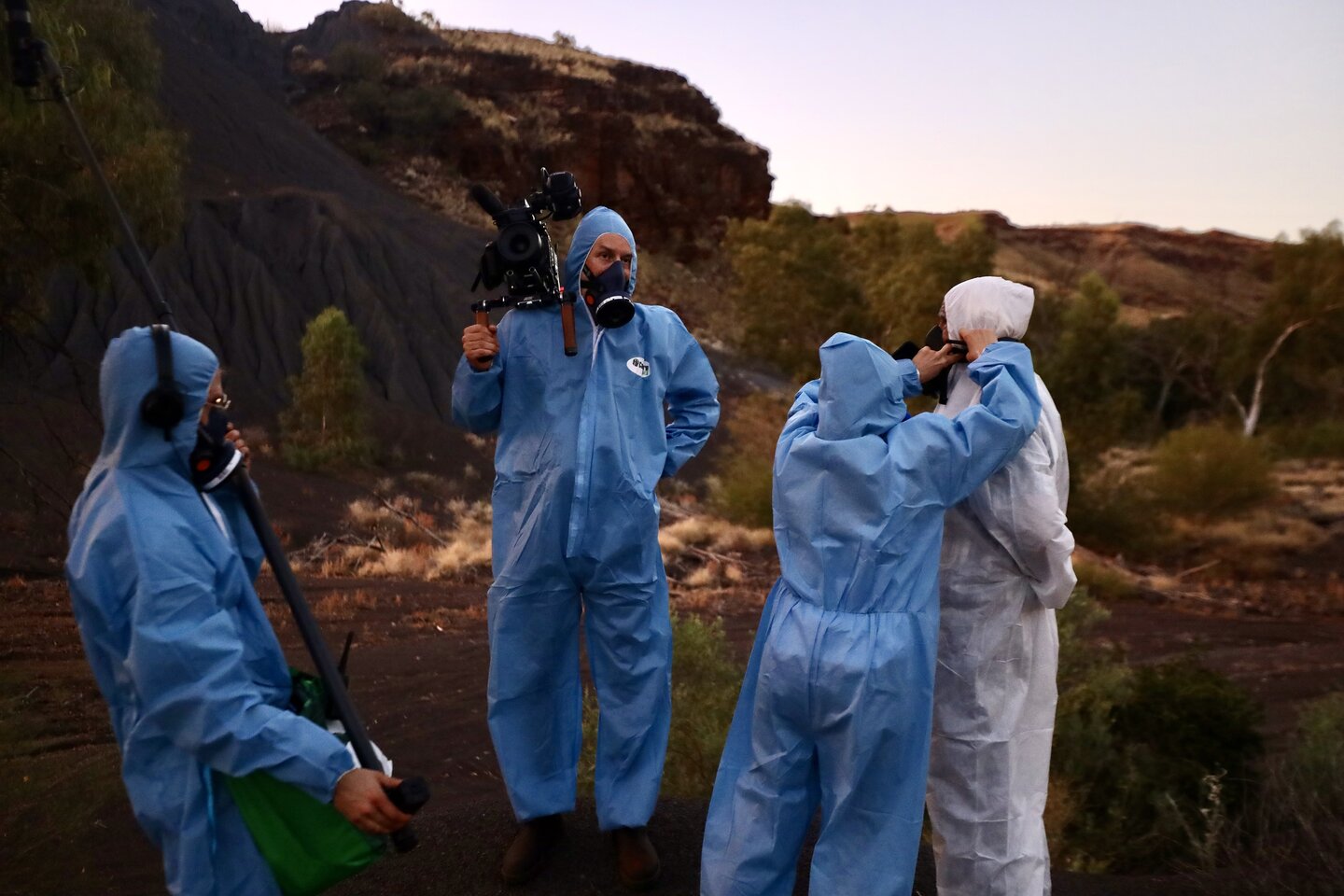
Late Banjima elder Maitland Parker and the film crew in Wittenoom Gorge. Photo: Illuminate Films
The film production team used a co-creation model, which gave the Parker family agency over the creative process; an endeavour Ms Melham said ultimately made for a tale full of cultural richness.
Ms Parker said her uncle was brave to let his story become a public legacy.
“A lot of our elders and our people didn’t have the opportunity to tell their story, because it’s something that, as Indigenous people, [we] don’t really talk about,” she said.
“Him being brave and humble and gracious in showing how the effects of this disease has impacted him and his family and his community is a testament to him.
“To follow this film has been a very humbling experience.”
Ultimately, the movie’s purpose is to convey the life and legacy of an important man, with an important story to tell.
“Maitland always said to us that if you care for country, country will care for you,” Ms Melham said.
“We haven’t cared for Wittenoom. Well, Wittenoom is now not caring for people.”
The state government declined to answer whether any ministers would attend the film’s opening at Luna Leederville on Sunday, November 9.