The Kimberley is entering a decisive phase in its economic evolution. Investment capital is circling Northern Australia across energy, infrastructure, tourism, logistics and defence. The question is no longer whether development will occur, it will. The real question is far more consequential: who will own it, who will benefit from it, and who will still be standing, strong and independent, in 20 years’ time.
At the centre of that conversation sits the Indigenous business sector, a space that is no longer peripheral, but increasingly foundational to the region’s economic trajectory. And within that landscape, Djarindjin Aboriginal Corporation (DAC) has emerged as one of the most instructive and disruptive models of what Indigenous economic leadership looks like when it is driven by ownership, discipline and long-term thinking.
Moving Beyond “Participation”
For too long, Indigenous economic engagement in Australia has been framed as a question of participation, how to include Aboriginal organisations within a broader system designed elsewhere. This framing has often reduced Indigenous business to a policy instrument: a lever for social outcomes, rather than a driver of economic value.
The Kimberley is now pushing beyond that paradigm. Indigenous businesses are asserting themselves not as stakeholders to be consulted, but as economic actors, owners, operators and decision-makers embedded in supply chains and asset bases.
This distinction matters. Participation can be temporary. Ownership endures. Participation can be symbolic. Ownership compounds. And as the region transitions into a multi-sector investment corridor, from renewables to critical minerals, this shift will determine whether wealth continues to flow through the Kimberley, or stays within it.
The Role of Forums, and Their Limits
Recent forums bringing together government, corporates and Indigenous enterprises reflect a maturing conversation. At their best, these gatherings create clarity around real opportunities, establish accountability for those with capital and procurement power, and build pathways to partnership and execution.
But the Kimberley has seen enough “talkfests” to know that dialogue alone does not change economic outcomes. Without structural change, real procurement, joint ventures, equity stakes and capability investment, forums risk becoming performative.
The emerging expectation is sharper: transparency about what is genuinely on the table, honesty about capability gaps, and a commitment to competitive inclusion rather than symbolic engagement.
Djarindjin: A Different Operating System
This is where Djarindjin stands apart. Rather than waiting to be included, DAC has built an economic model grounded in self-determination, asset ownership and system-wide thinking.
Our trajectory is striking. From a small employment base just a few years ago, the organisation now supports a workforce exceeding 100 people, with approximately 90 per cent of revenue generated through our own enterprises rather than grants.
More importantly, DAC has moved beyond project-based thinking. We have built what can only be described as an operating system: governance frameworks anchored in cultural authority, a 20-year strategic horizon, and a portfolio approach spanning aviation, logistics, infrastructure, land-based enterprises and human capability.
The result is not just business success; it is institutional strength. Systems that compound over time rather than reset with each funding cycle.
Proving Capability at Scale
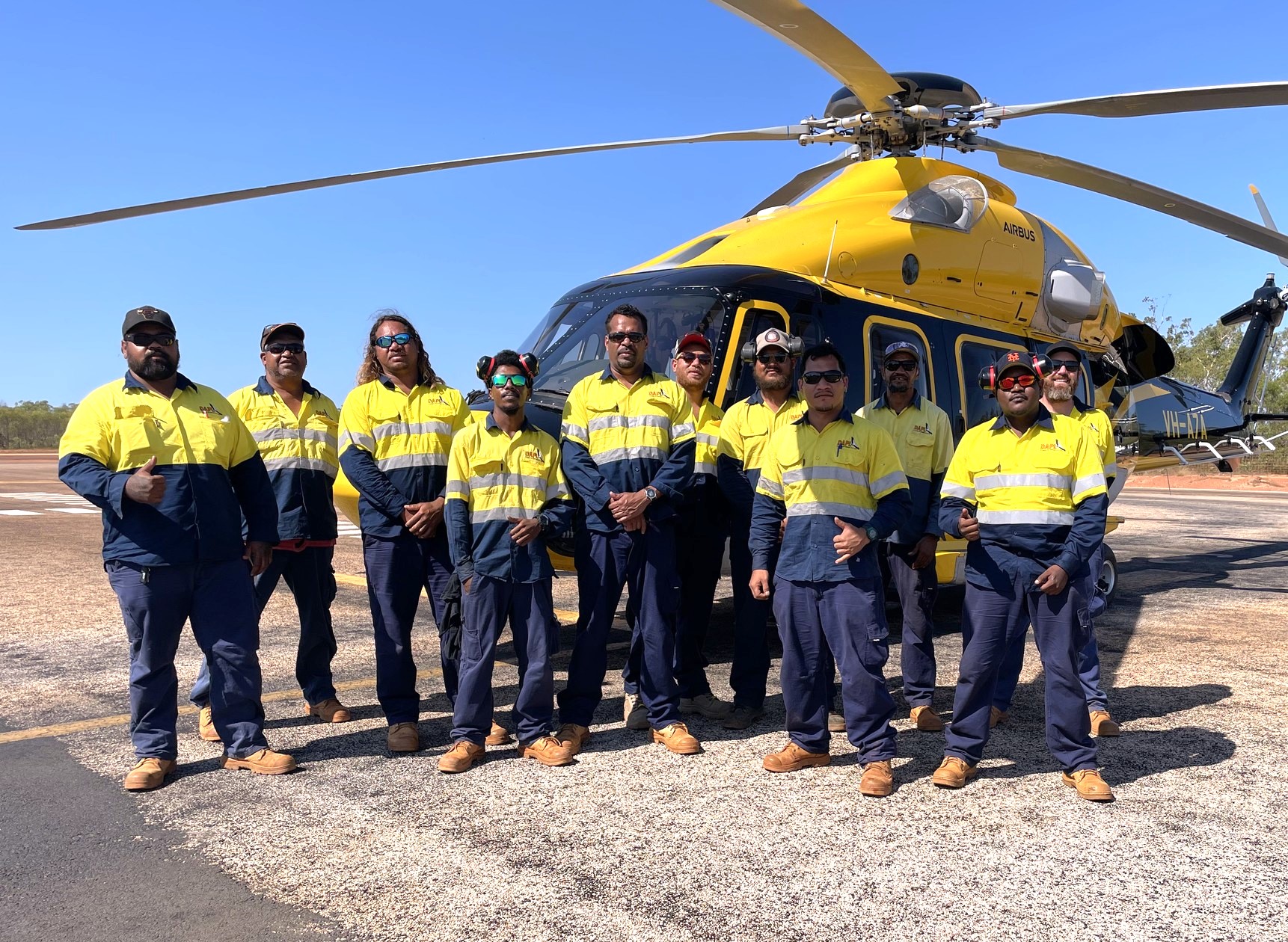
Perhaps the most compelling demonstration of this model is Djarindjin’s aviation operations. As the owner and operator of Australia’s only Indigenous-run commercial airport, we have positioned ourselves within a highly technical, high-trust industry traditionally dominated by major operators.
This is not symbolic participation; it is competitive execution. It challenges lingering assumptions about the limits of Indigenous enterprise and demonstrates that capability, when properly developed and supported, is not constrained by geography or history.
In doing so, Djarindjin is reshaping market perceptions. We are not simply advocating for inclusion; we are proving our case through performance.
A New Standard for Partnership
Crucially, DAC’s model reframes partnership. We don’t reject collaboration, far from it. But we have set clear conditions: partnerships must lead to ownership, capability transfer and long-term economic control.
This standard is increasingly influencing expectations across the Kimberley. Indigenous organisations are less willing to engage in arrangements that deliver short-term activity without structural gain. The focus has shifted to questions that go to the heart of economic power:
- Who owns the asset?
- Who controls the contracts?
- Who builds the workforce?
- Who benefits over decades, not just project cycles?
These are not abstract considerations; they are the determinants of intergenerational wealth.
The Kimberley’s Defining Moment
The convergence of capital, policy attention and Indigenous capability places the Kimberley at a genuine inflection point. Done differently, this wave of development could embed Indigenous businesses at the core of regional supply chains, creating enduring prosperity rooted in Country. Done poorly, it risks repeating a familiar pattern of extraction without local legacy.
Djarindjin offers a blueprint for avoiding that outcome. Our approach, building our own table, our own infrastructure, and now our own “bridge” between capital, capability and governance, demonstrates what is possible when Indigenous enterprise operates on its own terms.
For investors, governments and corporates, the implication is clear. The future of the Kimberley economy will not be defined by how effectively Indigenous businesses are consulted, but by how seriously they are engaged as partners in ownership and execution.
The shift is already underway. The only remaining question is who is ready to meet it? Are you?


 By Djarindjin Aboriginal Corporation