Djarindjin Aboriginal Corporation (DAC) has reached an important early milestone in its long‑term housing ambitions, with approvals secured for 12 new dwellings as part of a broader 20‑year plan to deliver 70 community‑owned homes by 2045.
While the approvals mark a significant development moment, DAC leaders emphasise the project is the result of seven years of strategic groundwork, governance reform and economic development, and just one early step in a much larger journey.
Seven years ago, the community developed its first formal strategic plan, a turning point that brought clarity to long‑standing challenges and set a disciplined direction for growth. At the heart of that initial plan was a simple but urgent priority, the need for more housing.
Since then, DAC has evolved into a diversified Aboriginal corporation overseeing multiple businesses, community service programs and infrastructure initiatives across the region. That growth culminated in 2025 with the commencement of a formal 20‑year strategy, which sets out a staged pathway toward economic independence, asset ownership and community wellbeing. Housing forms a core pillar of that long‑term plan.
Under the 20‑year strategy, and their cornerstone Binimal Aambooriny Strong People, Healthy Living strategy, DAC aims to build 70 homes by 2045, all of which will be owned, operated and maintained by the community. The housing program is designed not only to address overcrowding and poor living conditions, but also to establish a locally controlled housing system capable of generating employment, supporting skills development and protecting assets over generations.
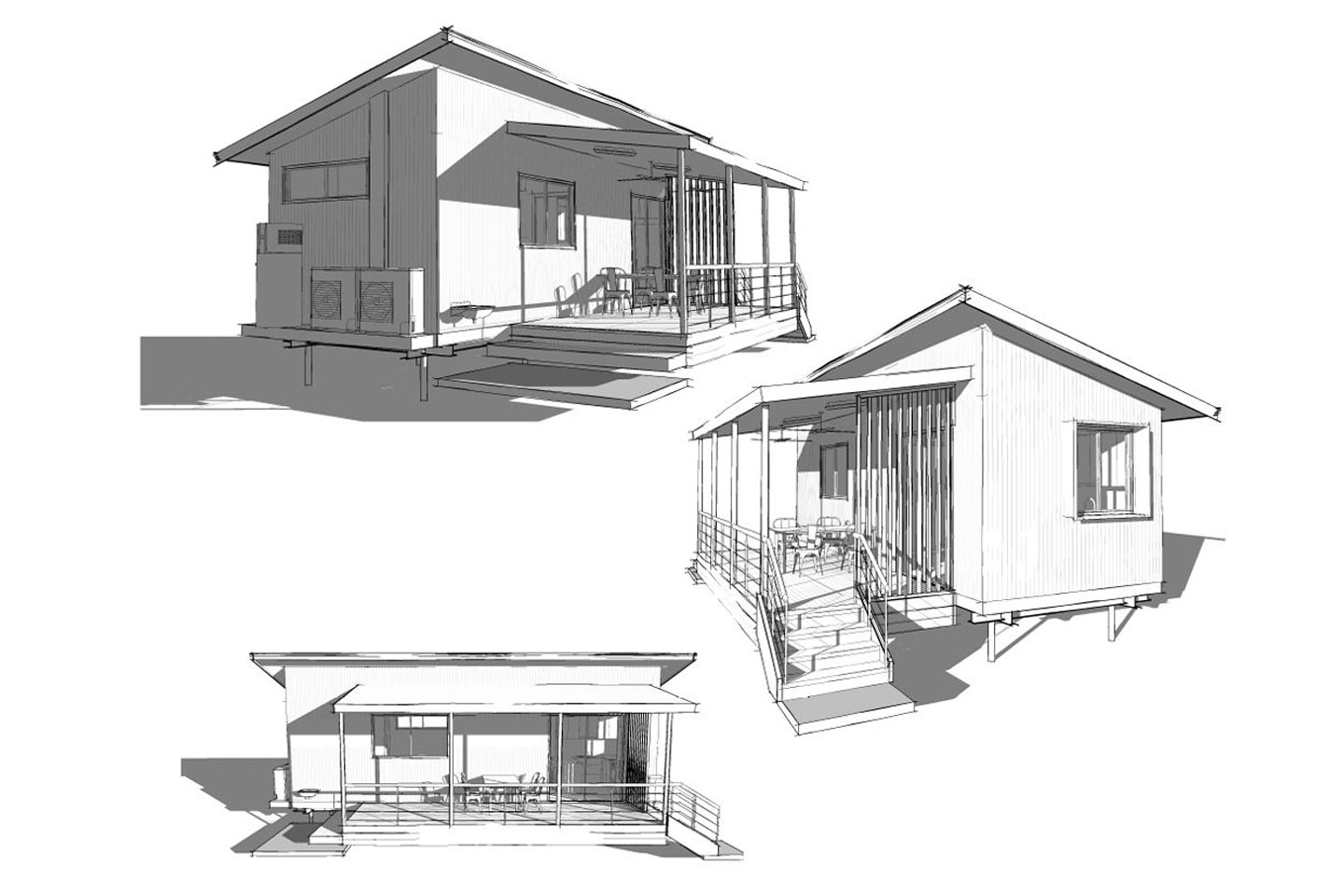
The newly approved 12 dwellings represent the first construction phase toward that 2045 target. Of those, four homes have now been contracted for delivery during the 2026 calendar year, with construction to be undertaken by Kimberley Manufacturing Pty Ltd, an Aboriginal‑owned construction company based in Broome. Kimberley Manufacturing specialises in modular housing designed for remote and regional environments, allowing homes to be built efficiently while supporting regional supply chains and Aboriginal employment. These four homes are specifically for Aboriginal Workers for DAC or related entities as single bedroom dwellings.
No new housing has been provided by the State in Djarindjin for over a decade, and DAC states “We know Bardi and Jawi people want to return to country, but housing is the major hurdle, we also know that locals we have tried to employ have not been able to secure appropriate housing so therefore they have left the community or turned down the job opportunities”. DAC recognises that if they wait for housing to be provided, it will never come, so they have taken the step to lead by example and do what they can to provide for their own community.
Unlike many housing programs in remote Australia, the DAC housing initiative known as “GORNGORN-MA Djarindjin Developments Pty Ltd” is community‑driven from inception to delivery. Planning, approvals, financing and asset management sit within DAC’s local governance framework shaped by long‑term strategic discipline rather than short‑term funding cycles. The project has progressed with support from the WA Housing Authority through the Northwest Aboriginal Housing Fund, alongside sustained advocacy from Kimberley MLA Divina D’Anna, and planning cooperation from the Shire of Broome, which helped navigate approvals in a timely manner. DAC sees the provision of funding by the state as a resource, not a hand out, and demonstrates this by having skin in the game.
Industry stakeholders say the project reflects a shift toward investment‑ready community development, where Aboriginal corporations take responsibility for both risk and return. “This is not about announcements,” the organisation said. “It’s about houses on the ground, owned by our community, managed by us, as part of a long‑term economic strategy.”
While all 12 dwellings have received approval, funding is currently in place for only the first four homes. The remaining eight are shovel‑ready, pending additional investment. Consistent with its broader economic philosophy, DAC has committed its own resources to the project, reinforcing a principle that community leadership must include financial participation and accountability.
However, leaders acknowledge that government and co‑investment remain critical to achieving scale. Programs such as the Regional Housing Support Fund, supported by Housing Minister John Carey MLA and Regional Development Minister Stephen Dawson, are seen as vital mechanisms in bridging the gap between approval and delivery for community‑led projects.
For DAC, housing is not viewed solely as a social service. It is regarded as economic infrastructure, essential to workforce participation, enterprise development and long‑term cost reduction across health, education and social services.
Overcrowding has long constrained economic opportunity in many Aboriginal communities. By contrast, secure, locally managed housing enables stability, productivity and intergenerational asset growth. The housing program also complements DAC’s broader enterprise portfolio across aviation, tourism and development, helping to anchor workforce retention and local capability.
While the delivery of four homes may appear modest in isolation, Djarindjin leaders stress that the scale must be understood in context.
“This is one small step toward a clearly defined goal, 70 houses by 2045,” the organisation said. “What matters is that the system, the governance and the ownership model are now in motion.”
As construction begins in 2026, the first homes will stand as tangible evidence of a long‑term strategy moving from paper to practice, and of a community determined to build its own future, one carefully planned step at a time.


 By Djarindjin Aboriginal Corporation