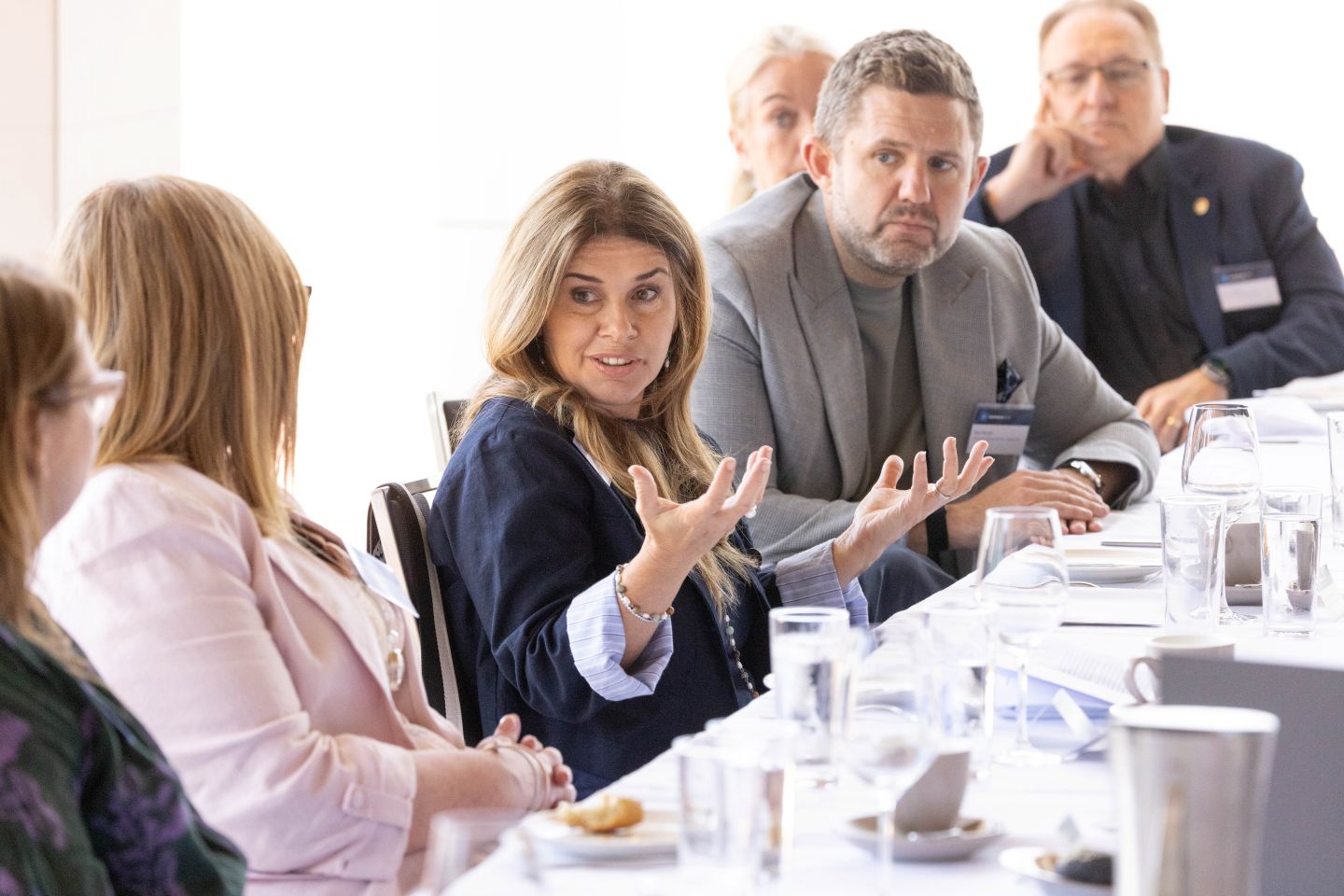
Behind closed doors at last week’s Hearts & Minds CEO Lunch, hosted by Business News, some of Western Australia’s most senior not-for-profit leaders delivered a message that should command the attention of government, business and investors alike.
Western Australia may boast the highest wealth per capita in the nation, but the community services sector , the network that shields families, children and vulnerable people from crisis is carrying an increasing share of the state’s social responsibility. Unless the widening gap between what Western Australians need and what government funding delivers is narrowed, the consequences will not stop at the social level.
CEOs or senior executives from Foodbank WA, Perth Children's Hospital Foundation, Minderoo Foundation, MND WA (Motor Neurone Disease Association of WA), Communicare, Anglicare, Kids Cancer Support Group, Women and Infants Research Foundation, Arthritis & Osteoporosis WA, genU (Activ Foundation) and others were clear about one reality too often misunderstood:
not-for-profit does not mean cost-free.
These organisations are businesses. They employ staff, pay rent, utilities, insurance, technology and compliance. They manage risk and operate under pressure like any commercial enterprise. The only difference is where the revenue goes back into protecting the community that sustains the state’s economic success.
As one CEO put it bluntly:
“Right now in WA, the number of people living in poverty could fill Optus Stadium seven times.”
Without these organisations absorbing that level of need, Western Australia’s standard of living would erode rapidly.
Also present was Hon Steve Martin, Shadow Minister for Transport, Ports and Communities, who described the concerns raised as “a frighteningly familiar conversation” one that is persistent, urgent and intensifying. Demand is rising. Investment is not and the gap between what Western Australians expect from their government and what they are receiving continues to grow.
The leaders were not asking for sympathy or a rescue package, they were asking for strategic investment and a national recognition of their role.
These organisations are not a safety net at the margins of the economy, they are core economic infrastructure.
They ensure families remain stable, children are supported, hardship is intercepted early, and medical research and disability services continue to advance, they preserve the social cohesion on which productivity and workforce participation depend.
Philanthropy was positioned as a critical counterpart to government. While public perception often reduces philanthropy to tax positioning, the sentiment in the room was unmistakable:
philanthropy is not charity , it is investment in the State’s long-term stability and economic resilience.
Many of the achievements Western Australians assume are government-funded from childhood mental health programs to medical breakthroughs would not exist without philanthropy stepping in where traditional funding has failed to keep pace.
This need for modernised investment is underscored by what lies ahead, Australia is entering a $5 trillion intergenerational wealth transfer over the next 20 years.
If even a small share of that transition is directed into strategic philanthropy, WA’s social infrastructure will not simply stabilise it will accelerate.
The conversation also pointed to innovation already in play, with Minderoo Foundation’s Pay What It Takes Initiative described as a funding model the sector believes should be more broadly adopted by government and donors. The model funds the true cost of service delivery not just program outputs allowing organisations to build sustainable capability rather than operate on minimal margins.
The CEOs left the Hearts & Minds lunch aligned around a single mission, to shift the national narrative from “helping those in need” to “strengthening the State.” Not to portray the sector as fragile, but to remind policymakers and business leaders that WA’s high standard of living is not automatic , it is actively protected every day by the organisations in that room.


 By Hearts and Minds