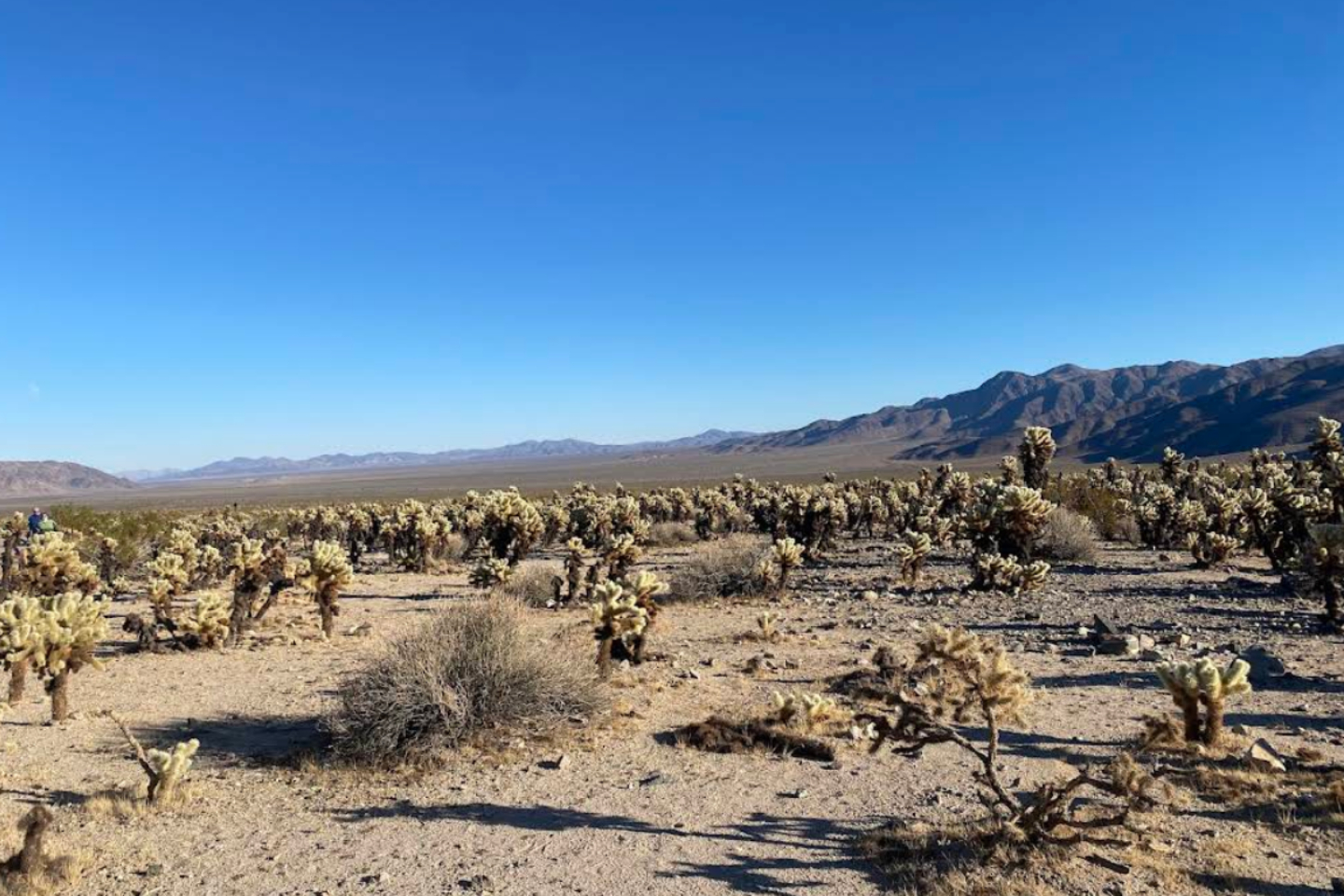
Dateline Resources has zeroed in on three high-priority targets at its district-scale Music Valley heavy rare earths project in California after processing data from a massive airborne magnetic and radiometric survey.
The company says the interpretation has successfully identified a series of structurally complex zones with the right ingredients for heavy rare earth element (HREE) concentration.
The detailed geophysical survey, flown in March, covered the entirety of the 20,520-acre project that Dateline consolidated earlier this year in a move to increase the project’s footprint by a massive 1800 per cent.
Interpretation of the new data has now lit up numerous structures across the project, with the company’s consultants highlighting a geological trifecta of features considered prospective for HREE mineralisation.
The freshly identified 'sweet spots' are primarily found within the favourable Pinto Gneiss host unit. They occur at the intersection of thorium-rich zones - a key indicator for HREE’s - local faulting and contacts with younger diorite intrusions.
Dateline says the results have allowed it to move from a broad-brush search across a huge land package to focusing on a handful of highly prospective target areas, showing precisely where the key ingredients for a discovery might come together.
With the targets now in hand, the company is wasting no time getting boots on the ground. The company’s geos are already on-site to ground-truth the geophysical anomalies and refine the targets ahead of sampling and drilling programs.
Dateline Resources managing director Stephen Baghdadi said: “Music Valley has always had the ingredients of a significant heavy rare earth district. What these surveys have done is show us where those ingredients come together.”
Music Valley sits in a well-endowed mining district just 110 kilometres south of the only significant rare earths producer in the United States, MP Materials’ massive Mountain Pass mine, which hosts a resource of 26.27 million metric tonnes grading a whopping 5.89 per cent total rare earth oxides.
Dateline has stitched together a commanding position across the Music Valley terrain where US Geological Survey geologists first flagged heavy rare earth mineralisation more than seven decades ago. Despite the historical smoke, the area has seen little in the way of modern exploration.
The strategic location is a recurring theme for Dateline. Its flagship Colosseum gold project sits just 10km north of the very same Mountain Pass operation.
A bankable feasibility study on Colosseum recently tabled some impressive numbers, projecting a pre-tax net present value of US$785 million (A$1.11 billion) and an internal rate of return of 49.5 per cent, based on a US$4200 (A$5940) per ounce gold price.
Notably, Colosseum is also considered prospective for HREE’s with the drill rods already spinning to test for the critical minerals. The company also owns the Argos strontium project in California, the largest known deposit in the US.
With the US government actively looking to establish secure domestic supply chains for critical minerals such as rare earths and reduce its reliance on foreign sources, in-country projects with genuine district-scale prospectivity are beginning to attract significant attention.
Dateline’s approach of building on historical work with modern exploration techniques appears to be paying early dividends.
Having staked a commanding land position over a region with serious geological pedigree, the company’s first high-tech survey has now pointed to where the treasures may lie.
With two major projects now being advanced in a certified critical minerals hotspot, Dateline looks to have plenty on the go in California.
Is your ASX-listed company doing something interesting? Contact: matt.birney@businessnews.com.au






 02 Oct 2026
 28 Sep 2026
 15 Jul 2026
 13 Jul 2026
 26 Jun 2026
 22 Jun 2026