Dalaroo Metals has moved a step closer to de-risking its Blue Lagoon critical minerals project in southern Greenland after confirming the discovery of a zircon-dominated heavy mineral system, just as Western governments are scrambling to secure alternative supply chains outside China.
Geochemical analysis results from surface and shallow auger sampling obtained during the company’s maiden 2025 field program have landed in Dalaroo’s inbox, and have confirmed a strong, consistent correlation between zirconium and hafnium - a textbook signature of zircon-hosted mineralisation.
The tight relationship suggests the heavy minerals are being naturally concentrated within lagoonal and shoreline sediments, pointing to a laterally continuous system that has already been upgraded by nature through mechanical processes.
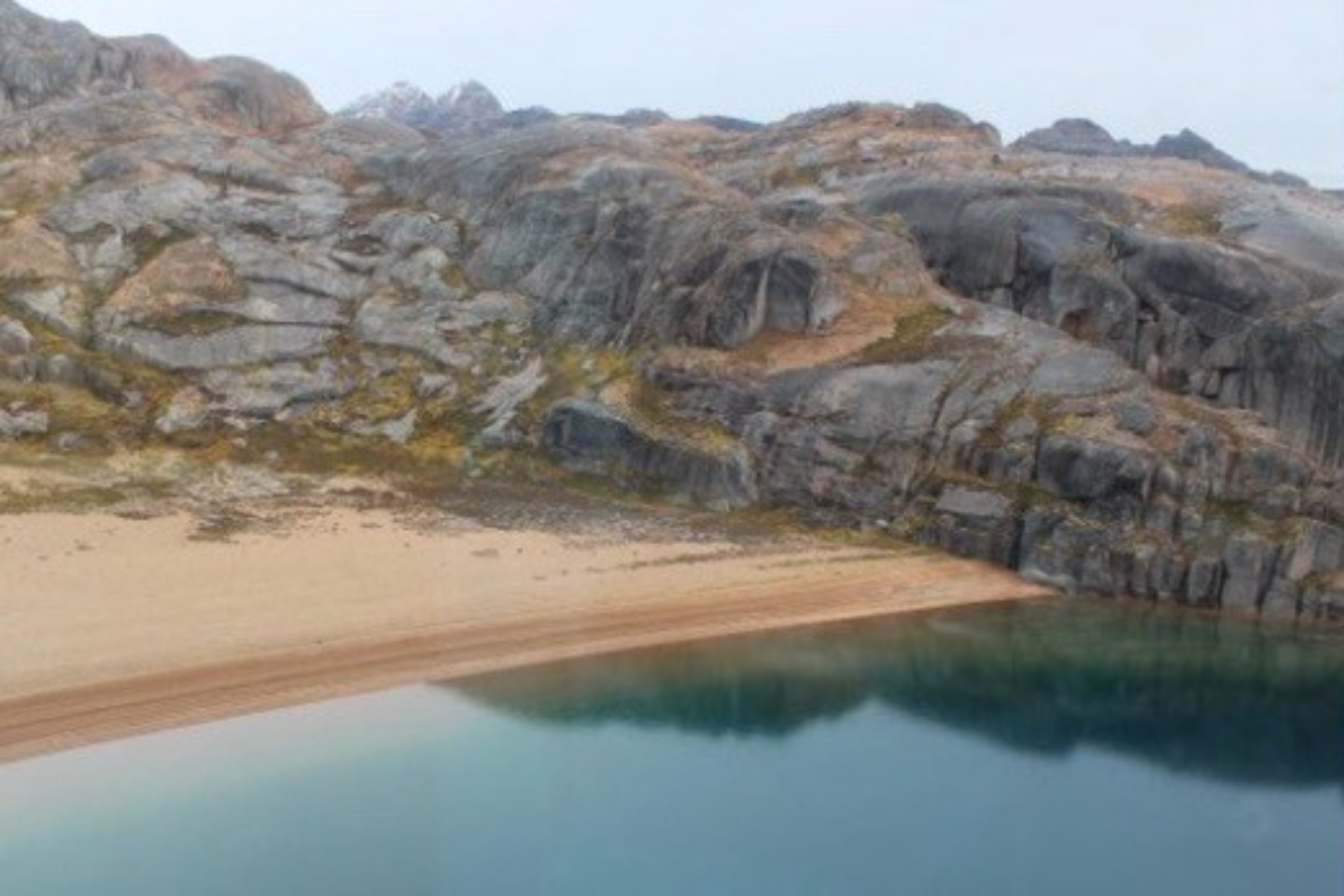
Dalaroo believes natural sedimentary and hydraulic processes have done much of the beneficiation work upfront. Wave action and shoreline sorting have concentrated dense, chemically resistant minerals into near-surface traps.
The strong zirconium–hafnium correlation also delivers a practical exploration advantage. The zirconium mineralisation is proving to be a practical pathfinder element, enabling handheld X-ray Fluorescence (XRF) surveys for rapid, real-time targeting in the field.
This geological simplicity could be the key to future development. Heavy mineral sands systems are typically shallow, flat-lying and amenable to straightforward gravity separation. These factors can lead to shorter, cheaper development timelines, coupled with reduced technical risk compared to many hard-rock critical minerals projects.
Notably, the zirconium–hafnium relationship shows up across multiple sample types and locations, supporting the company's view of a broad, sedimentary heavy mineral system rather than isolated or structurally controlled occurrences - a level of consistency that materially de-risks the project at an early stage.
Recent surface samples have thrown up 0.81 per cent total rare earth oxides (TREO), alongside consistently high-grade zirconium oxide reaching up to 4.42 per cent. The project has also returned substantial hafnium grades up to 99 parts per million (ppm) hafnium oxide.
The project was secured by Dalaroo Metals Limited just a month ago and its initial work — the first systematic exploration since the late 1970s — has outlined a 2.7km strike zone with standout critical mineral grades, pointing to a potential district-scale rare earth elements and zirconium discovery.
Zirconium and hafnium are both listed as critical minerals due to their roles in advanced manufacturing, aerospace, defence technologies and nuclear applications. Hafnium, in particular, is prized for its use in semiconductors, nuclear control rods and high-temperature alloys, and currently trades at a whopping AU$17,000 per kilogram. Zirconium, meanwhile, is essential in ceramics, refractories and nuclear fuel cladding.
Blue Lagoon also holds a promising rare earths inventory, dominated by the prized elements dysprosium and terbium - critical for the manufacturing of strong, permanent magnets used in electric vehicle motors, wind turbine generators, and other renewable technologies.
Crucially, uranium and thorium analyses have remained low and are well below Greenland’s mandated 100ppm threshold, smoothing the regulatory path to any future development.
Greenland has emerged as a focal point for Western critical minerals strategy, sitting within NATO territory and increasingly viewed as a stable, transparent jurisdiction capable of supplying zirconium, hafnium and rare earth elements into allied markets.
Dalaroo’s wholly owned Blue Lagoon project sits in the south-west corner of Greenland, well below the Arctic Circle and within the Gardar Alkaline Province, which is a globally recognised belt prospective for zirconium, niobium, hafnium and rare earth elements.
Dalaroo Metals chief executive officer John Morgan said: “These results represent an important step in systematically de-risking the Blue Lagoon project. Confirming zircon as the dominant host mineral provides confidence that heavy mineral concentrations are laterally continuous and potentially amenable to simple gravity processing methods. Heavy mineral systems globally are typically associated with shallow mining, low strip ratios and straightforward beneficiation flowsheets.”
Next up, Dalaroo plans to bring in specialist consultants to run detailed mineralogical, metallurgical and process characterisation test work. The program will include heavy mineral separation, automated mineralogical microanalysis (QEMSCAN) and gravity recovery testing. Expanded shoreline sampling, handheld XRF mapping and additional shallow drilling are also on the to-do list.
With critical minerals now front-and-centre in Western industrial and defence policy and Greenland firmly in the geopolitical spotlight, Dalaroo’s Blue Lagoon project appears to be shaping up as a strategically located, technically simple and potentially scalable source of minerals the world is increasingly desperate to secure.
Is your ASX-listed company doing something interesting? Contact: matt.birney@businessnews.com.au