A landmark decision after a 51-day trial with more than 4,000 documents only scratched the surface of the complex relationship between some of the state’s mining pioneers and their heirs.
It took Supreme Court of Western Australia Justice Jennifer Smith more than two years to deliver her judgment, after a three-month civil trial in 2023.
In her remarks in court, Justice Smith said the parties won half but lost the other half of their claims.
The 1,655-page judgment could not capture the decades of tension among the parties that could be traced back to gentlemen agreements between three mining pioneers.
READ MORE: Supreme Court delivers landmark judgment
Their playing field was the mining tenements in the Pilbara dubbed Hope Downs, and also formerly known as East Angelas.
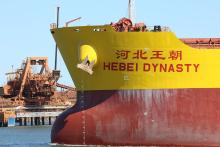
The sites were half-acquired by Rio Tinto (then Hamersley Iron) in 2005 and subsequently became home to lucrative iron ore operations.
At the heart of the judgment covering the legal and factual issues is answering the question on who held the beneficial interest and commercial opportunity in the Pilbara tenements, dubbed Hope Downs and East Angelas areas, according to Justice Smith.
“The factual findings which are necessary to be made to make a determination on this critical issue are factually dense and intricate,” she said.
“As a result, the disposition of the matters in dispute in these proceedings have not only taken up a considerable amount of the court's limited resources but are lengthy, and in part repetitious, as it has been necessary to determine some issues by revisiting findings of fact and law in other parts of these reasons.”
Lang Hancock, Peter Wright, and Don Rhodes were once friends and colleagues who sought to explore and develop iron ore in the East Pilbara.
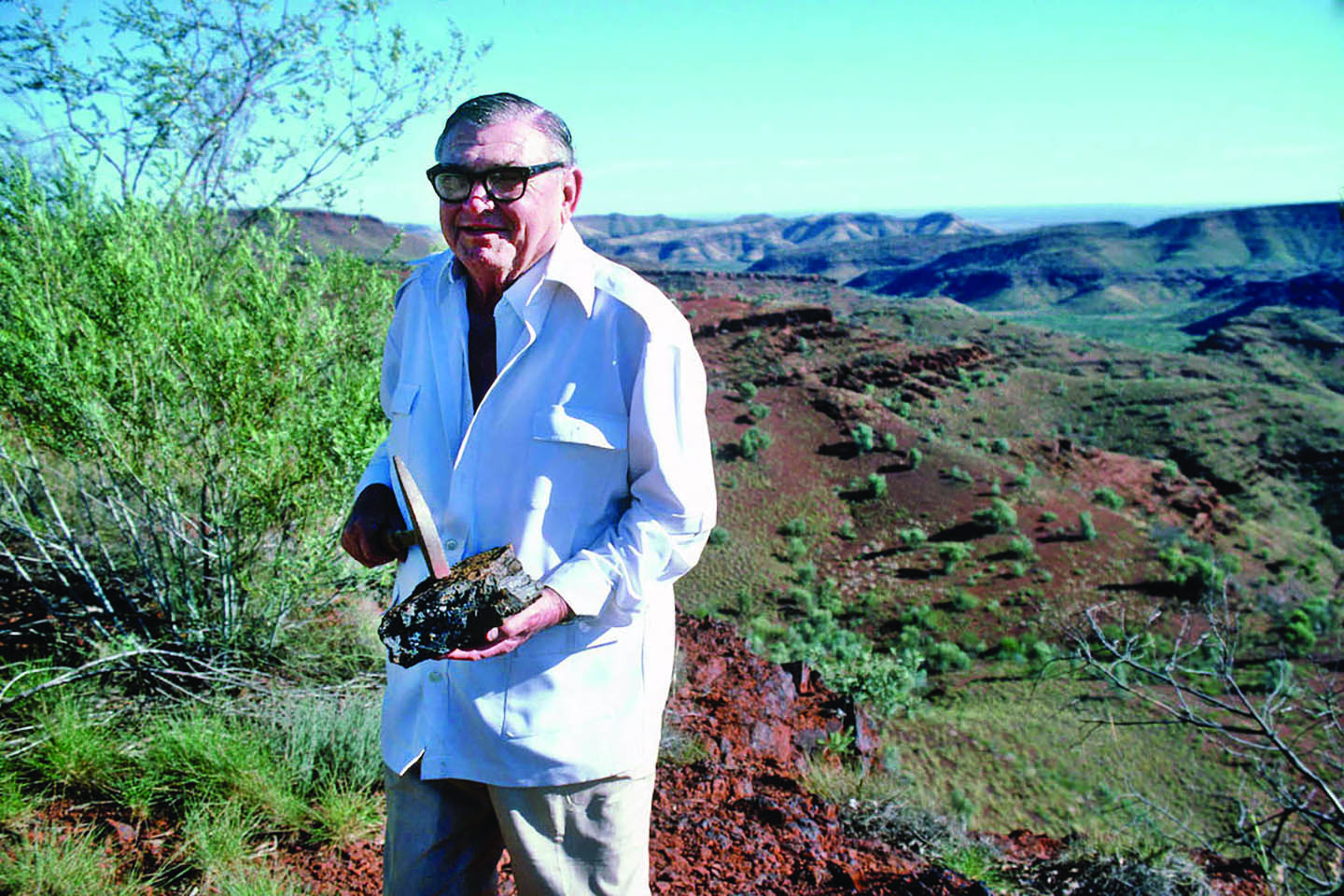
Lang Hancock. Photo: Mannkal Economic Education Foundation
Long after the men’s death, their descendants have gone over the decades-old business agreements with a fine-toothed comb.
Mr Hancock’s daughter Gina Rinehart took over Hancock Prospecting upon the founder’s death in 1992.
Wright Prospecting is owned by Mr Wright’s descendants including daughter Angela Bennett and her billionaire nieces Leonie Baldock and Alexandra Burt.
The high-profile legal proceedings unearthed years of correspondence and evidence to reconstruct events from 1967 to now.
Peter Wright’s descendants claimed Hope Downs reserves 4-6 were assets held for the Hancock-Wright partnership under an agreement signed in 1987.
Wright Prospecting also sought royalties from what Hancock entity Hope Downs Iron Ore received from Rio Tinto, over iron ore produced on the Hope Downs reserves.
DFD Rhodes pitched similar claims but chased only 1.25 per cent of royalties from Hope Downs Iron Ore’s share of iron ore produced in the Hope Downs areas.
Hundreds of millions of dollars have been spent on legal representation over the more than 15 years of the legal dispute.
But all seems to be chump change to what’s at stake; billions of dollars and a slice of a major mining empire.
Wright v Hancock
Peter Wright’s death in 1985 did not put an end to the partnership, the court was told.
Lang Hancock met with Peter’s children, Michael Wright and Angela Bennett in 1985 and 1986, before the parties struck an agreement in 1987.
In her judgment, Justice Smith boiled down Wright Prospecting (WPPL) and Hancock Prospecting (HPPL)’s row over the 1987 partnership agreement to five clauses despite their legal teams lodged hundreds of pages of written submissions.
The 1987 agreement covered division in royalties over Wittenoom, Rhodes Ridge, Hope Downs and other areas.
“It was an object of the 1987 Partnership Agreement to strike a rate for the royalties that remained assets and interests of the partnership which rate was to be shared equally between the partners,” Justice Smith’s judgment read.
HPPL argued the royalties from Rio Tinto were paid to Hope Downs Iron Ore, a corporate entity that produces ore on its own account and for its own benefit.
WPPL submits that Hope Downs Iron Ore (HDIO) acted on behalf of HPPL as its agent or alter ego.
It was alleged HPPL breached the 1987 partnership agreement when it failed to divide the royalties, as Rio Tinto started making money from the Hope Downs tenements.
In her decision, Justice Smith found HPPL was the principal with whom Rio Tinto negotiated over the Hope Downs joint venture in 2005, despite the royalties being paid HDIO.
Justice Smith said it was clear HPPL had and continued to breach the 1987 Partnership Agreement by failing to pay or procure what HDIO owed to WPPL, being half of the revenue royalties it received from Rio Tinto over ore sold from Hope Downs and East Angelas areas.
“When ore was produced and sold from areas comprising … by Hamersley, the contractual elements for treating all the revenue royalties paid to HDIO on ore produced and sold by Hamersley pursuant to cl 1(e) were met,” she said in her judgment.
“This had, and has, the consequence that the revenue royalties are by the terms of the 1987 partnership agreement to be treated as property of the partnership.”
WPPL also claimed it had a proprietary interest in Hope Downs 4-7, formerly known as East Angelas areas, under the 1987 agreement.
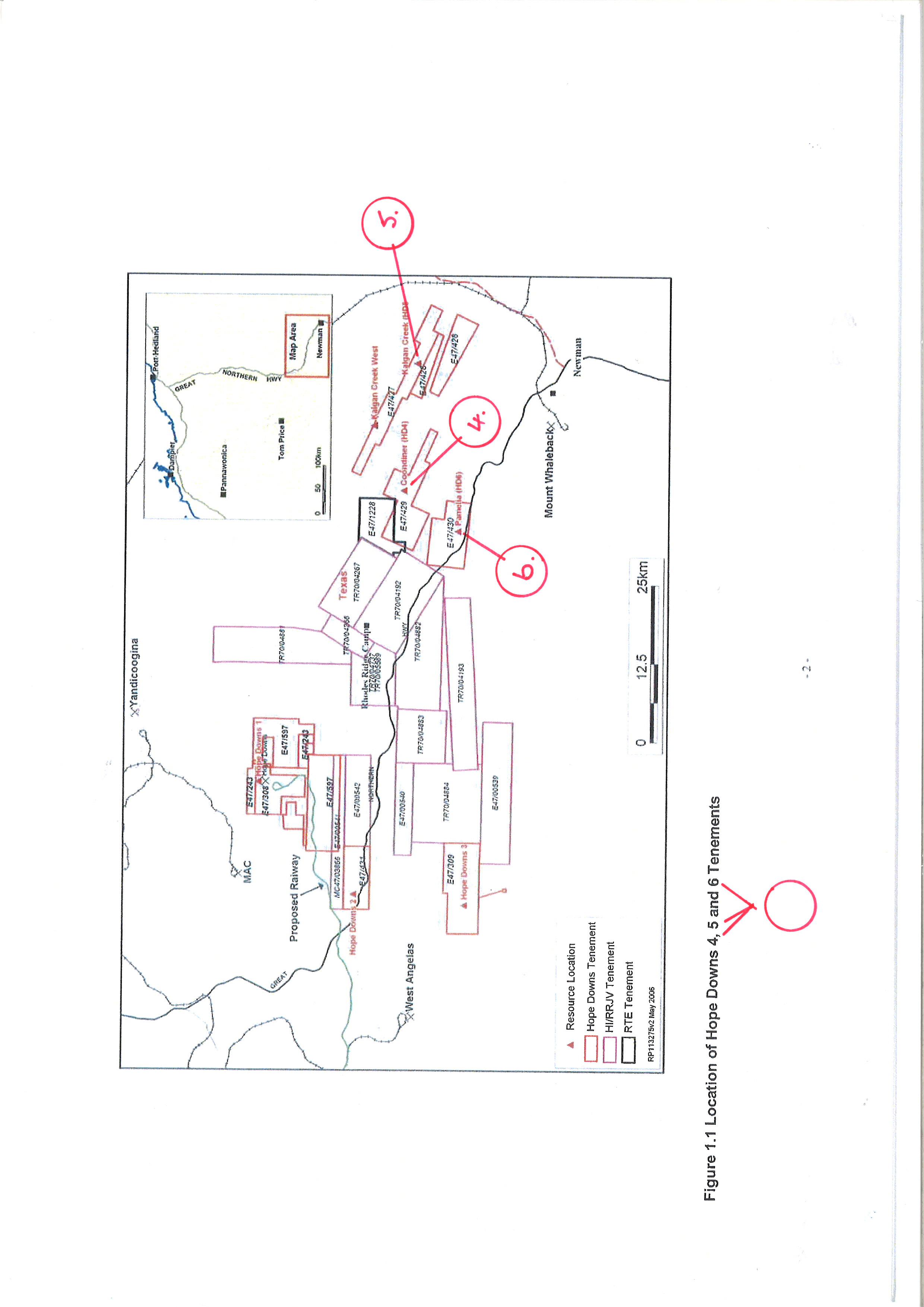
Source: Department of Mines, Petroleum and Exploration's Minedex
Lang Hancock wrongfully diverted the commercial opportunity to take up East Angelas, the court was told.
However, HPPL claimed the agreement allowed it to take up tenements and mining ventures on its own account without needing to offer WPPL the opportunity to join.
HPPL also claimed WPPL had no interest in any area forming part of the joint venture between HDIO and Rio Tinto.
Justice Smith turned to a memorandum between Lang Hancock and Peter Wright, signed in 1983, to consider the issue.
Peter Wright approached Lang Hancock in September 1983, to discuss a division of the partnership’s assets.
The judgment shows Lang’s aim to keep the partnership while giving each partner complete control over an equal share of things they owned or were developing.
“It required HPPL as the managing partner after the death of Peter Wright to direct its efforts towards bringing into production as soon as reasonably practicable the then mining prospects of the existing Partnership, always seeking, inter alia, a royalty,” Justice Smith said in her judgment.
“This provision prohibited HPPL from involving the Partnership in new prospecting or in mine management unless specifically agreed in writing between the partners.”
In the absence of any written agreement between WPPL and HPPL to get licences to explore East Angelas, the 1983 agreement stops the reserves being taken up on behalf of the partnership.
“The effect of these findings is that WPPL has lost its right to claim a proprietary interest in the East Angelas areas, which in turn has the effect that the Partnership holds no interest in the East Angelas areas…,” Justice Smith said.
Rhodes v Hancock
Lang Hancock considered Don Rhodes as an important pioneer in the WA mining industry, Justice Smith noted in her judgment.
“From about 1955 through the 1960s and into the 1970s, Rhodes engaged in significant mining activities, including prospecting, exploration and operating a manganese mine in the Pilbara,” she said.
“Rhodes' endeavours were assisted by the Partnership. From about December 1955, Rhodes and HPPL were engaged in dealings concerning mineral exploration in the Pilbara, particularly in relation to manganese.”

Don Rhodes in Kalbarri in the early 1980s. Photo: DFD Rhodes
Lang Hancock and Don Rhodes signed an agreement in 1969, a document that has been at the centre of the dispute between HPPL and DFD Rhodes.
DFD Rhodes claimed it was entitled royalties from any production of iron ore on behalf of the HanWright partnership as per the 1969 agreement.
The claim has been dismissed by Justice Smith, who said DFD Rhodes was unable to prove that the ore produced in the Hope Downs JV between HPPL and Rio Tinto was on behalf of the HanWright partnership.
However, Justice Smith upheld in part DFD Rhodes’ claim in equity to past and future royalties from HPPL’s share of the Hope Downs JV.
Justice Smith said Rhodes’ rights in equity to a royalty did not cover iron ore produced in the Hopes Down reserves that was sold by Rio Tinto.
Rinehart children v Hancock
Mrs Rinehart's children - John Hancock, Bianca Rinehart, Hope Welker and Ginia Rinehart - joined the proceedings in September 2016.
John Hancock and Bianca Rinehart have been the main players in the action against their mother's company.
They claimed Hancock Resources Ltd (HRL) held full legal and beneficial title to each of the Hope Downs and East Angelas exploration licences and never held them on trust for HPPL.

John Hancock and Bianca Rinehart leaving Supreme Court of WA in 2023.
Ultimately, they claimed the tenements were instead held on trust for the children as beneficiaries of the Hancock Family Memorial Foundation (HFMF) trust and denied WPPL had any interest in the tenements.
At the time of Lang Hancock’s death, HFMF held 33 per cent of HPPL while Mrs Rinehart held 51 per cent of HPPL, through 33.3 per cent in her own right and 17.7 per cent under the Hope Margaret Hancock family trust.
Her children had the remaining 15.6 per cent stake in HPPL through the Hope Margaret trust, but claimed they also owned the interest held by HFMF.
During the trial, the children claimed Lang Hancock transfer HPPL shares to the family trust as a gift to his grandchildren.
It is understood the current HPPL ownership structure comprises of Mrs Rinehart’s 76 per cent stake, and the remaining interest held by Hope Margaret Hancock Trust in which her four children are the beneficiaries.
HPPL alleged its founder transferred the shares to avoid paying tax, the court was told.
In her judgment, Justice Smith found John and Bianca failed to prove their claims.
The children did not seek any relief in the proceedings and cannot, as their counterclaim has been stayed.
"Bianca Rinehart and John Hancock have failed to make out their claim that HML (Hancock Mining Ltd), then HRL, held the legal and beneficial interest in the East Angelas exploration licences," Justice Smith said.
Resultingly, their defence failed.
“Yet, the critical point on which Bianca Rinehart and John Hancock's defences in these proceedings stands is the premise that HML, and thereafter HRL, acquired the Hope Downs and the East Angelas tenements beneficially,” Justice Smith said.
“However, Bianca Rinehart and John Hancock have failed to make out this first step: they cannot prove that HML then HRL acquired these tenements beneficially.”
Future
Justice Smith remarked on the length of the dispute in her judgment.
“The attention required to be given in these reasons to the factual matters detailed in numerous business records has led to the length and complexity in making many findings,” she said.
“Adding to the complexity of the factual and legal issues requiring determination are the number and complexity of the issues raised by the parties in their pleadings.”
The judgment may just be a milestone, and not the end of, the long-running feud with the parties strongly expected to appeal the decision.