WA has the projects, capital interest and industrial ambition to remain globally competitive.
But industry leaders say delays around land access, approvals and infrastructure are increasingly threatening project viability across key growth sectors.
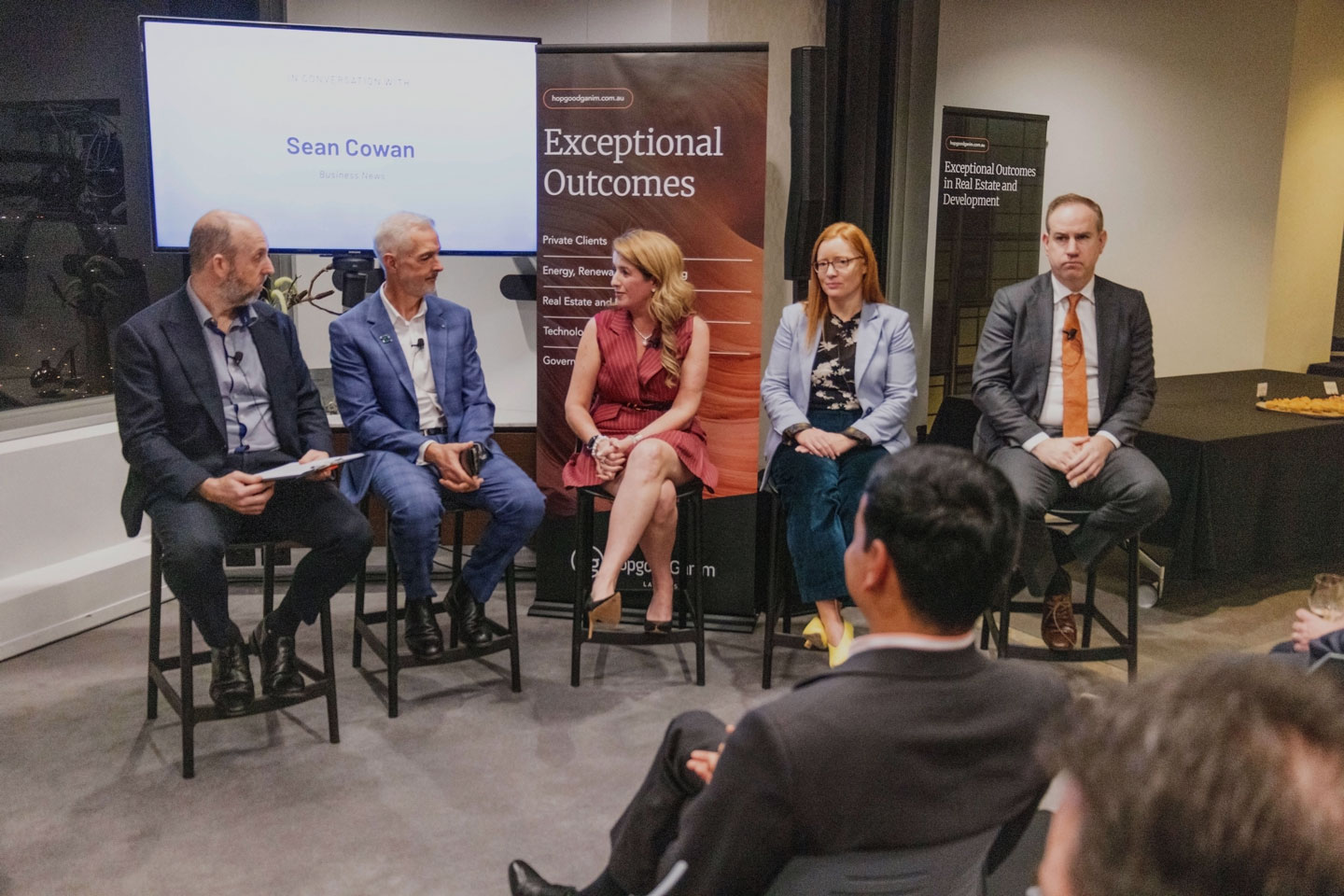
At a recent HopgoodGanim Lawyers and Business News panel discussion in Perth, executives across property, mining, energy and infrastructure described a state economy still positioned for growth, but increasingly constrained by approvals systems, infrastructure bottlenecks and regulatory complexity.
HopgoodGanim corporate and M&A partner Robyn Ferguson opened the evening by highlighting the practical challenges facing many projects across Western Australia, including approvals, infrastructure constraints and rising costs.
Business News managing editor and moderator Sean Cowan referenced a recent conversation with Fortescue deputy chair and non-executive director Mark Barnaba, where he asked whether a company like Fortescue could realistically be built from scratch in WA today.
“The approvals process would kill it,” Mr Cowan said, relaying Mr Barnaba’s response.
The comment set the tone for a discussion centred on delivery timelines, infrastructure constraints and project viability.
Projects stalled by process
For industrial property developer Julie Drago, founder and chief executive of Realside Ovest, the problem begins with land access.
She said much of WA’s commercial land is inaccessible – tied up in environmental approvals, lacking essential services, constrained by planning settings, or unavailable within viable timeframes.
“There is just not enough vacant land around for us to be able to deliver,” Ms Drago said.
“Land is not available, it’s not serviced, and it’s not cleared.”
This means developers are encountering lengthy delays across planning, environmental assessment and infrastructure delivery.
“It took us years to get through approvals and we built it in nine months,” Ms Drago said.
HopgoodGanim commercial property partner Ryan Chorley said those delays were affecting commercial feasibility.
“Approval and infrastructure delays are pushing out practical completion and significantly driving up project costs in a high inflation environment.”
HopgoodGanim said delays across land access, approvals and infrastructure are exposing gaps between project assumptions and contractual frameworks, particularly as timelines extend.
“Delays tied to approvals, land access and securing enabling infrastructure like power and utilities are increasingly driving disputes on major projects,” HopgoodGanim partner Andrew Vinciullo said.
“As those dependencies push out delivery timelines, parties are testing the limits of relief under their contracts, exposing a growing gap between commercial expectations and how risk is actually allocated.”
Infrastructure constraints
Lack of infrastructure, particularly electricity and grid connections, is becoming a major constraint on industrial development. Ms Drago said securing a power connection from a standing start could now take 18 months – compared with about six months several years ago.
“Time kills deals for us,” Ms Drago said.
The delays are problematic for data centres, advanced manufacturing and downstream processing that require large energy loads and dedicated infrastructure.
“Even if we have land, we don’t have electricity, we don’t have water, we can’t actually do anything with it right now,” HopgoodGanim energy transition partner Jo Garland said.
Additionally, increasing residential development is placing pressure on industrial land and buffer zones.
“We need to mandate and protect those buffer zones,” Ms Drago said.
Ms Drago said planning systems had not kept pace with emerging industries.
“We haven’t seen a huge amount of data centres because we don’t have the right zoned land,” she said.
“The planning rules haven’t been adjusted to allow a data centre as its own asset class with its own requirements.”
Mining sector under pressure
The same issues are affecting mining and exploration.
Warren Pearce, chief executive of the Association of Mining and Exploration Companies, said regulatory complexity and rising approvals costs had become significant barriers for junior and mid-tier operators.
“These are now project stops,” he said.
Mr Pearce said cultural heritage protection remained important, but the current system lacked consistency, cost certainty and workable timeframes.
“The sector is spending tens of millions of dollars in one year essentially doing nothing,” he said.
Smaller companies, without the balance sheets to absorb prolonged delays, are increasingly reconsidering where they deploy capital.
“If you’re a mid-tier exploration company and you’re presented with a half-a-million-dollar request to get through the grant-making process … ultimately you’re packing up your exploration activities and looking at other jurisdictions,” Mr Pearce said.
He said heritage should be identified and mapped earlier to provide greater certainty for both industry and traditional owners.
Other panellists pointed to growing concern around the impact of approval delays, rising compliance costs and recent tax reform announced at the Budget on future investment.
One attendee from the mining and resources sector said the discussion reflected growing frustration across industry. “The alarm bells should be ringing, but the government is not hearing them,” the attendee said.
Systems under pressure
Earlier in the evening, WA chief scientist Professor Sharath Sriram outlined a vision for a more diversified economy built around advanced manufacturing, medical technology, energy systems, robotics and commercialisation.
“There’s massive potential for us to diversify,” Professor Sriram said.
But panellists repeatedly returned to the same issue – industrial growth will depend on whether projects can be delivered within commercial timeframes.
The recently announced State Development Coordination Unit was referenced as one step toward improving coordination across approvals and infrastructure delivery.

HopgoodGanim is a leading Australian legal services provider at the forefront of expertise and service delivery in our key client markets. We provide exceptional outcomes to our Australian and international clients from our offices in Brisbane and Perth, spanning the east and west coasts of the country. Discover the markets we focus in