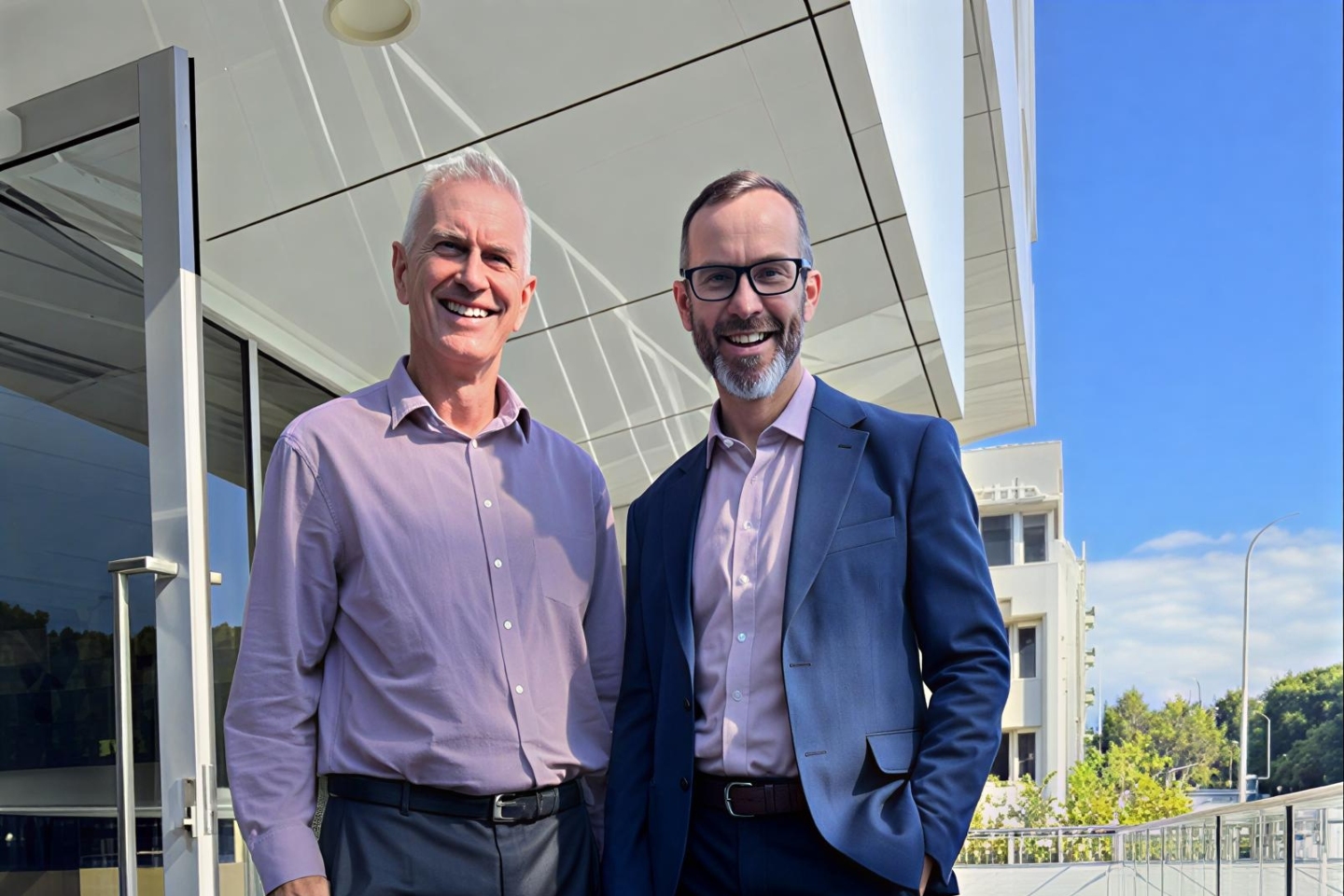
Triangle has flicked the switch on a strategic shake-up, installing chief operating officer Rory McGoldrick as chief executive officer. Long-serving helmsman Conrad Todd has shifted into a non-executive director role and will also step across to steer the Tetragon Energy spinout ahead of an ASX listing.
The move, effective 1 May, follows the company’s carve out of Tetragon and a sharpened focus on core Perth Basin and United Kingdom gas assets, with the Cliff Head oil field exit continuing to clear the decks for a crisper, more commercially driven portfolio.
The leadership shift mirrors the strategy. McGoldrick brings a deal-driven background spanning governance, acquisitions and capital markets.
Anchoring the refreshed footprint is a compact yet compelling asset base.
In Western Australia, Triangle holds a 50 per cent interest and operatorship of the L7 production licence and an adjoining exploration permit in the Perth Basin. Joint venture partners Strike Energy and Echelon Resources each hold 25 per cent and have signalled a potential withdrawal, with the company progressing legal discussions regarding a promised third well commitment.
Geologically, the acreage still packs a punch. Management has high-graded its main prospect, dubbed MH-28, where a Dongara oil target sits up-dip from oil shows in a nearby, previously drilled well. Further potential may lie in the Irwin River coal measures and Kingia reservoir, with deeper gas upside beneath.
Triangle has also secured a 7.5 per cent option over the highly prospective offshore WA 481 P acreage through a $250,000 short term loan to the licence’s operator, Pilot Energy, adding strategic exposure without heavy upfront spend.
On the monetisation front, its 78.75 per cent stake in the Cliff Head oil field remains a key lever. A deal to sell the stake to Pilot will ultimately transfer all ongoing costs to the buyer, allowing Triangle to step back from operating spend as the asset moves towards carbon capture and storage.
In the northern hemisphere, Triangle holds a 50 per cent non-operated interest in two North Sea licences. The first lease hosts the Cragganmore gas field with 683 billion cubic feet of gas (Bcf) in contingent resources and 1.49 trillion cubic feet of gas (Tcf) in prospective resources. Management says a farmout or divestment process is currently underway.
In its second North Sea ground, seismic has highlighted direct hydrocarbon indicators pointing to shallow gas potential, with the permit currently held in care and maintenance.
Across both licences, operators are conducting low-cost seismic reprocessing and technical re-evaluation programs to build value and position the assets for potential transactions as market conditions improve.
Triangle Energy chairman Greg Hancock said: “Triangle is pleased to welcome Rory to the position of chief executive officer, and we look forward to extracting shareholder value from the remaining assets embedded in the company. The board of Triangle would like to thank Conrad for his 4 years of service as managing director.”
Near-term work for Triangle will centre on advancing the MH-28 prospect towards drilling, progressing the Cliff Head transaction and continuing technical work in the United Kingdom to support potential deals.
Elsewhere, management has carved out its Philippines portfolio into Tetragon Energy, a move overwhelmingly backed by shareholders.
The spinout delivers 50 per cent of Tetragon shares through an in specie distribution, with $1.5M in seed capital supporting the new vehicle ahead of a planned $4M initial public offering at $0.20 per share. The move has positioned Tetragon as a well-funded, Asia-focused growth vehicle.
Tetragon’s portfolio includes offshore licences in the Sandakan Basin, where previous discoveries have yielded 470Bcf of gas and 5 million barrels of condensate. The acreage also hosts the large Halcon prospect, where seismic data point to a structurally trapped system that could support a low-cost, early-stage drilling opportunity.
Onshore, an additional licence in the Cagayan Basin has provided appraisal and development potential near infrastructure. Early work is focused on seismic reprocessing and technical validation.
Adding another string to its bow, Triangle has kicked off a Joint Study Agreement in Indonesia with Lemigas under the watchful eye of state regulator MIGAS, targeting a future production sharing contract. The six-to-eight-month program, costing US$300,000 ($460,000), is partly funded by Tetragon and Winchester Energy, which can earn participation rights if successful.
Under new management, Triangle says its strategy going forward will be to zero in on scalable plays across Australia, Europe and Southeast Asia, while applying a strict filter to new opportunities.
With Tetragon tracking towards an ASX debut and the core business trimmed and tuned, the company appears to be emerging as a sharper, smarter operator, focused on execution and disciplined growth.
It is no longer about casting a wide net, it is about striking with precision and purpose.
Is your ASX-listed company doing something interesting? Contact: matt.birney@businessnews.com.au


 By Penny Taylor