Mark Glasson’s three-month contract with Anglicare WA in 2013 has grown into more than a decade of leadership, coinciding with the organisation’s 50th anniversary.

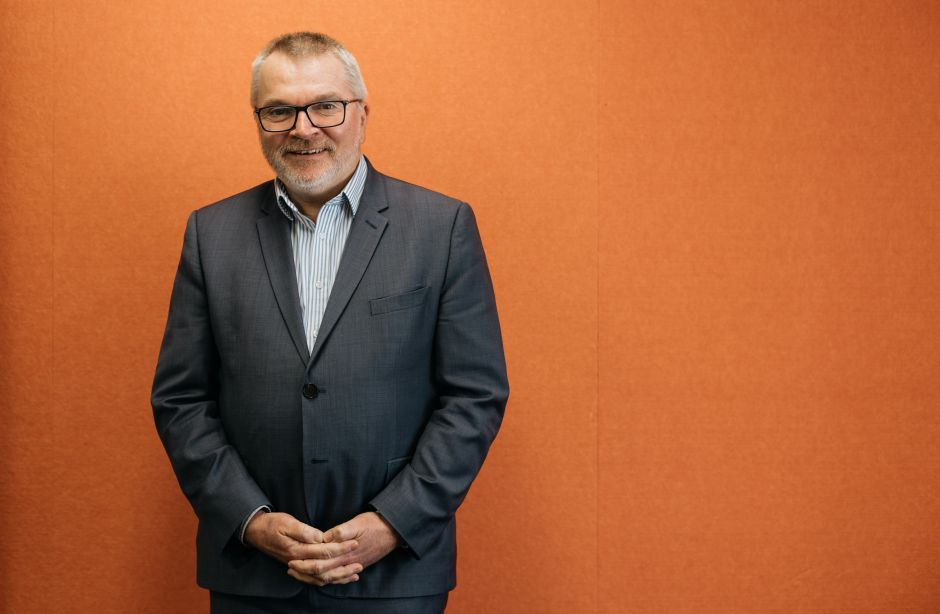
What began as a short three-month contract in 2013 has evolved into more than thirteen years of leadership and counting. Mark Glasson, Chief Executive Officer of Anglicare WA, did not originally plan to build a long-term career with the organisation, which this year marks its 50th anniversary. A qualified social worker with a professional background spanning policy, corrections, family services and community development, he arrived with a strong grounding in the sector but an open timeline. More than a decade later, he leads one of Western Australia’s most influential community service organisations, guided by a leadership style defined by empathy, systems thinking and practical impact.
“I have the best job in the world,” Glasson says. “Because every day you see people take steps forward sometimes small, sometimes life-changing and you know the work matters.”
His approach to leadership is less about hierarchy and more about proximity to the people Anglicare WA serves. Trust, dignity and hope are not simply values printed on a wall, they shape operational decisions, partnerships and service delivery across the state. “We exist to help people achieve positive things in their lives,” he explains. “Often the barriers people face are not personal failings , they’re structural pressures and our role is to walk alongside them”.
Under Glasson’s leadership, Anglicare WA has expanded both its reach and its depth of service. Today the organisation delivers 101 services across more than 201 locations throughout Western Australia, operating across metropolitan, regional and remote communities. In the 2024–25 year alone, Anglicare WA reached 102,981 Western Australians , an increase of over 20,000 people compared to the previous year. Of these, 52,408 received direct support through counselling, housing assistance, youth programs and family violence services, while a further 50,573 engaged through school education initiatives, innovation projects and community capacity-building activities. This impact is delivered by a workforce of 793 staff, including dedicated regional teams who bring specialist services to areas where support can be hardest to access.
The scale of Anglicare WA’s operations reflects the growing complexity of social challenges across the state. Rising housing costs, utility pressures, transport expenses and healthcare needs are consuming an increasing share of household income, often leaving families vulnerable despite employment or stable backgrounds. Glasson speaks candidly about the environment. “The demand is going through the roof,” he notes. “If we can step in earlier, we can prevent bigger challenges later, as early support changes outcomes.”
Partnership plays a critical role in enabling that early intervention. Organisations such as Rio Tinto and Channel 7 Telethon Trust have become significant collaborators in extending Anglicare WA’s reach, particularly in youth mental health and wellbeing initiatives. A notable example is the Bounce Wellbeing program, supported through significant investment over a five-year period, allowing Anglicare WA to expand preventative mental health services for young people across regional Western Australia. These partnerships are not simply financial contributions, they are strategic alliances that strengthen service delivery and innovation. “When businesses and community organisations align around shared goals, the impact multiplies,” Glasson says. “We are stronger together.”
Youth services remain one of Anglicare WA’s most impactful areas, alongside financial counselling and family and domestic violence support. In regions such as the Pilbara, early-intervention mental health centres are providing children and adolescents with support before issues escalate into crisis. The organisation’s philosophy is deliberately preventative. “We don’t want to be a safety net,” Glasson explains. “We want to be a trampoline, something that helps people bounce back stronger and sooner.”
While data informs decision-making, empathy remains central to execution. Programs are continually reviewed to ensure they are delivering measurable improvements rather than simply maintaining activity. “If we’re not making a difference, we reassess,” Glasson says. “Impact is about outcomes that genuinely improve lives.”
Looking ahead, his focus is not merely on expansion, but on strengthening what works and innovating where new needs emerge. Cross-sector partnerships, deeper community engagement and adaptive service models form the backbone of Anglicare WA’s strategic direction. “Western Australia has everything it needs to care for its community,” Glasson reflects. “When government, business, philanthropy and individuals all play their part, the effect is exponential.”
What started as a brief engagement more than a decade ago has become a sustained commitment to social progress. Under Mark Glasson’s leadership, Anglicare WA continues to demonstrate that meaningful change is achievable built through collaboration, early support and a shared belief that stronger communities are created not in isolation, but together.