Across Western Australia’s farming regions, pressure is building, not from a single source, but from a convergence of forces that are reshaping the industry in real time.
The phase-out of live sheep exports by sea sits at the centre of it. For decades, the trade has been a critical pillar of the state’s sheep industry, providing a viable market for producers and underpinning regional economies. Its removal is not just a policy shift, it is a fundamental disruption to how many farming businesses operate.
For some, it means rethinking entire business models. For others, it raises immediate questions around pricing, supply chains and long-term viability. The transition is happening against a clock that many in the sector feel is moving faster than their ability to adapt.
Farmers are simultaneously navigating increasingly unpredictable seasons, where rainfall can no longer be relied upon in the way it once was. Climate variability is tightening margins and amplifying risk, particularly for those already operating on thin returns.
At the same time, global instability including the ongoing impacts of war has disrupted fertiliser supply chains, driving up costs and creating uncertainty around availability at critical points in the production cycle. For an industry dependent on precise timing, these disruptions carry real consequences.
Fuel prices and shortages have added yet another layer of pressure. For regional businesses, fuel is not optional it underpins everything from machinery operation to transport logistics. When supply tightens or prices spike, the impact is immediate and unavoidable.
Taken together, these factors are creating what many on the ground describe as a compounding effect where each pressure point magnifies the next.
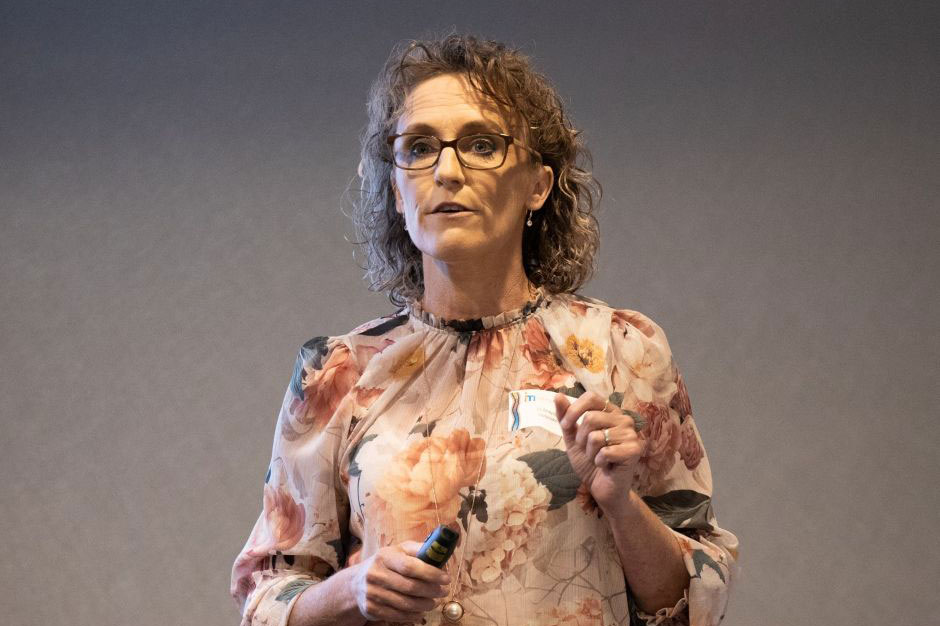
“A lot of stressors and uncertainty which is compounding,” says Jo Drayton, a specialist in suicide prevention and facilitator with Holyoake.
What is becoming increasingly clear is that this is not just an economic challenge, it is a human one.
Behind every farm business is a family, a workforce, and a community. As financial and operational pressures escalate, so too does the mental load carried by those responsible for navigating them. The weight of decision-making often with limited control over external factors is taking a toll.
In regional areas, that burden is intensified by limited access to services. Unlike metropolitan centres, where support networks are more readily available, rural communities often rely on informal connections neighbours, colleagues and family to identify and respond to distress.
Yet stigma around mental health remains deeply embedded. “We’re working to reframe that conversation,” Drayton says. “Help-seeking is a sign of strength. It’s about doing it for the people you care about.”
It is within this context that Holyoake’s Community Wellbeing Program has been introduced, not as a reactive measure, but as a proactive response to a growing and complex issue.
Supported by $396,590 in funding through the Australian Government’s Sheep Industry Transition Assistance Package, the program is designed to equip agricultural communities with the tools to better understand and respond to mental health challenges.
Holyoake CEO Ben Smith says the intent is clear. “This funding is an investment in the people who keep our agricultural communities going through the good seasons and the tough ones,” he says. “As the sector navigates the transition away from live sheep exports, it’s essential we not only focus on the economics of change, but also on the people impacted.”
Since its rollout began in February 2026, the program has taken a grassroots approach, working directly with communities across the Wheatbelt, Mid West, Goldfields, Great Southern and South West.
Rather than applying a one-size-fits-all model, the initiative is shaped by local needs recognising that each region is experiencing the current challenges in its own way.
“No two communities are the same,” Drayton explains. “We go in, listen, and respond to what people actually need.”
At its core are a series of free, evidence-based workshops focused on mental health literacy, early intervention and suicide prevention. Participants are given practical tools to recognise signs of stress and distress, start meaningful conversations, and connect people with the right support services.
Importantly, the training acknowledges the reality of rural life.
“In these communities, people often find themselves in what we call the ‘accidental counsellor’ role,” Drayton says. “This training gives them the confidence to step into that space and support someone.”
Participants have described the workshops as “a life-changing process” and “a really valuable, practical session,” highlighting not just the quality of the training, but its immediate relevance to their lives.
Beyond individual outcomes, the program is helping to strengthen community networks building a more connected and capable support system from within.
Delivered in collaboration with organisations such as Rural Aid and the Blue Tree Project, the initiative forms part of a broader effort to ensure that support is accessible, visible and tailored to the realities of regional WA. But while programs like this are critical, they also highlight a larger issue.
The transition facing Western Australia’s agricultural sector is not just about markets, policy or infrastructure. It is about people , their capacity to adapt, their resilience under pressure, and the support systems available to them.
As the live sheep export phase-out continues, alongside ongoing climate challenges, supply disruptions and rising costs, the need for that support will only grow.
Because while the economics of change can be measured in output and revenue, its true impact is felt elsewhere, in the day-to-day decisions, the uncertainty, and the quiet weight carried by those on the land.
For further information on the initiative or to schedule a workshop, contact Jo Drayton JDrayton@holyoake.org.au
https://holyoake.org.au/our-services/specialist-training-for-agricultural-communities/