Western Australia is often held up as a story of prosperity.
Its economy is strong. Investment continues to flow. Population growth remains robust. By many measures, the state is thriving.
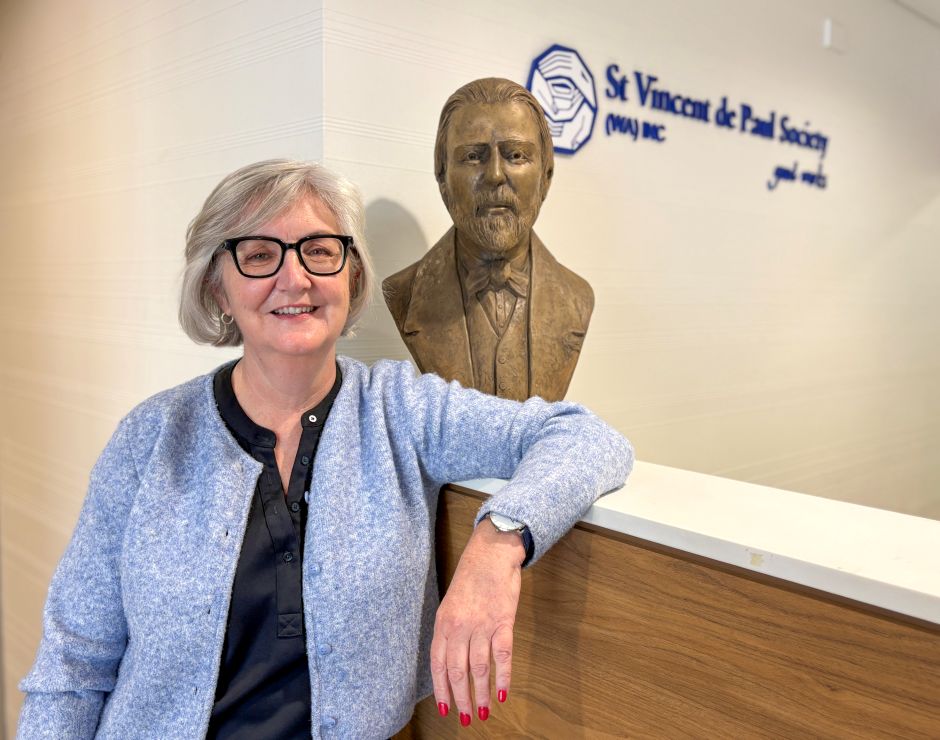
Yet beneath the headlines of economic success lies a reality that Ann Curran believes should command far greater attention from business leaders, policymakers and the broader community.
As Chief Executive Officer of Vinnies WA, Curran occupies a vantage point few executives experience. Every day she sees the human consequences of rising housing costs, financial insecurity and growing social inequality. The stories arriving at Vinnies are increasingly challenging long-held assumptions about who experiences hardship in modern Australia.
The people seeking support are not who many would expect.
They are employed professionals unable to secure affordable housing. Families juggling multiple jobs while struggling to pay rent. Older women facing homelessness for the first time. Young people whose futures are being shaped by instability rather than opportunity.
"We are seeing people who have done everything society has asked of them," Curran says. "They're working, contributing, raising families, and yet they are finding themselves in situations they never imagined."
For leaders focused on economic growth, workforce participation and long-term productivity, the implications extend far beyond the social sector.
Homelessness is often discussed as a welfare issue. Curran sees something far more complex.
It is a workforce issue. A health issue. An education issue. A productivity issue. It affects the resilience of communities, the stability of families and the strength of the economy itself.
For much of her professional career, Curran viewed organisations through the lens of finance. Having spent more than two decades in senior financial leadership roles, including seven years as Chief Financial Officer of Vinnies WA, she understands the discipline required to build sustainable institutions.
When she stepped into the CEO role, however, she discovered leadership demanded a fundamentally different perspective.
A chief financial officer seeks certainty. A chief executive often operates in ambiguity.
The transition forced her to move beyond questions of efficiency and sustainability and confront a more difficult challenge: how to lead an organisation through an era when demand continues to outpace capacity.
The answer, she believes, begins with understanding that every statistic represents a human story.
In boardrooms, numbers are essential. They provide clarity, accountability and evidence for decision-making. Yet numbers alone rarely capture the full picture.
A report may show rising homelessness, increasing requests for emergency relief or growing demand for mental health support. What it cannot fully convey is the experience of a parent deciding whether to pay rent or buy groceries, or a young person navigating homelessness while attempting to stay engaged in education.
The closer Curran has moved to frontline services, the more she has become convinced that leadership requires equal measures of analytical rigour and human understanding.
It is a lesson that extends well beyond the not-for-profit sector.
The most effective leaders today are increasingly those capable of balancing commercial realities with social responsibility. They recognise that organisations do not operate in isolation from the communities around them.
This understanding is particularly relevant as Australia confronts what many consider to be one of the defining challenges of this generation: housing affordability.
Curran describes the current environment as a "perfect storm" that has been years in the making.
Housing shortages, rising rents, cost-of-living pressures and increasing mental health needs have converged to create unprecedented demand for support services. The traditional safety nets designed to protect vulnerable Australians are being stretched in ways few anticipated.
Yet what concerns her most is not simply the scale of need, It is the growing normalisation of hardship.
When housing insecurity becomes commonplace, when financial stress becomes an accepted feature of daily life and when homelessness increasingly affects people with jobs and stable employment histories, society risks becoming desensitised to challenges that should provoke urgent action.
History shows that societies are ultimately judged not by how they treat the successful, but by how they support those facing adversity and that principle sits at the heart of Vinnies' mission.
Founded more than 160 years ago, the organisation the St Vincent de Paul Society WA (or Vinnies WA, which many know it as today) has weathered wars, recessions, economic booms and profound social change. Through each era, its purpose has remained remarkably consistent: to provide practical support while working towards a more just and compassionate society.
Curran speaks about this legacy with a sense of stewardship rather than ownership.
She often reflects on the fact that Vinnies existed long before her arrival and will continue long after her tenure concludes. Her responsibility, as she sees it, is to strengthen the organisation for future generations while ensuring it remains capable of responding to today's challenges
In an age dominated by quarterly results and short-term performance metrics, leaders are under constant pressure to prioritise immediate outcomes. Yet many of the issues shaping Australia's future housing, social cohesion, workforce participation and community wellbeing require a longer horizon.
They require institutions willing to invest in prevention rather than simply responding to crisis.
And they require leadership that understands sustainable success is measured not only by financial performance but by broader societal impact.
Curran remains optimistic despite the challenges she encounters. Her optimism is not born from naivety. It comes from witnessing the extraordinary capacity of people and organisations to come together around shared purpose.
She sees it in volunteers who dedicate their time to helping strangers. In businesses participating in initiatives such as the Vinnies CEO Sleepout, which has raised more than $13 million in Western Australia and sparked meaningful conversations about homelessness among senior corporate leaders. She sees it in governments, community organisations and philanthropic partners increasingly recognising that complex social challenges demand collective solutions.
The future, she believes, will belong to organisations capable of building partnerships rather than operating alone.
No single sector can solve homelessness. No single institution can address inequality. The most enduring solutions will emerge from collaboration across business, government and the community.
For Australia's corporate leaders, there is an important lesson in that observation. The health of the economy and the health of society are not separate conversations.
Long-term prosperity depends upon stable housing, accessible education, meaningful employment and strong communities. When those foundations weaken, the consequences eventually reach every sector.
Perhaps that is why Curran continues to speak about hope, not as an abstract ideal, but as a strategic necessity.
Hope enables people to rebuild after crisis. It sustains communities through uncertainty, it inspires organisations to pursue solutions to problems that can appear overwhelming.
And in a period when many Australians are questioning whether opportunity remains within reach, sustaining hope may be one of the most important forms of leadership there is.