In a city as prosperous as Perth, it is easy to assume that pathways to opportunity are clearly marked, well-lit and accessible to all. But for a growing number of vulnerable young people navigating instability, homelessness or fractured support systems, those pathways can feel invisible.
This is where programs like Compass matter not as an optional layer of support, but as essential infrastructure.
After a period of uncertainty, Vinnies WA has revived its Compass program at its Passages Youth Engagement Hubs across Perth and Peel. It is a quiet return, but one with profound implications. In a sector often defined by funding cycles and finite grants, the reinstatement of a program like Compass signals something deeper, a commitment to continuity in a space where disruption can have lifelong consequences.
Originally launched in 2022, Compass was designed with a deceptively simple philosophy to meet young people “where they’re at.” In practice, this means something far more complex: tailoring support to individuals whose lives rarely conform to linear progress. For some, it is securing identification or stable housing. For others, it is re-engaging with education, finding employment, or simply rebuilding confidence after prolonged instability.
The results from its initial run were striking. More than 80 per cent of participants who set employment goals secured work or work experience, while 60 per cent who pursued study completed courses. These are not just statistics; they are indicators of what becomes possible when support systems are both flexible and sustained.
Yet Compass, like many effective social programs, faced a familiar challenge. Its initial Commonwealth Government funding concluded in April 2024, leaving a gap that could easily have marked the end of the initiative. Instead, its revival has been made possible through philanthropy, an increasingly critical force in maintaining services that sit between crisis response and long-term transformation.
Support from organisations such as the Stan Perron Charitable Foundation, McCusker Charitable Foundation and the Sisters of St Joseph of the Apparition has ensured that Compass not only returns, but does so with renewed intent.
Chrissie Smith, Director of Specialist Community Services at Vinnies WA, points to the program’s ability to deliver tangible outcomes in a relatively short timeframe. But perhaps more telling is what those outcomes represent: stability where there was once volatility, and direction where there was once drift.
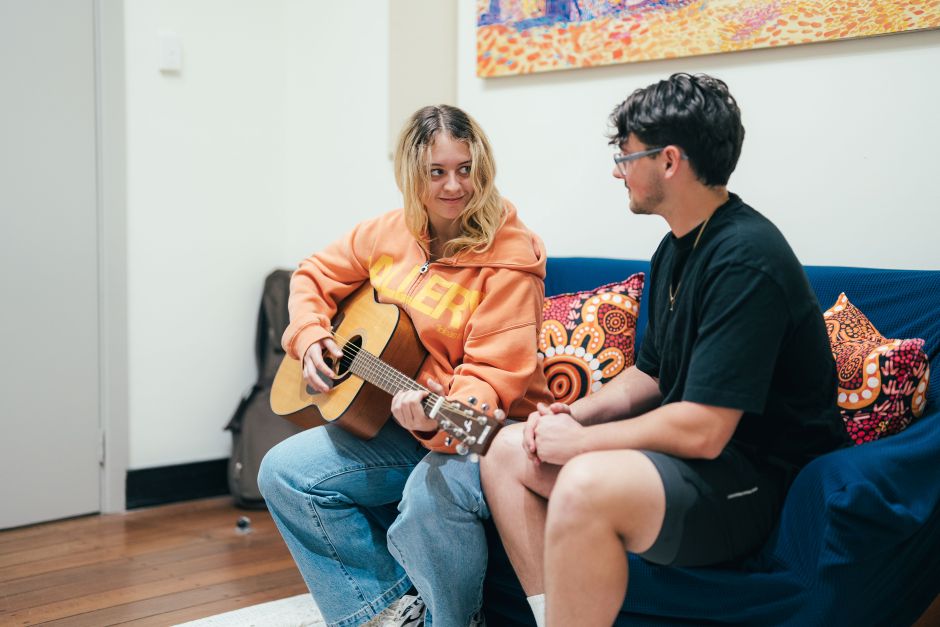
At the operational level, the program’s strength lies in its structure. Dedicated Youth Navigators work alongside a Youth Engagement Officer to provide intensive, one-on-one case management. This is complemented by flexible brokerage funding small, targeted financial interventions that can have outsized impact. A laptop for study. A driver’s licence to access work. Clothing for a job interview. Individually modest, collectively transformative.
Aimee Robinson, Coordinator at Passages Perth, describes the reinstatement of Compass as pivotal. It allows staff to work more intensively with young people, particularly those with complex needs who might otherwise fall through the cracks of traditional service models. In a system often stretched thin, this kind of targeted intervention can be the difference between short-term assistance and long-term change.
Her counterpart in Peel, Jade Gillespie, underscores the program’s role in bridging a critical gap. While youth hubs provide immediate support, Compass offers the next step the transition from crisis management to capacity building. It is here, in this often-overlooked middle ground, that the foundations of a stable future are laid.
Since its reinstatement in late 2025, early indicators suggest the program is once again delivering. Young people are engaging in case planning, setting goals and actively addressing barriers. Feedback from participants and staff alike has been overwhelmingly positive.
But beyond its immediate success, Compass raises a broader question for Western Australia’s business and philanthropic communities, what role should they play in sustaining programs that demonstrably work?
The answer is becoming increasingly clear. As demand for services grows driven by cost-of-living pressures, housing instability and broader social challenges, reliance on short-term government funding alone is no longer sufficient. Programs like Compass require a more resilient funding model, one that blends public investment with private and philanthropic support.
For the business community, this is not merely a matter of corporate social responsibility. It is an investment in the future workforce, in community stability, and ultimately, in the economic health of the state. Young people who are supported to find employment, complete education and build confidence are not just beneficiaries of these programs they are contributors to the broader economy.
There is also a deeper, less quantifiable return. Programs like Compass restore something fundamental which is a sense of possibility.
In the end, the true measure of Compass is not just in employment rates or course completions, but in the quieter transformations the young person who begins to believe that their future can look different from their past.