How do you make a small fortune? Start with a big one and buy a boat.
It’s a joke no doubt familiar to many in the position Charlie Bass has found himself.
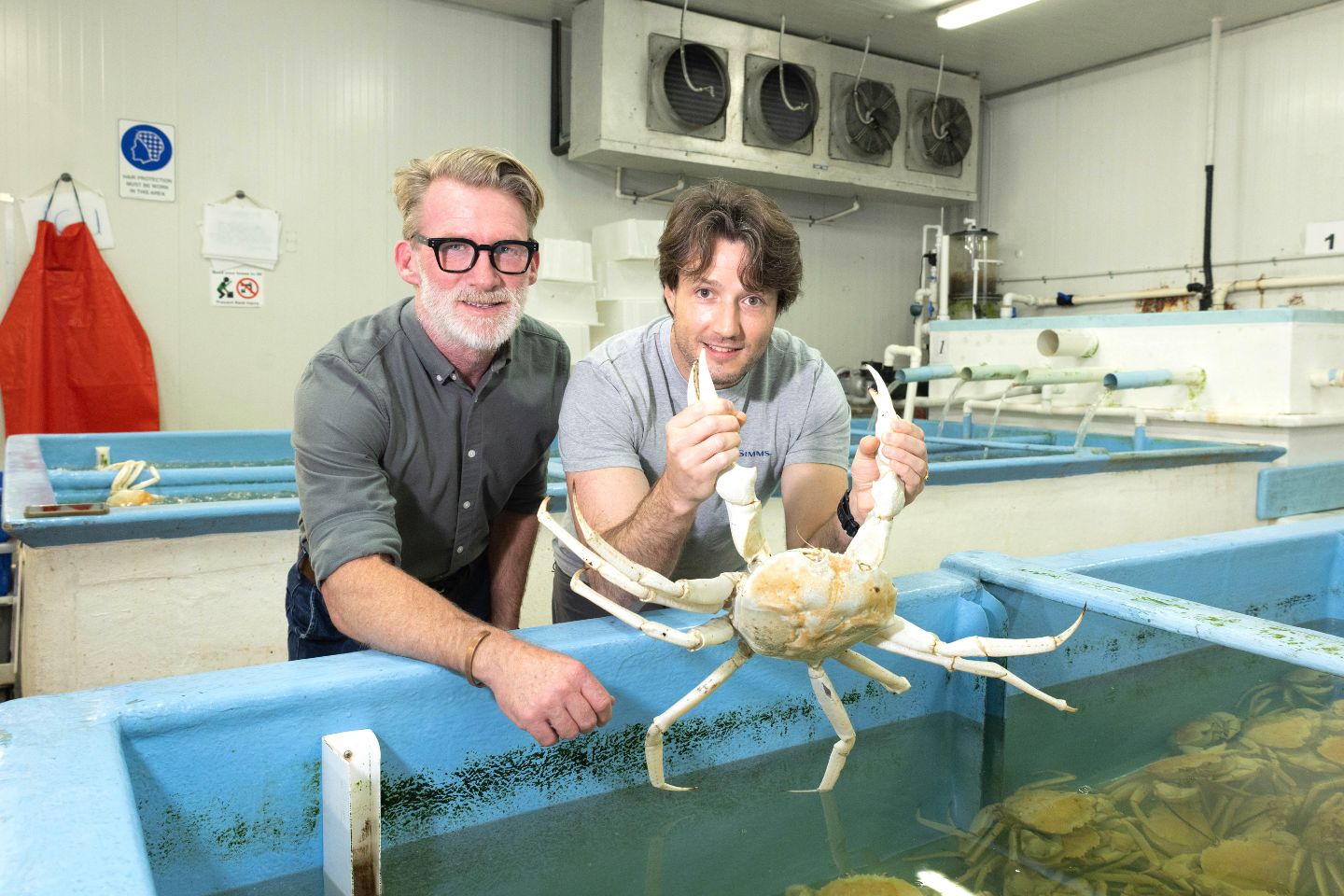
However, far from being daunted by becoming a boat owner, Mr Bass has two of them as part of a rising commercial fishing asset base gathered under an umbrella group called Aquatic Life Industries.
Having invested about $50 million since 2018, the Bass family office has become a significant player in some key fishing sectors, most notably crabs, both directly through fishing and via a wholesaling enterprise called Southern Trading Australia.
Mr Bass credits his son Sam, a keen recreational fisherman, for driving Aquatic Life’s inception, along with its key executive Steven Davies, who has emerged with a 15 per cent stake in the business.
Fishing is leagues away from the resources that made Mr Bass his fortune, or the technology development most associated with him since the launch of his major philanthropic enterprise: the Centre for Entrepreneurial Research and Innovation.
“I wanted to be in control of my own destiny,” Mr Bass said regarding the investment.
Although the fortune was made and is still largely connected to resources, The Bass Group family office targeted a broad spectrum of areas in which to put its shoulder to the wheel; from utilities to technology startups such as those that emerge from CERI.
In the end, though, it was fishing – neatly described as a limited entry, alternative asset class – that provided the opportunity, right on the Bass family’s doorstep.
“This has been perfect,” Mr Bass told Business News.
“To a tee it is what I was looking for.”
Mr Bass arrived in Perth in 1978 as a software developer with North American mining company Amax Inc to work on the Mt Newman iron ore project.
He established exploration and mining software company Metech in Perth in 1980 but eventually put his skills to work directly in the sector when, in 1993, he established and ran successful gold explorer Eagle Mining Corporation.
In 2000, Mr Bass and his co-founder, Tony Poli, embarked on their next project – Aquila Resources – which started in gold but transitioned to become a successful iron ore, coal and manganese developer. It was taken over for $1.4 billion in 2014 (from which Mr Bass earned about $150 million).
He has kept his hand in resources with US-focused Eagle Mountain Mining and an intertest in Canadian miner Champion Iron.
At a philanthropic level, Mr Bass established Nedlands-based CERI in 2015 to stimulate a high-knowledge, high-value innovation ecosystem by working with university and institute researchers to translate their work into positive commercial impact.
CERI has an incredible track record over the past decade, during which the Bass family have committed about $10 million in funding.
The 1,000 graduates from its various programs have launched dozens of companies.
Alumni entrepreneurs now employ about 130 people, hold patents across 18 inventions, have raised about $15 million and have a combined value of about $240 million.
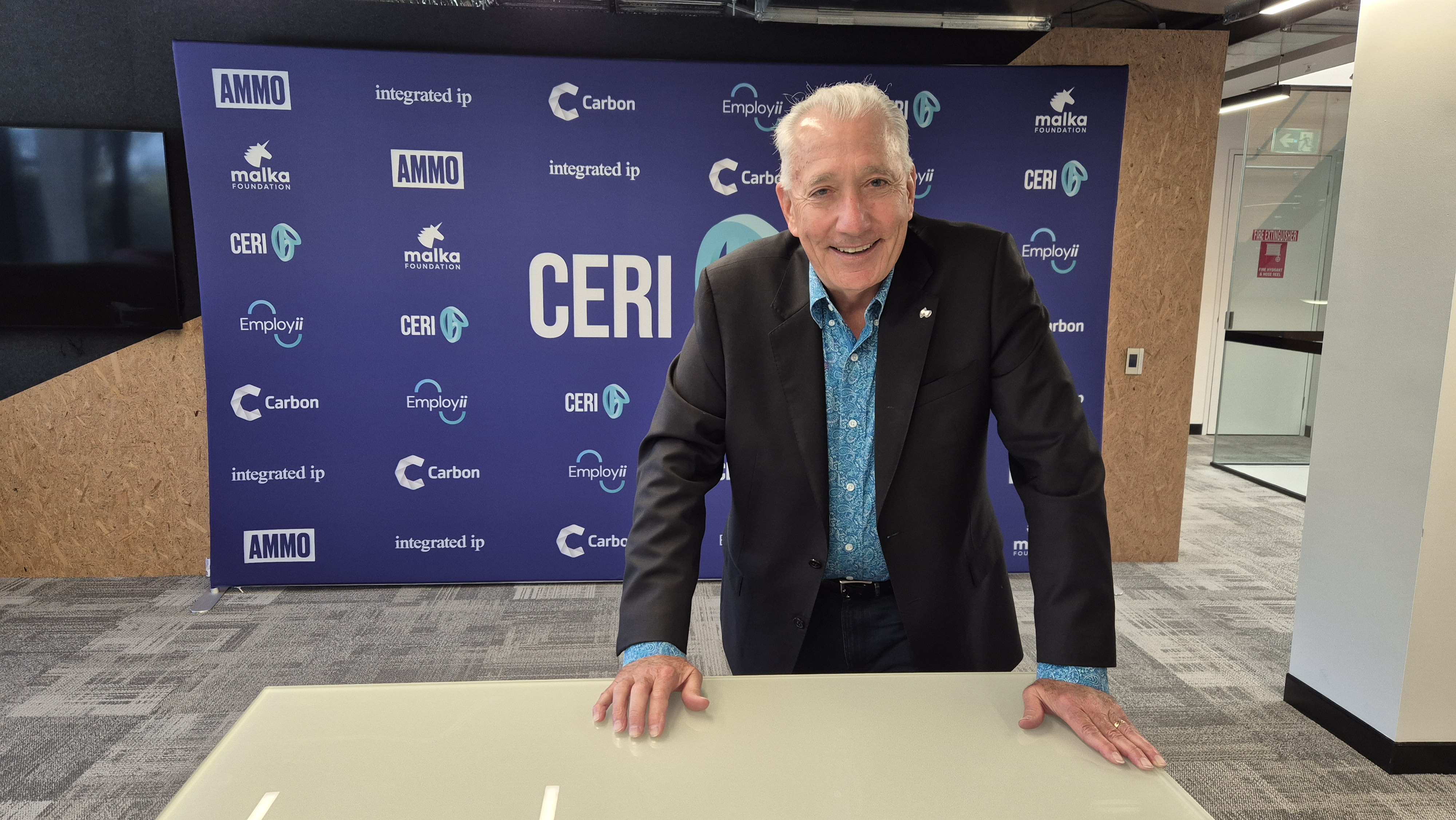
Charlie Bass at his headquarters in Nedlands. Photo Mark Pownall
Mr Bass has made clear The Bass Group doesn’t get involved with those in the program at the very early funding stages to avoid any perception of a conflict of interest.
However, the group has participated in some later-stage raisings in firms that started life at CERI.
“People said, ‘Charlie, you are doing this to find things to invest in’,” he said.
“It is arm’s length.
“Maybe one advantage I have is when you talk to VCs [venture capital funds] around the world, the number one thing they look for is people.
“Do you know the people? Do you know their values?
“If I have a competitive advantage in investing it is because I have seen them work and how they think.”
It is hardly surprising, therefore, that the fishing investment came from recognising the potential in an individual rather than an industry.
But it wasn’t Mr Bass who made the choice.
Fishing lure
Former CERI chief executive Carolyn Williams had met Steven Davies at a conference and thought the industry specialist might have something in common with Sam Bass, who has a self-confessed obsession with fishing.
That intuition was right and, after spending some time with the family office as a consultant, Mr Davies was brought on board.
His background includes having been raised in a multigenerational fishing family across the state border, in Port Lincoln, and then working in the field both there and, later, with a corporate barramundi operation – Marine Produce Australia – in the Kimberley.
Conscious of the growing chasm between primary production and consumers, Mr Davies had also researched the concept of a social licence to operate, producing a paper subtitled as Fishmongering and Fearmongering in the Modern Market with support from the Fisheries Research and Development Corporation as a scholar of the prestigious Nuffield Australia program.
By the time Mr Davies had started full time with The Bass Group, its dreams of investing in aquaculture, including breeding programs, had been put on hold as the group realised that developing an asset base and cash flow in more traditional fishing might serve them best at the start.
“We recognised that Steve was investable,” said Sam Bass, who was a student of one of CERI’s courses alongside Mr Davies around the time Aquatic Life was established.
“The industry was investable. “And I think that was our boom [moment]. “That’s also sad, in a way, [because] there’s a lot of generational fishing operations that the next generation either doesn’t want or can’t [take over] for some reason; or there just isn’t that next generation.
“So we’re very lucky to enter into these.
“Steve had made lots of friends in the industry; he has lots of fishing ‘dads’ in the state.
“A lot of these people trusted Steve and trusted his opinion of us as a family, which was very nice.
“Things kind of progressed from there.”
Sam points out the window from the Hamiton Hill headquarters of Southern Trading Australia to the Indian Ocean, 500 metres away across Cockburn Road.
“Our first entrance was actually just the sardines,” he said.
“There was a small sardine licence out here, which has gone up and down, being fished or not fished.”
The group’s next investment was in cockles in South Australia, due to Mr Davies’ familiarity with that region, followed by blue swimmer crabs in Shark Bay, where they kept their risk low by owning the licence and leasing it to others.
New opportunities arose as they learned the business and understood the operating models that might work best.
The crystal crab quota Aquatic Life now controls was held by three different families and was acquired piece by piece over two years or so.
Add a couple of fishing boats to the Southern Trading Australia operation, still run by long-term manager Yimong Bowen, and Aquatic Life looks like a traditional, fully integrated fishing business.
Minnows
Despite the profile of rock lobster, seafood is not a major component of agribusiness, let alone resources extraction, generating about $530 million a year in Western Australia, according to preliminary 2023-24 Abares data from the federal Department for Agriculture, Fisheries and Foresty.
Of that figure rock lobster represents more than half, at $285.8 million, while pearling is the next biggest at $95.8 million.
Both those major sectors are a shadow of their former selves.
At the turn of the century, notably the bumper 1999-2000 financial year, a record rock lobster catch of 14,605 tonnes was worth $385 million. Pearls, too, had their best year back then at $190 million, boosting total WA production to $744 million (worth more than $1.5 billion today).
In terms of single species, nothing else breached the $20 million per annum value for production in 2023-24, with scallops ($19.1 million), prawns ($18.4 million) and tropical snapper ($14.3 million) being the products worth more to WA than crabs at $12.4 million, according to the preliminary data.
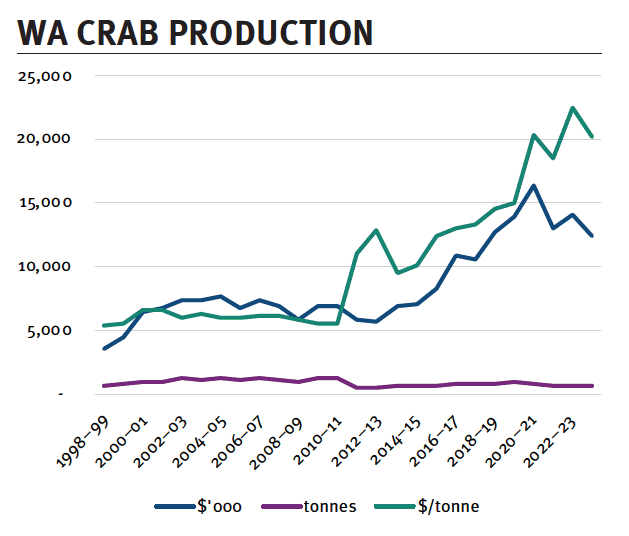
The data also shows the value of the crab catch has risen four-fold this century – most notably in the past decade – while the volume has been less volatile than many other hauls.
However, even with the crab production likely to have grown significantly since the 2023-24 financial year, it remains a small niche within the various WA fisheries.
Aquatic Life claims to be the biggest crab quota holder in WA, with the species representing the bulk of the more than $17 million it turned over in the 2025 financial year.
While it fishes for blue swimmer and king crab, its main game is Chaceon Albus, which it refers to as crystal crab and is otherwise commonly known as snow crab.
Sold mainly to Chinese communities in Australia with about 30 per cent exported to China itself, the deepwater species is highly prized for its physical size, thin shell, significant meat quantity, taste and the colour of the shell from which it derives its name (Albus means white, in Latin).
For the hospitality sector an attractive feature of the species is that it remains white when cooked, unlike most crustaceans.
Net wealth
Charlie Bass is not the only Rich 100 entrant whose interests have spread to the seas around WA’s pristine coastline.
Harvest Road, the agribusiness arm of Andrew and Nicola Forrest’s family office Tattarang, has been in the fishing sector for a few years, operating under its Leeuwin Coast brand.
In 2020, Harvest Road acquired 150 hectares of aquaculture leases in Albany’s aptly named Oyster Harbour as part of the assets of Ocean Foods International, as well as about 80ha of leases at the nearby Mistaken Island.
Around that time, it also secured leases in Cockburn Sound near Perth after buying out WA’s last surviving mussel farming business, Blue Lagoon. That brand does not appear to be in current use, however.
Meanwhile, Harvest Road’s efforts to build an oyster project in Carnarvon was reportedly thwarted by disease.
In late 2021, Tattarang sold out of Huon Aquaculture, a major salmon farming player in Tasmania, for $29 million, making a $9 million profit.
Just to take its industry penetration further, Tattarang also owns commercial boat builder SFM Marine.
Another Rich 100 member, resources billionaire Chris Ellison, has taken a keenness for fishing to another level, having controlled Northern Territory-based Wild Barra Fisheries since 2019.
A year ago, Wild Barra reportedly controlled licences that represented around 75 per cent of the territory’s 160t/year barramundi industry and was investing in new shore-based infrastructure in Darwin to deal with its catch.
It also fished in Queensland waters.
While fishing may be a relatively small investment for these players, WA billionaire Tim Roberts is believed to have had a significant part of his portfolio in the sector, having acquired a big exposure to rock lobster licences.
Mr Roberts is fond of alternative investments, including aircraft leasing, and has a lifetime of exposure to the sector: initially through holidays in the Abrolhos Islands off Geraldton where he still has a getaway.
Back in 2003, he was understood to have secured a key portion of the assets of failed rock lobster processor Bluewave Seafood, formerly Fremantle Fishermen’s Cooperative, which was dismantled through a series of trade sales having fallen into administration.
Mr Roberts is thought to have continued investing and amassed a big quota, riding volatility in the sector impacted by environmental, regulatory and geopolitical issues.
In 2020, it was reported Mr Roberts was president of a body incorporated under state law that oversaw the management of the Wallabi group of islands, one of four such bodies that governed the use of leasehold land across different parts of the Abrolhos archipelago.
Proof that fishing and aquaculture offer major challenges can be found in the operations of Seafarms Group, where Ian Traher is the biggest shareholder.
Mr Traher, who was listed in the Business News inaugural Rich 100 in 2024 with a fortune estimated at $190 million at the time, has been a major backer of Seafarms and its vision for a significant prawn-based aquaculture business.
ASX-listed Seafarms has operating assets in Queensland, but its blue-sky initiative Project Sea Dragon ran into financial trouble and ended up in the hands of a liquidator.
Late last year, Seafarms acquired the assets and undertakings of Project Sea Dragon from the liquidator, paving the way for a return of the trouble-plagued concept to develop new farms, hatcheries and infrastructure across WA and the Northern Territory.
Sustainability
Having substantial private financial backing has advantages when it comes to the patient capital required to innovate and develop new ideas, including research that is often required in a sector closely watched by environmentalists.
One of the areas the Bass family business is driving into is cockles, which Charlie Bass prefers to call vongole, using the Italian name popular in restaurants.
Aquatic Life believes there is some opportunity for this species in WA, notably in Shark Bay, where they are harvested by hand: a process the founders believe may have tourism potential and provide commercial earnings from production.
Shark Bay is one of a number of regional centres in which Aquatic Life has interests and, in many cases, permanent staff; or is at least a frequent visitor through its fishing boats. Its ongoing regional presence is something the business leaders emphasised.
For instance, on top of being the biggest holder of west coast deep sea crustacean fishing licences along the extent of the WA coast, other licences include: Shark Bay low-impact pots for blue swimmer crabs; South West multi-species fishery; Albany aquaculture; West Coast purse seine; and being the biggest holder for crustacean in three South Coast zones.
While the recent fishing bans for demersal species in much of WA’s waters is in the back of their minds, the Aquatic Life team is circumspect about the regulatory move, which has only had a limited impact on their operations.
Sam Bass believes that the company’s goal of scale and diversity of species would allow the business the flexibility to be the master of its own destiny.
“The beauty of when we have that critical mass, financially, we can decide not to fish, which I’m really excited about,” he said.
“One day we can just decide not to fish for a certain area or a certain species, to help bring things back, even just as an experiment.”
Mr Davies said marine resources could be more sustainable than any others if managed well, which he believes was generally the case in Australia.
“We have a long history of managing our aquatic resources incredibly well in this country,” he said.
“And so, what wild harvest fishing represents, and one of the beauties of it is essentially for nature to produce something for you with not just low input, but zero input.
“That, for the most part, puts it streets ahead, from an ecological sustainability perspective, of any other food production method.
“Well-managed fisheries cannot just exist for a long time; they can exist in perpetuity.”