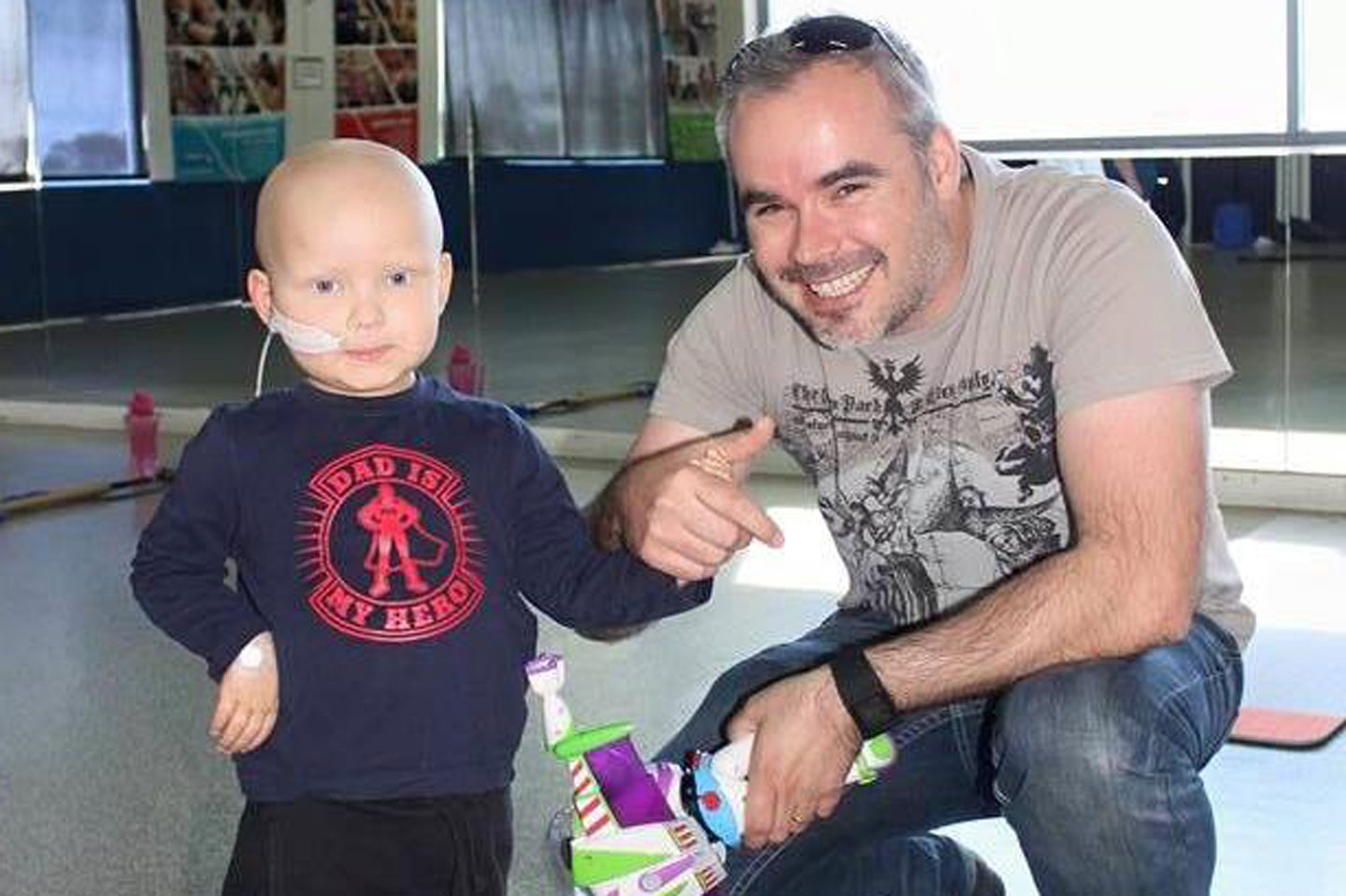
There is a moment Richard Nell carries with him, not from a boardroom or fundraising gala, but from a hospital ward where time seemed to stretch endlessly and certainty dissolved, the day his son Kai was diagnosed with cancer at just two years old, followed by eight months living inside hospital walls and then two more years moving between treatment, recovery and relapse, a life reshaped by bone marrow transplant, sleepless nights and the quiet terror that no parent is ever prepared to face.
“It’s not something you imagine happening to your family,” Richard says, “but once you’re inside that world, you quickly see how much support families actually need and how little exists beyond medical treatment.”
Before Kids’ Cancer Support Group, Richard’s life looked very different, career in insurance and claims in the UK followed by real estate after relocating to Australia, yet when Kai was diagnosed his wife began volunteering with KCSG supporting families on the ward, and over time Richard joined too, eight years later being invited onto the committee and eventually stepping into leadership, not as an outsider offering help but as a father who had lived every stage of the journey.
“Our committee is made up entirely of lived experience,” he says. “Every one of us has walked this road, and it changes how you lead and how you listen.” Among them are corporate professionals, community leaders, and individuals accustomed to boardrooms and public platforms alike which is a reminder that childhood cancer does not discriminate.
Founded 43 years ago, Kids’ Cancer Support Group has quietly become one of Western Australia’s most essential support organisations for families navigating childhood cancer, connecting with hundreds of families each year across the state and offering practical, emotional and logistical care from diagnosis through recovery and sometimes through grief, their philosophy simple yet profound, to fill the gap and ensure no family faces childhood cancer without the support they need.
“We’re not medical, we’re not therapy, we’re the in-between,” Richard says, “the support that happens when the doctors leave the room.”
On the ward that may mean fresh pyjamas, warm meals, coffee or a toy, small gestures that open the door to trust and connection, while off the ward it can mean something far more fundamental, deep-cleaning a family home while parents remain at the hospital, tending gardens, preparing meals or simply being present when the weight becomes too much.
“It starts with practical things,” he says, “but what we’re really doing is telling families they are not alone.”
The impact is often immediate and unforgettable, like the visit to a little boy recovering from a brain tumor who had not walked since surgery, until volunteers arrived with a toy trolley and during a simple conversation he stood up and walked towards it, a moment that left his parents in tears and everyone in the room holding their breath.
“Little gestures,” Richard says quietly, “big impact.”
Funding remains a constant challenge yet demand continues to grow as more children are diagnosed and more families relocate to Perth for treatment, while the current KCSG facility, a modest house away from the hospital, can no longer meet the scale of need.
“We’ve outgrown our home,” Richard says, “and families need us closer.”
The vision now is a purpose-built KCSG House creating a welcoming sanctuary where families can rest, connect and access wraparound care under one roof. With peer support workers on site, play therapists, communal kitchens, quiet rooms and healing gardens, it will offer children and parents space to breathe beyond the fluorescent glare of the ward. Crucially, it will be designed to meet the clinical realities of childhood cancer, many of these children are immunocompromised, requiring a facility that is not only comforting, but medically suitable, hygienically controlled and purpose-built to support their complex health needs.
“We want to be a conduit to every other support service,” Richard says, “a place that holds families through the whole journey, not just parts of it.”
The cost is significant, around $2 million, yet the ambition is grounded not in aspiration but necessity.
“Childhood cancer isn’t going away,” he says, “it’s still the biggest disease-related killer of children, and if we can make the journey more bearable, emotionally, practically, humanly, then that’s where we need to be.”
Balancing compassion with strategic leadership comes naturally because the mission is personal.
“Life puts you where you’re meant to be,” Richard reflects, “this is what I’m meant to be doing.”
He has learned that people want to help but need a pathway, that small amounts of funding can transform a family’s experience, and that community is not a luxury in crisis but essential infrastructure.
“If you support us,” he says, “you’re impacting hundreds of families every year, and we embrace every single one.”
As Kids’ Cancer Support Group prepares for its next chapter, the message is simple, community support will build a home where compassion lives just steps from the hospital doors, ensuring that when childhood cancer enters a family’s life without warning, they never have to walk the path alone.






 15 Sep 2026
 26 Jun 2026
 08 Dec 2025