Reach Resources’ recent metallurgical test results from its Murchison South gold project in Western Australia confirm that its proposed ore is free-milling, relatively soft and highly amenable to conventional gravity and cyanide leach processing.
The results show the material to be ideal for third-party toll milling or ore purchase deals at nearby facilities.
The standout results from the testwork, managed by JT Metallurgical Services and run at Bureau Veritas laboratories in Perth, really put Murchison South in a strong position.
Across three representative ore composites, gold recoveries clocked an outstanding 95.2 to 97.4 per cent using a straightforward gravity circuit followed by cyanide leach at a P80 of 106 microns.
In simple terms, 80 per cent of the crushed rock was ground fine enough to slip through a 0.106mm screen – a very typical grind size for gold plants and a sweet spot between recovery and cost. Better still, the tests were run using actual site process water, giving a realistic snapshot of how the ore is likely to behave in a nearby toll treatment mill.
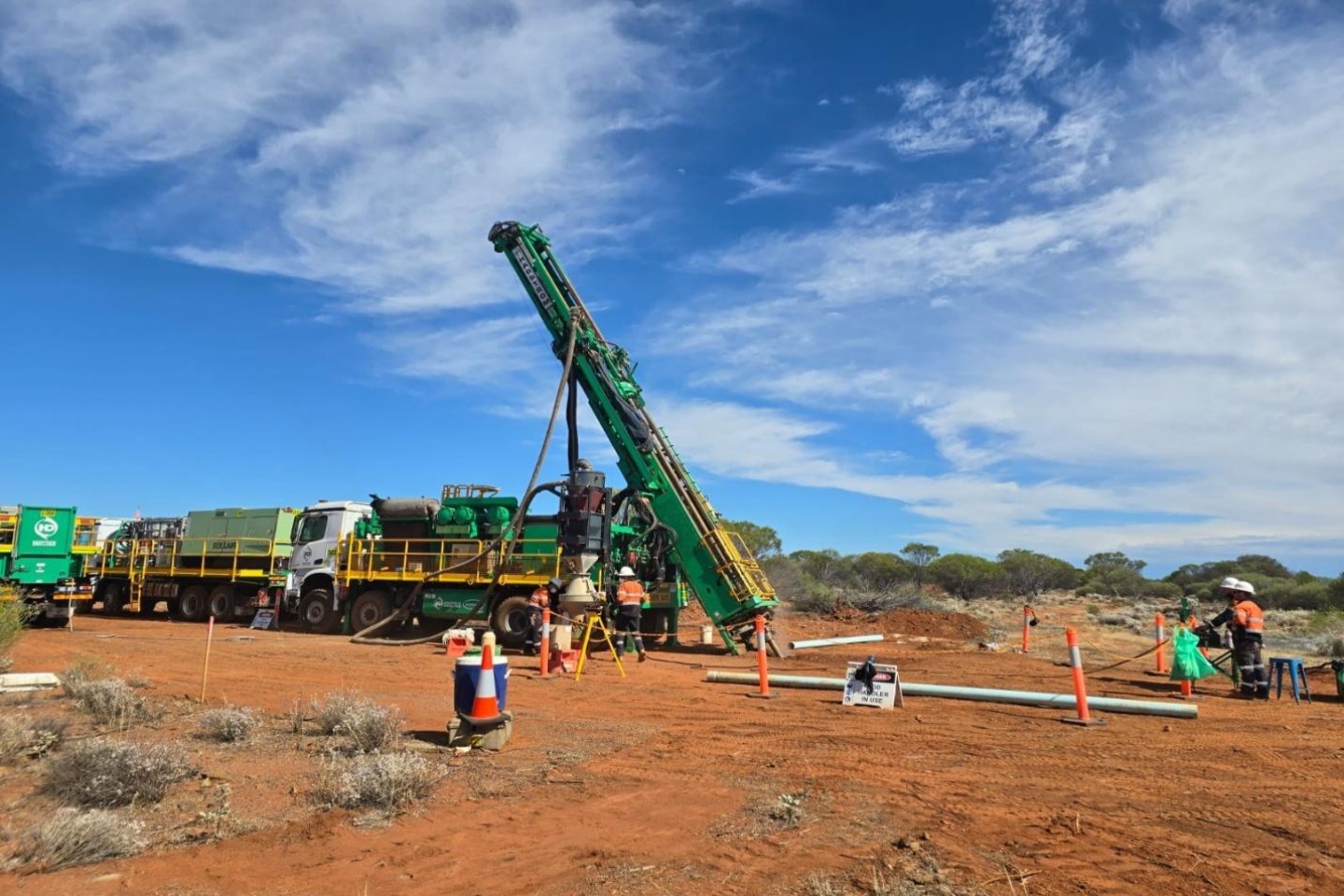
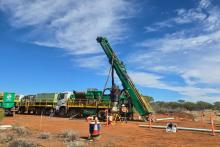
Two of the three composite samples were built up from a blend of diamond drill core – pulled from 127 metres across two holes – and RC drill chips, creating parcels that reflect the planned MC1 North Zone and MC2 Central Zone mill feed. Both samples were designed to mirror a target head grade in the 1.4-1.5 grams per tonne gold range, providing a realistic snapshot of what early plant feed could look like.
A third variability composite was taken from near-surface oxide or weathered zones, in case shallow material is used for early stockfeed.
Reach Resources chief executive officer Jeremy Bower said: “We have undertaken a thorough and comprehensive metallurgical test regime, and the results demonstrate that the ore is free milling with high gold recoveries achieved across the tested composites. The outcomes provide technical support for further assessment of processing options for the Murchison South Gold Project.”
Additionally, cyanide leach times were fast, with no sign of what is known as “preg-robbing”. This is a problem in which certain carbonaceous material in the ore acts like a sponge, adsorbing dissolved gold from the pregnant solution before it can be recovered, which reduces overall recoveries.
Grind sensitivity was low once the material was milled to about P80 150 microns, meaning the softer, weathered and oxide ore should respond well to a slightly coarser grind, using less power and costing less to process. The fresher, harder rock, meanwhile, still appeared to deliver its best performance at the finer 106-micron grind.
The company says another big tick for the flowsheet came from the reagent side, with both lime and cyanide consumption staying pleasingly low throughout the tests. On top of that, the ore showed only minor levels of troublesome elements, such as heavy metals, and the final leach residues proved non-acid-forming – a handy environmental benefit that could simplify tailings management down the track.
Comminution tests – which examine the crushing and grinding properties of the feedstock – have confirmed the ore is relatively soft but still competent, making it suitable for conventional ball mills, semi-autogenous (SAG) mills, or hybrid setups, which could potentially allow for higher plant throughputs.
Finally, the rheology tests, which show how the slurried ore flows and behaves when pumped through the plant, showed no major handling headaches.
Reach says the standout metallurgical performance has gone a long way to de-risking the processing pathway and adds real weight to its plan to pursue toll treatment as a fast-track route to production, sidestepping the need to build its own mill.
The approach looks especially attractive thanks to the project’s prime position close to operating processing plants, already granted mining leases and established site infrastructure, all while enjoying the strong tailwinds of a robust gold price.
The scoping study is continuing in parallel with the testwork, however, with favourable characteristics across grinding, leaching, reagent use and environmental profile, Reach’s 67,000-ounce Murchison South project is shaping up as a low-capex, near-term gold producer via one of several possible toll-treatment routes.
Solid metallurgical validation appears to have set the stage for an early cashflow entry into the mining business, so Reach will be worth watching as it works through its scoping update updates and follow-on work as the company refines its Murchison gold play.
Is your ASX-listed company doing something interesting? Contact: matt.birney@businessnews.com.au


 By Doug Bright