

OPINION: A new venue in Victoria Park has disproved a long-held assumption about heritage.

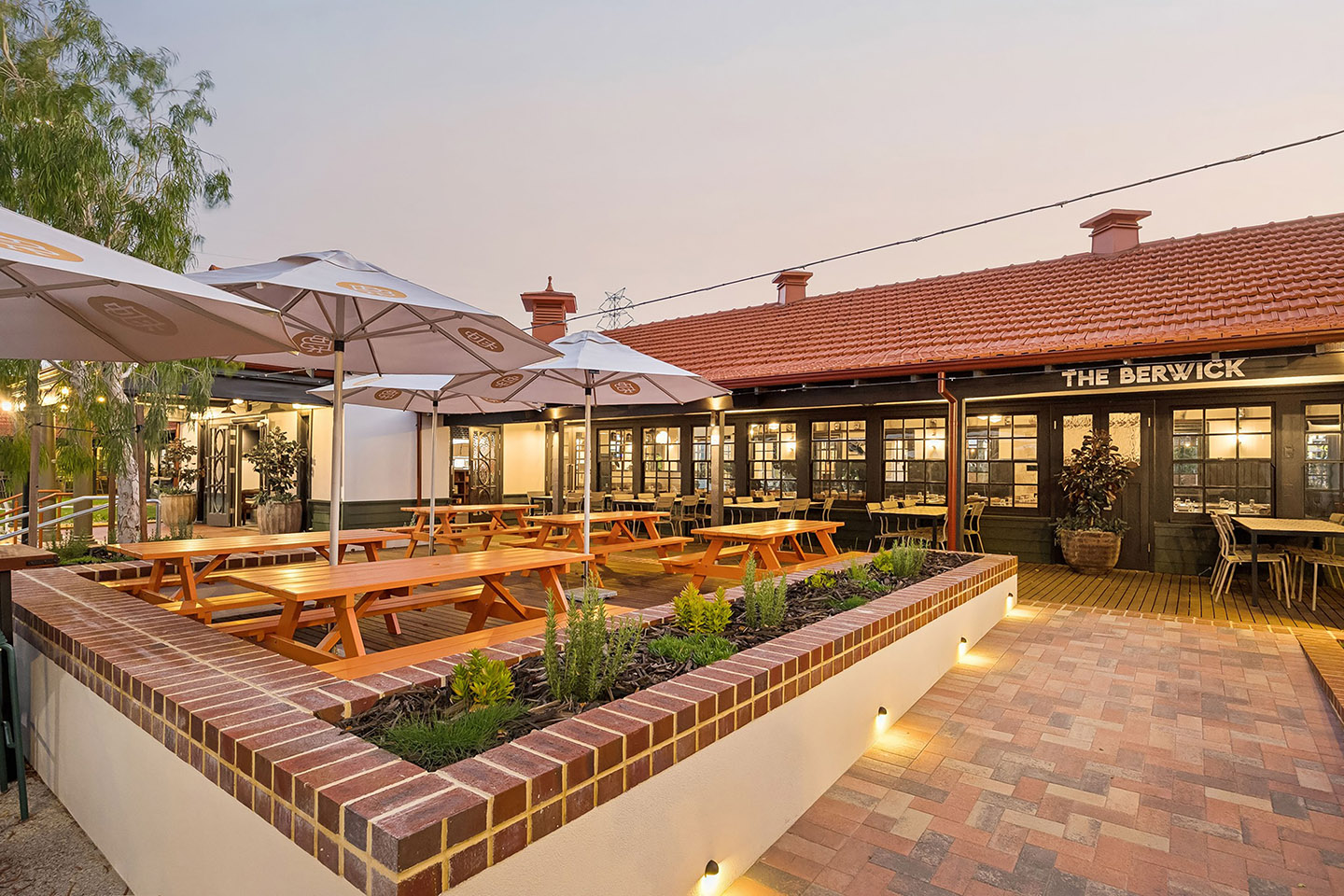
Victoria Park’s newest watering hole is brilliant.
Baillie Hill, opened in January, has upped the ante in the battle to get families to visit and open their wallets.
The outdoorsy feel of the place is good. The nature playground is great. But what really sets a new bar for venues is the animal farm.
Yes, an animal farm. Madness, right?
Really, it is genius.
The longer the kids are happy and occupied, the longer parents and their mates can stay around, contribute to the atmosphere, and buy drinks.
Baillie Hill is following the well-worn path of the past decade of venues chasing the family dollar.
Every pub my mates and I enthusiastically patronised as teenagers now has a playground and promotes itself as a ‘family-friendly venue’.
Gone are the days when dingy pubs could survive off the wallets of a few old mates sitting around the bar, slinging back pints while shouting at a TV screen showing animals running around a track.
It is telling that the only watering hole on the Albany Highway cafe strip yet to move with the times is also the quietest.
The owners of that pub, Franklins Tavern, have clearly seen the writing on the wall, proposing plans to evolve into what looks like a much better venue.
The big question is, what will the next venue do to one-up Baillie Hill’s animal farm?
Baillie Hill also carries with it an important lesson for local governments, state government agencies and private landholders in possession of vacant heritage buildings.
For decades, it seems, the preferred course of action for owners of those assets has been to board-up these buildings and let them fall into a state of disrepair too severe to fix.
By doing so the heritage asset becomes so damaged that there is no option left but to demolish it (often replacing it with a boring glass box).
Baillie Hill has shown what is possible when landowners and businesses work together.
The Town of Victoria Park deserves plaudits for thinking outside of the box, and for being open to a public park being used for commercial gain.
Kudos, too, to Blackoak Capital for jumping at the opportunity and doing the venue justice.
Their commercial gain is also providing great benefit to the community.
What the council and Blackoak have created is something that should be replicated across many of Western Australia’s heritage buildings and public spaces.
That is, the public use of buildings that contributes to a community’s sense of place.
The Exchange Hotel in Pinjarra is another example of this.
Opened in 2024, it is an excellent collaboration between local government and a hospitality business that did away with red tape to do the right thing by a heritage asset.
Too many of these heritage buildings are still boarded up by their landlords until they crumble and fall.
There is now more than enough proof that it is possible – and profitable – to throw open the doors.
The onus is on government and private landholders to make sure this happens.