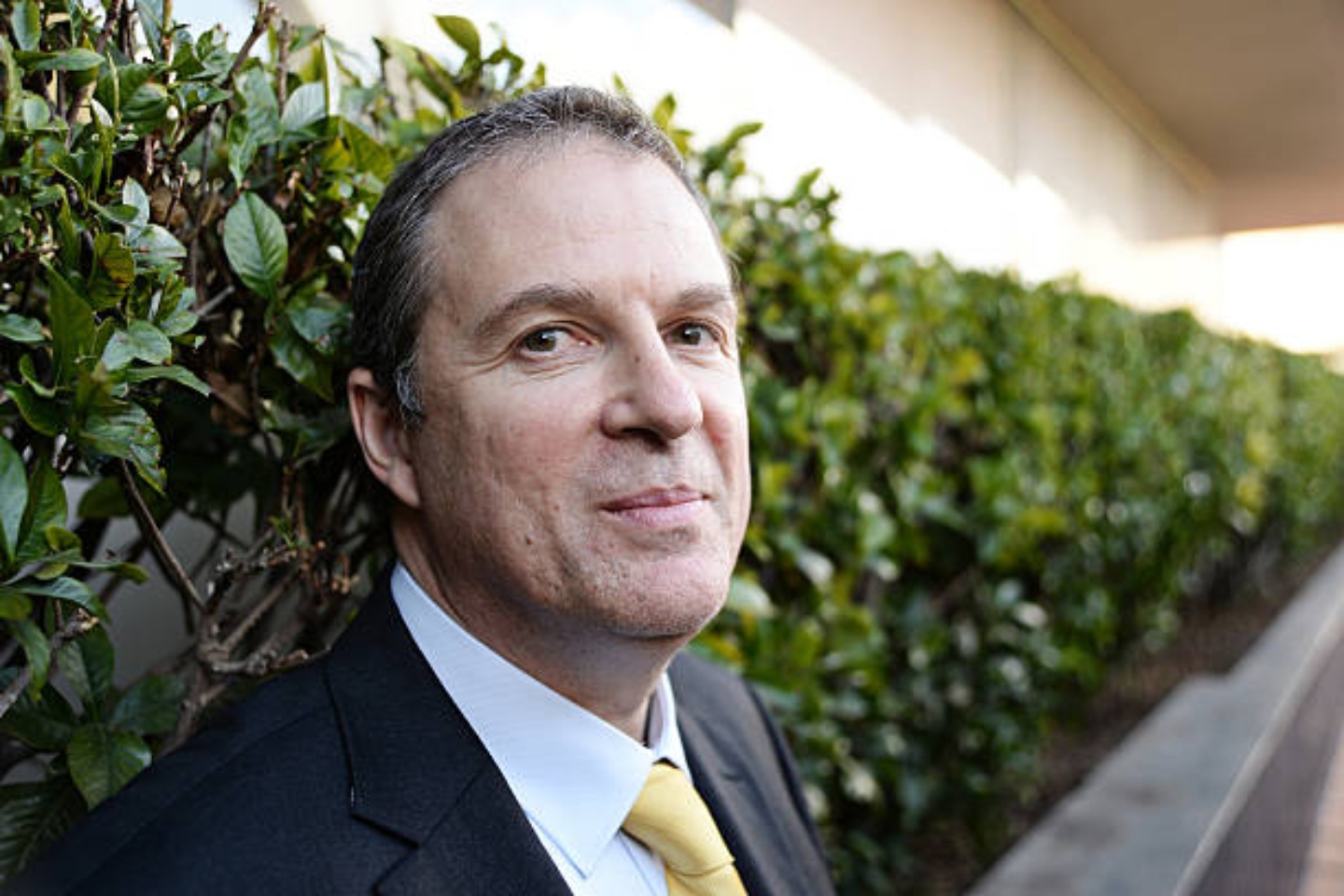
Middle Island Resources has made a decisive leadership move, appointing mining industry veteran Peter Spiers as its new chief executive officer, effective immediately. The appointment appears to signal the board's intent to convert early exploration success in Serbia into something more substantial.
Spiers is no stranger to the Middle Island story. He previously served as executive chairman of Konstantin Resources, the private company that assembled much of the Serbian portfolio before its acquisition by Middle Island. The company says that history has given him deep familiarity with the assets, the geology and the local operating environment.
Spiers was formerly group manager of business development at WMC Resources and later founded Orbis Gold, where he oversaw the company’s transformation from an Australian-focused explorer into a West African gold success story.
Under his leadership, Orbis delivered multiple discoveries totalling 2.6 million ounces of gold, before being taken over by Canadian miner Semafo in a hostile acquisition.
The appointment has come just as Middle Island released encouraging assays from a maiden phase one reverse circulation (RC) drilling program at its Bobija polymetallic project in Serbia.
The results have confirmed widespread, near-surface gold-silver-base metals mineralisation across a much broader area than was historically recognised.
The 11-hole program totalled 816 metres at an average hole depth of 78m. It was designed to test known sulphide-barite zones identified in historical underground workings, as well as step-out extensions beyond the previously defined central, west and north mineralised zones.
Key results from the work confirm continuity of a thick, highly-mineralised flat-lying zone spanning about 300m by 300m, with the mineral footprint remaining open, linking zones previously considered separate.
Top intercepts from the program include a solid run in a drillhole collared between the West and North zones that was previously considered barren, with 52 metres at 1.17 grams per tonne (g/t) gold, 26g/t silver, 0.12 per cent copper, 0.39 per cent lead and 1.01 per cent zinc from 9m depth.
The intercept included 10m going 2.18g/t gold, 47.2g/t silver, 0.14 per cent copper, 0.76 per cent lead and 0.73 per cent zinc from 9m.
A second hole, in the same zone as the previous hole, delivered 17m at 1.44g/t gold, 34.6g/t silver, 0.18 per cent copper, 0.49 per cent lead and 1.97 per cent zinc from 40m.
That intercept was complemented by a further 11m at 1.14g/t gold, 52.1g/t silver, 0.24 per cent copper, 1.19 per cent lead and 1.56 per cent zinc from 71m, including 4m at 1.83g/t gold, 118.8g/t silver, 0.55 per cent copper, 2.66 per cent lead and 2.86 per cent zinc from 78m.
A third hole – on the same section as the previous holes but collared above the western exposure, intercepted 11m at 3.15g/t gold, 22.6g/t silver, 0.10 per cent copper, 0.57 per cent lead and 1.09 per cent zinc from 28m.
These hits were complemented by a further three holes, all of which threw up similar and significant numbers.
Middle Island Resources Non-Executive Chairman Daniel Raihani said: “The results of our maiden drilling program at Bobija, Serbia, further highlight the exceptional potential of the area and are exciting for several reasons. We have successfully extended the known footprint of the Bobija deposit, and mineralisation remains open in all directions. In addition, we have intersected thick zones of substantial mineralisation in areas previously considered barren, further adding to the overall footprint of the deposit.”
Middle Island says the results also neatly line up with its recent channel sampling results, highlighting strong gold and silver mineralisation linked to base metals.
Middle Island’s highly successful maiden drilling at Bobija has significantly expanded and consolidated the known mineralised footprint, giving the system a clear shape and reinforcing the project's potential for a large-scale polymetallic system.
The company is now planning a phase two program, which may include diamond core drilling for better geological understanding, while awaiting final barium assays.
The Bobija project lies within the globally significant Tethyan Metallogenic Belt, a vast, world-class geological region that stretches over 10,000km from the Balkans in southeastern Europe, through Turkey, the Middle East, Iran, and into the Himalayas and Southeast Asia.
With open-ended mineralisation evident throughout the target area, new results expected from regional targets and a highly credentialed CEO now at the helm to drive accelerated exploration, Middle Island Resources appears well positioned to unlock substantial value from its Serbian portfolio through 2026 and beyond.
Is your ASX-listed company doing something interesting? Contact: matt.birney@businessnews.com.au


 By Doug Bright