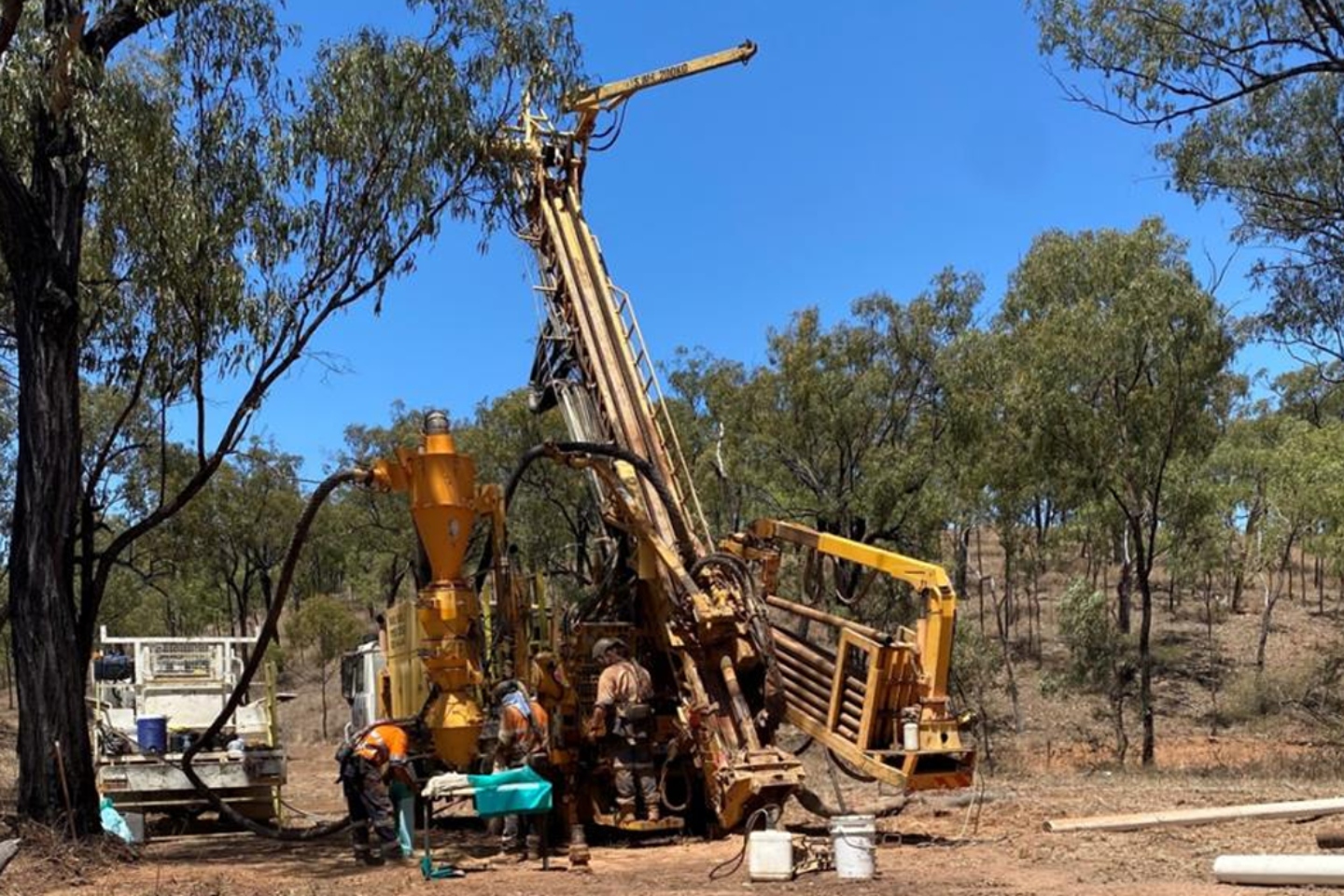
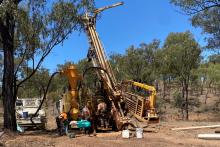
Moonlight Resources’ first swing with the drill bit at its Clemont project in Queensland has struck thick, shallow gold, including two standout holes of 40m at 1.3 grams per tonne (g/t) from surface and a further 34-metre hit averaging 1.37g/t from only 6 metres downhole. That intersect also included a 10-metre core tipping in at 2.52g/t.
Notably, both holes ended in mineralisation.
Impressively, all 14 holes in the maiden reverse circulation (RC) campaign hit gold from near surface, delivering consistent mineralisation across multiple drill sections. More importantly, the results suggest the system hangs together, demonstrating downhole and strike continuity within the Leo Grand Shear Zone - a hallmark of scale-sized prospects.
Management says the first stage RC program was deliberately lean and fast, designed to validate and stretch the existing geological model built around 70 historical drill holes across the prospect.
Previous operators hit pay dirt more than once, pulling hits such as 46m grading 1g/t gold from near surface, 22m at 2.25g/t gold from 40m and 19m at 3.35g/t gold from 34m depth.
Moonlight recently secured the forgotten Clermont gold project – a 265 square-kilometre landholding in one of Queensland’s most historically productive gold belts - from Diatreme Resources for 16.25 million shares in Moonlight and a token $250,000 in cash.
Despite the broader district coughing up more than 6.5 million ounces of gold, large stretches of the Leo Grande trend have seen little in the way of modern, systematic drilling.
Moonlight Resources managing director Greg Starr said: “Intersecting thick, near-surface gold mineralisation in every hole drilled, with step-out holes finishing in mineralisation, highlights the consistency and scale potential of the system we have on our hands. Importantly, drilling to date is a very long way from defining the limits of mineralisation, and points to what could be a major new gold system.”
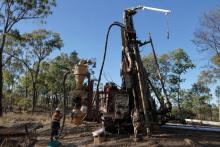
Moonlight has wasted no time, with the rig set to roll back in any day to punch out another 3000 metres at the Leo Grande trend before turning the rods on the nearby Goldfinger prospect, where a further 2000m is planned to test and extend mineralisation.
Gold Finger sits within an east-west-trending siliceous zone with outcropping quartz veins in a pyritic, chlorite-altered schist.
Limited drilling to date has turned up impressive near-surface hits, including 18m grading 3.5g/t gold and a sizzling 8m running at 6.54g/t gold. Yet despite the early success of the 1990’s, the second target on Moonlight’s drill card remains virtually untouched below the oxide zone, leaving plenty of blue sky for the upcoming drilling.
Gold’s meteoric rise was turbocharged overnight, blasting through yet another record high to land at US$5024 (A$7264) an ounce. Some market pundits have touted that the price of the precious yellow metal could surge as high as US$6400 (A$9254), as investors increasingly favour gold as a safe haven asset amid ongoing global geopolitical uncertainty.
With the rig primed to roll in, a near-surface gold trend that remains open in multiple directions and housed in a proven gold district known to cough up some serious ounces, Moonlight appears to be just getting started at Clermont.
Throw in a red-hot gold price and things could get interesting quickly for this junior explorer.
Is your ASX-listed company doing something interesting? Contact: matt.birney@businessnews.com.au






 14 Oct 2026
 01 Sep 2026
 27 Aug 2026
 12 Aug 2026
 03 Aug 2026
 27 Jul 2026