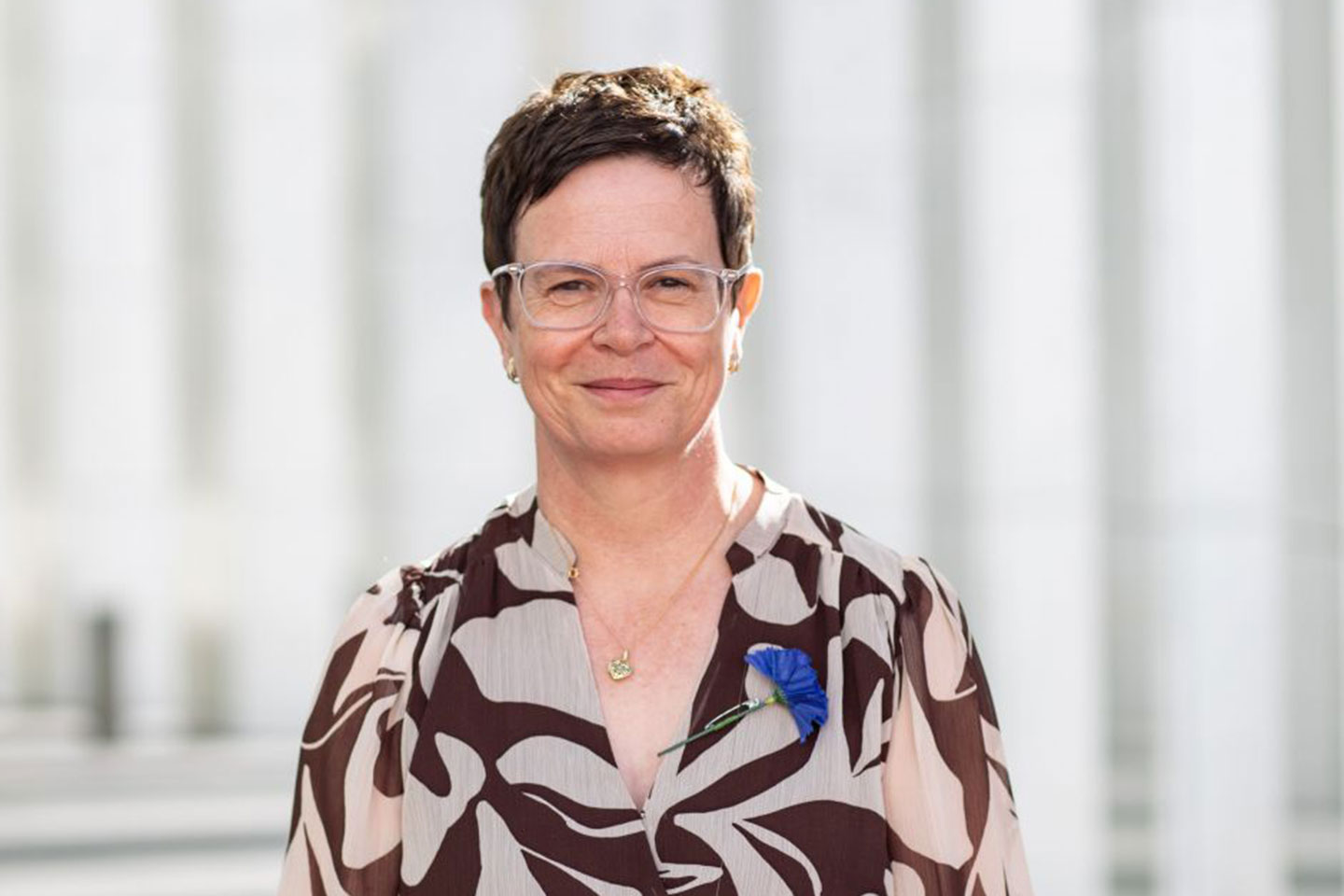
For some people, a career unfolds through trial and error, a series of roles that gradually reveal what fits and what does not. For Maeve Egan CEO OF MNDAWA, the trajectory was clear from the beginning. Long before executive titles or organisational strategy entered the picture, she understood that her work would centre on people. Helping others was not an ambition discovered late, it was a constant thread, one that would quietly guide each professional decision.
Egan’s early pathway pointed toward nursing, a profession traditionally associated with care and service. However, it was her experience working directly in the community that proved most formative. While studying, she worked as a support worker with an agency delivering disability and health services, gaining firsthand exposure to the lived realities of individuals navigating complex and often life-altering conditions.
“It was in those one-to-one environments that I realised the real impact happens when you take the time to understand the person, not just the process,” Egan says.
That insight prompted a strategic shift. Nursing studies transitioned into a focus on the health sciences and a major in health promotion, broadening her understanding of the policy that shapes health and disability systems. The combination of frontline service delivery and structural oversight equipped her with a dual perspective, the ability to navigate both the human and operational dimensions of leadership. “You can’t lead effectively if you don’t understand what the work feels like on the ground,” she notes. “The nuance informs better decisions.”
Egan first joined Motor Neurone Disease WA in 2013 as programs manager, gaining operational visibility across MND advisory services, equipment coordination, education and volunteer portfolios. The role provided comprehensive insight into the challenges faced by individuals living with Motor Neurone Disease (MND) a progressive neurological condition that places significant emotional and logistical strain on families and health systems alike.
In the years between her initial tenure and her return as Chief Executive Officer, Egan held senior executive leadership roles delivering NDIS-aligned allied health services within community settings which proved to be an experience that deepened her expertise in large-scale service delivery, funding navigation and multidisciplinary workforce management across the disability sector.
Her return to Motor Neurone Disease WA as Chief Executive Officer represents less a reinvention than a strategic full circle. The organisation she re-entered had become more complex, shaped by evolving funding structures, the expansion of the National Disability Insurance Scheme and increasing pressure on allied health services. What remained unchanged was the organisation’s central mandate, ensuring that Western Australians living with MND are supported through every stage of the disease trajectory.
The scale of that responsibility is measurable. In the most recent reporting period, Motor Neurone Disease WA supported 302 Western Australians living with MND, including 242 in the Perth metropolitan region and 60 in regional or remote communities, where access to specialised services can be limited. The organisation conducted 3,072 individual consultations and loaned 736 pieces of essential equipment, including mobility aids, respiratory devices and communication tools , resources that directly influence independence and quality of life.
Under Egan’s leadership, the organisation’s relatively lean structure which consists of a small professional team supported by a strong volunteer base has become a strategic advantage. Agility allows for personalised service delivery, faster decision-making and deeper stakeholder engagement. In an environment increasingly driven by efficiency metrics and funding constraints, Motor Neurone Disease WA has deliberately prioritised presence and responsiveness as core operational values.
“Our mission is to provide specialised support and care services for people living with MND in Western Australia,” Egan says. “In a world that is becoming increasingly system-oriented and fast-paced, we have to remember to slow down, to be present and responsive, and to sit with people”
Program innovation has also been a focus. The recently re-imagined GATHER initiative consolidates the organisation’s education and peer-support offerings under a single platform, providing structured workshops, facilitated discussions and practical resources for individuals and carers. The program reflects a broader understanding that effective service delivery must extend beyond clinical or logistical assistance to include emotional resilience and community connection.
For Western Australia’s business community, Egan’s leadership underscores a broader executive principle, sustainable impact is built at the intersection of empathy and operational discipline. Motor Neurone Disease WA does not position itself as a cure-driven institution, rather its value proposition lies in continuity of care, system navigation and human presence. In a commercial landscape often defined by scale and speed, the organisation presents an alternative performance metric one grounded in trust, accountability and long-term social value.
Egan’s career trajectory from frontline support work to executive leadership illustrates that effective governance in the not-for-profit sector increasingly demands both commercial acumen and lived understanding of service delivery.
In essence, Maeve Egan’s story is not simply about reaching the CEO position. It is about alignment, a return to purpose informed by experience, strategy and a commitment to ensuring that impact is measured not only in numbers, but in the tangible difference made in people’s lives.


 By Hearts and Minds