Easter is meant to signal abundance. It arrives with full shelves, long lunches and the quiet assumption that, for most households, there will be enough. But across Western Australia, a different pattern has been taking shape one that becomes most visible precisely at moments like this.
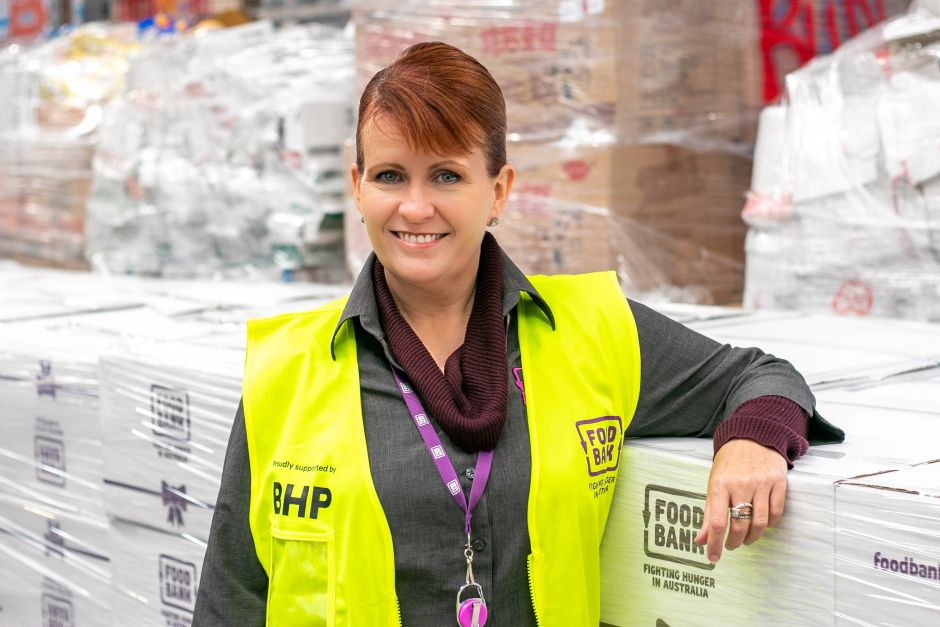
At Foodbank WA, Easter is not a celebration of plenty. It is the busiest day of the year.
As supermarkets accelerate into their peak trading period, demand for food relief rises in lockstep. Easter Thursday has become a fixed point in the organisation’s calendar the day when pressure converges. In 2024, Foodbank WA supported 1,164 people. In 2025, it was 1,148. Consistent, unrelenting demand, year after year.
“These figures show the consistent and growing reliance on food relief, particularly before the long weekend when many other services are closed,” says CEO Kate O'Hara.
This year, however, the expectation is different. Not just steady demand but a surge.
Foodbank WA is preparing for around 1,300 people on Easter Thursday 2026. It is a projection shaped by the months already passed. Across February and March, there have been six days where more than 1,000 people have sought support. The trajectory is no longer gradual, it is compounding.
The forces behind it are both local and global, and increasingly difficult to separate.
Interest rate rises from the Reserve Bank of Australia have tightened household budgets to their limit. Fuel prices, influenced by instability in the Middle East, continue to climb. Groceries, rent, utilities each has edged higher, but together they have created something more acute, the erosion of any remaining buffer.
For many households, there is no longer a margin between coping and falling short.
“Sadly, this is not unexpected,” O’Hara says. “Cost-of-living pressures continue to mount. We are preparing for what could be a record-breaking day of demand.”
Easter, in this context, becomes less a seasonal spike and more a stress test, a moment that reveals how finely balanced many households have become. A long weekend, reduced access to services, and higher spending expectations combine to expose the underlying fragility.
Foodbank WA’s ability to respond depends on a supply chain that is itself under strain. Much of the food distributed comes from surplus donations from farmers, growers and producers. Yet those same contributors are now facing rising fuel and operational costs, making it harder to harvest, transport and donate food at scale.
“The service we deliver is entirely dependent on the supply of food,” O’Hara says. “Rising transport and operating costs may affect the ability to move that food, at the very moment demand is at its highest.”
It is a convergence that is difficult to ignore, more people needing help, and fewer guarantees about how that help can be delivered.
Behind these dynamics are individuals whose circumstances rarely make headlines.
Linda, 61, lives on a disability pension. After paying her bills, she is left $60 in the red every fortnight.
“I never expected to be in this position,” she says. Her choices are precise and unforgiving: food or medication. Heating or groceries. Something, always, must give. “You are basically the only reason I eat.”
Through Foodbank WA, Linda can access affordable food but even that is contingent. If certain items are unavailable, she goes without. Winter sharpens the challenge. Layers of clothing and heat packs replace consistent heating. A small heater is used sparingly, for minutes at a time.
And yet, within that constraint, there are moments of dignity.
Linda values being able to choose her own food. “It feels like a treat,” she says.
It is a small detail, but an important one. Because food relief, at its most effective, is not only about calories. It is about agency. About preserving a sense of normalcy in circumstances that are anything but.
“Easter places intense pressure on households across Western Australia,” O’Hara says. “Demand continues to rise year on year, driven by cost-of-living pressures and reduced access to other supports over the long weekend. At the same time, our ability to respond relies on a fragile food supply chain that is under increasing strain.”
But Foodbank WA’s approach is clear.
The team understands the scale of the challenge and is taking every possible step to meet it. From expanding capacity to deepening partnerships and mobilising support across sectors, the focus remains on being present where it matters most.
“We know the community is under growing pressure,” O’Hara says. “But we are ready to rise to that challenge. The support we receive across every sector is what allows us to continue showing up for Western Australians.”
That collective effort is what underpins Foodbank WA’s resilience.
Because while Easter may expose the pressure many households are under, it also reveals something equally important a coordinated, committed response determined to ensure that no one is left without.