Despite people working hard and teams striving to deliver value, many organisations continue to experience delays, missed opportunities and inconsistent delivery outcomes.
When this happens, leaders often look first at workload, capability or resourcing within those teams.
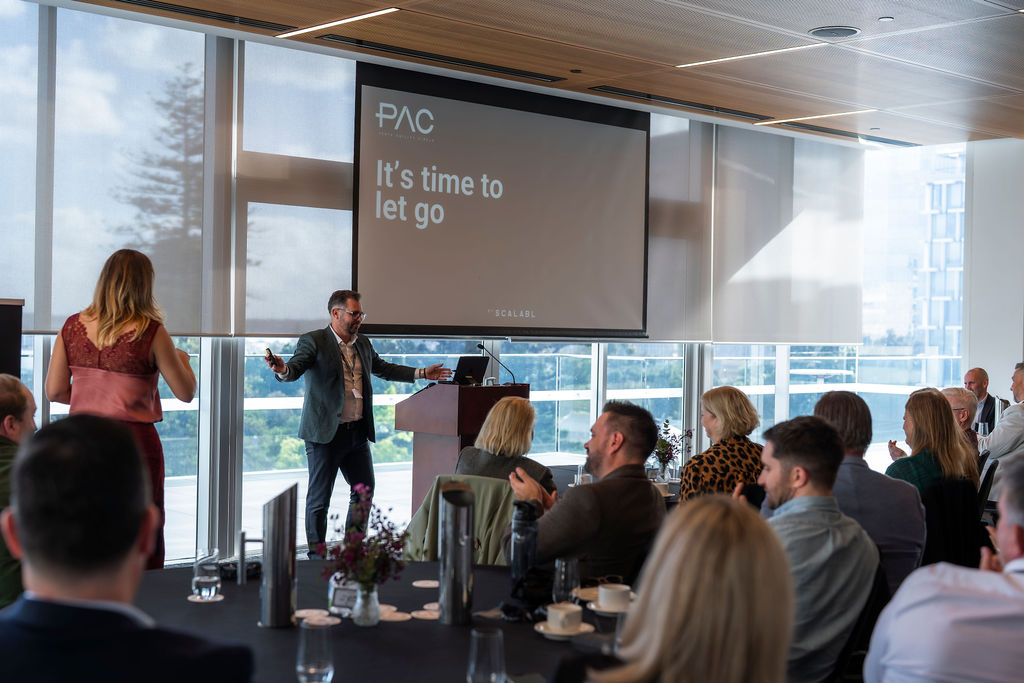
But according to Scalabl managing director Richard McAllister, many productivity challenges are better understood by looking at how work flows across an organisation than by focusing solely on the performance of individual teams.
Scalabl works with organisations to redesign how work gets done, improving visibility, prioritisation and the flow of work through human-centred, outcome-focused approaches tailored to each organisation's environment.
"What we typically see isn't that people aren't working hard," Mr McAllister says.
"It's that work is waiting for approvals, decisions, handovers or input from another team or part of the organisation. Those delays are often where organisations have the biggest opportunity to improve performance."
Mr McAllister says businesses can only move as fast as the slowest part of their system.
"The question isn't whether those constraints exist. It's whether you understand where they are and how they're affecting the rest of the business."
If one approval process, governance forum or specialist team becomes the bottleneck, improving everything else around it will not necessarily improve the organisation's overall performance.
Every handover, approval, governance review, dependency and decision point introduces friction. Individually, these delays may appear insignificant. Collectively, they can have a substantial impact on throughput and therefore how quickly an organisation realises value.
Mr McAllister says leaders often know something isn't working as well as it should without being able to see exactly why.
"Most executive teams have a sense that something isn't flowing as well as it could," he says.
"The work is happening across digital channels, governance forums and conversations. It feels inefficient, but it's difficult to pinpoint where the delays actually are."
The challenge becomes more pronounced as work moves across operations, technology, finance, legal, procurement and customer-facing teams.
While each function may perform well in isolation, businesses can inadvertently optimise individual functions without improving overall performance.
"It's possible to optimise one part of the organisation without improving the organisation itself," Mr McAllister says.
He explains that work in progress represents unrealised value and ongoing cost until it is completed and its intended benefits are realised.
"A team might become more efficient, but if the next team can't absorb the additional work, or approvals are still taking time, the overall outcome doesn't improve. The bottleneck simply shifts somewhere else."
Mr McAllister says this often explains why organisations continue to experience project delays, competing priorities and inconsistent delivery despite significant investment in capability and technology.
Rather than asking teams to work harder, he believes leaders should spend more time examining how work flows through the organisation and where unnecessary complexity has accumulated.
"You can't improve what you can't see. Making work visible allows organisations to identify issues earlier, respond before they escalate and improve decision-making. When problems are discovered too late, organisations tend to react rather than respond, creating even more disruption,” he says.
"Teams can improve how they work locally, but there can be less focus on how work moves across the organisation from end to end."
These challenges are becoming increasingly relevant as organisations invest in artificial intelligence and digital transformation. While new technologies can accelerate individual tasks, Mr McAllister says they do not automatically remove organisational friction.
"AI can help people execute work much faster," he says. "But if governance and decision-making remain unchanged, organisations may develop solutions more quickly without realising value any sooner. The bottlenecks are still there.
"But before organisations accelerate delivery, they need confidence they're solving the right problem. If they start with a solution instead of understanding the problem they're trying to solve, they'll simply move faster in the wrong direction."
Mr McAllister says organisations also need to become more deliberate about building future capability before critical skill gaps emerge.
"What we're often seeing is organisations responding once a capability gap has already emerged," he says.
"There's growing value in understanding the capabilities an organisation will need now, next and into the future, then building them before they become constraints."
This approach has already delivered measurable results for Scalabl clients. Following a ways-of-working engagement, a WA digital product business reported a 59 per cent increase in delivery predictability and a 57 per cent increase in clarity of organisational goals.
For Mr McAllister, improving organisational performance isn't about expecting people to work harder. It's about creating an environment where work can flow more effectively.
"People generally want to do good work," he says.
"The bigger opportunity is improving the system they're working within. When work flows more effectively between teams, organisations are better placed to respond to change, deliver value more consistently and make better use of the capability they already have."


 By Scalabl