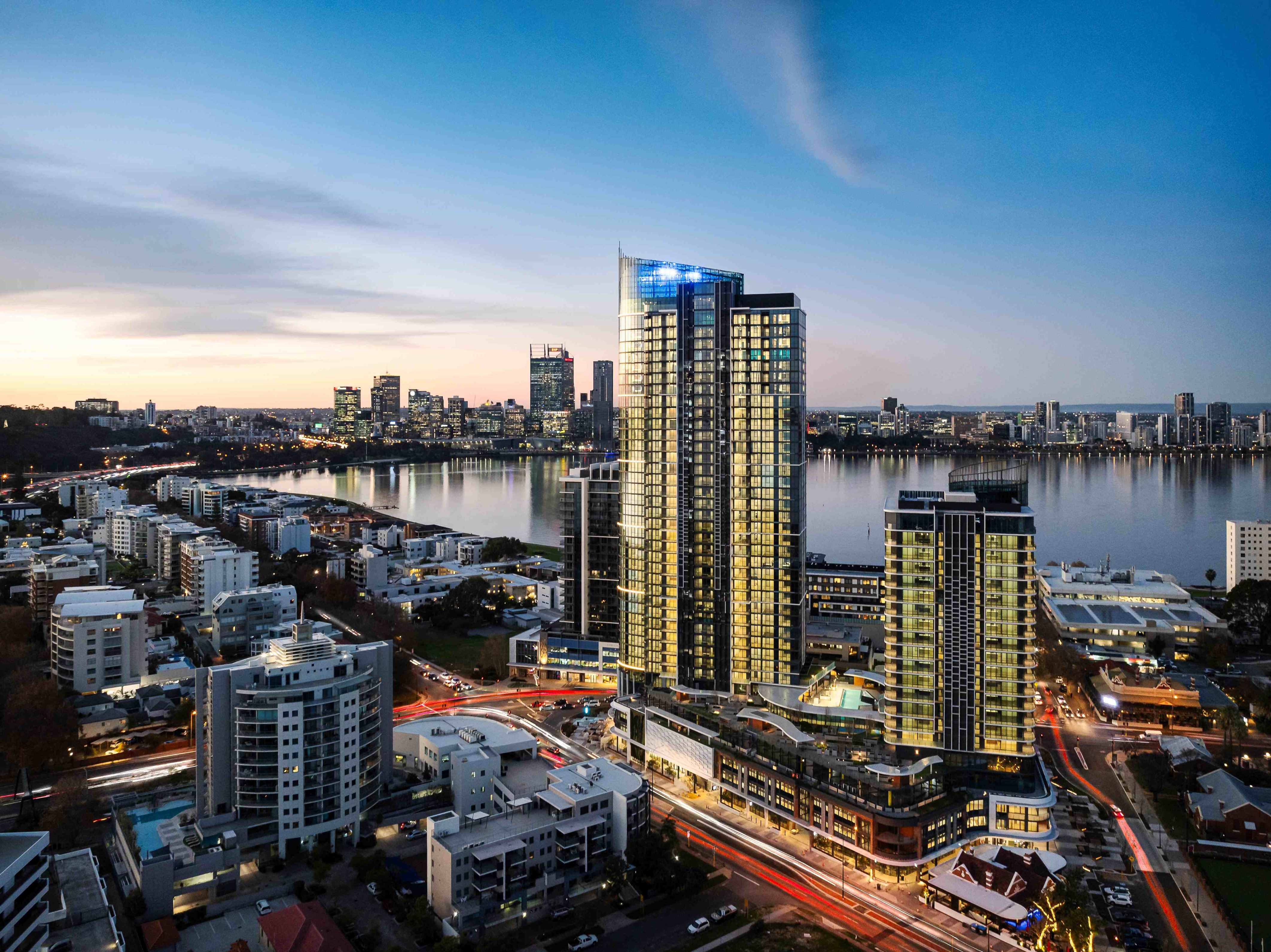
For Perth to continue to grow into a more compact and connected city, delivering quality medium and high density housing options to the market will be an important aspect of future growth.
Achieving a more compact and connected city means that we can deliver more housing choice to our community, with homes that suit a range of household and lifestyle needs from inner city, higher density living, through to more traditional homes in the suburbs.
Supporting infill development
For Perth, thoughtful infill that features well-designed buildings, and development that responds to the local context is increasingly providing a vital part of the housing mix. Providing apartment and townhome options in appropriate areas, offers opportunities for downsizers to stay connected to their communities, for young people to enter the housing market, and for key workers to live closer to jobs, transport and services.
To that end, UDIA WA is broadly supportive of the State Government’s 47 per cent infill target that has been set under the Perth and Peel @ 3.5 million planning frameworks, with a particular focus on development around transport hubs, activity centres, main streets and established shopping precincts.
While the overall goal of these frameworks is commendable, strategic planning and greater investment is needed in activity centres and precincts to bridge the feasibility gap and create opportunities to facilitate more medium and high density projects, including in transit orientated developments.
Importantly, infill must be underpinned by quality, with well-designed apartments that can enhance neighbourhoods, activate streets and create places people genuinely want to live.
Quality design principles
Apartment design in WA is guided by the Design WA suite of policies, including volume two of the Residential Design Codes (R Codes) that directly relates to apartments (multiple dwellings). Design WA policies are underpinned by ten design principles that provide guidance for design, review and decision-making processes related to development under the policies.
These principles include context and character, landscape quality, built form and scale, functionality and build quality, sustainability, amenity, legibility, safety, community and aesthetics.
Feasibility
While good design is critical, making apartment projects ‘stack up’ financially is one of the biggest hurdles that developers need to overcome to get more medium and higher density projects off the ground.
Construction costs, statutory fees, infrastructure charges and planning complexity all contribute to a challenging market environment, particularly for medium and high-density projects such as apartments. This is why UDIA WA continues to advocate for increased and expanded support through mechanisms such as the Infrastructure Development Fund (IDF).
Expanding the IDF to allow reimbursement of a broader range of statutory fees and charges, not just headworks, would make a meaningful difference to built form project feasibility.
Strategic government investment in activity centres and precincts can also help bridge the feasibility gap, by unlocking well located sites.
Community engagement
Equally important is genuine engagement with the community to build support and understanding for the importance of delivering housing choice across Perth and the regions. The State Government, supported by local governments, has a vital role to play in clearly articulating the long-term vision for Perth and explaining why infill and density are an important part our city’s future.
When communities understand the benefits of improved services, more vibrant centres, better transport outcomes and greater housing choice they are far more likely to support well-considered development.
Delivering more quality apartment projects also requires capability across the development industry. Medium and higher density projects are complex, and they demand a strong understanding of site constraints, demographics, planning frameworks, product design, feasibility, construction and sales. Continuing to build industry capability in these areas is essential if Perth is to successfully transition toward a more compact urban form.
Build your skills in apartment development
That is why UDIA WA has invested in our Built Form Professional Development program, focused specifically on apartment development. Our Built Form (Apartments) course provides a practical, real-world insight into the local residential built form sector. It takes participants through the full lifecycle of an apartment project from site acquisition and feasibility analysis, through planning and product design, to delivery, titling, sales and marketing.
The course is the only one of its kind currently delivered in Western Australia and is tailored specifically to local market conditions. Presented by a leading industry practitioner Danielle Davison, it includes local case studies along with practical skills and advice.
Whether you are new to planning, designing, approving or delivering apartment development, looking to expand your skillset, or working in a professional services role that supports the industry, this two-day apartment masterclass offers practical and highly relevant knowledge.
If Perth is to grow in a way that is sustainable, connected and inclusive, that means quality design, supportive planning frameworks, targeted government investment and a skilled, capable development industry.
You can view our bespoke Built Form Course and the full suite of UDIA WA Educate courses tailored to the WA property industry here: https://www.udiawa.com.au/professional-development/