

Where partnership meets purpose: Family philanthropy in action with UNICEF
 By UNICEF



There are moments in life that force us to confront our own privilege – moments that leave us acutely aware of how insulated we are from the hardships endured by others around the world.
For me, this occurred standing inside a pitch-black prison cell in Dili, Timor-Leste. The narrow cell was barely wide enough to stretch out my arms. Heat and humidity transformed it into a suffocating furnace.
Yet during the Indonesian occupation, in what is now known as Timor-Leste, it had housed dozens of prisoners at once.
Lasting from 1975 until 1999, the occupation subjected an entire population to years of unimaginable suffering.
But those imprisoned within the tiny cells somehow found the humanity and inner strength to survive; taking turns to lie down on the putrid
dirt floor and to gasp a few breaths of fresh air by the small crack in the door.
This capacity for resilience, dignity, and optimism in the face of such adversity became, for me, the defining characteristic of the Timorese people.
Timor-Leste– which finally achieved independence in 2002 – is one of Australia’s closest neighbours, just a one-hour flight from Darwin. However, it had not received even a passing reference in all my years of study at school.
It was only when I began discussions with UNICEF that I learnt our two countries share a long and complex history, from Timorese villagers bravely sheltering Australian soldiers during World War II to contemporary, protracted negotiations over natural resources. I knew almost nothing about its people.
That changed when I began regular dialogue with five young Timorese students and later travelled to Timor-Leste for a program visit with UNICEF – a United Nations agency working in more than 190 countries to holistically support children with health care; nutrition; water, sanitation and hygiene; education and child protection.
My first association with UNICEF began at the start of the Ukraine-Russia war when I was watching the news and saw images of frightened Ukrainian children sheltering in UNICEF “blue dot” tents.
After learning more about the organisation’s critical work on the ground, my family and I became UNICEF supporters and accepted an invitation to join the UNICEF International Council. I attended the council’s annual symposium in 2022 at UNICEF Supply Division – the world’s largest humanitarian warehouse. Semi-automated, it runs 24/7 and the scale of the operation was impressive.
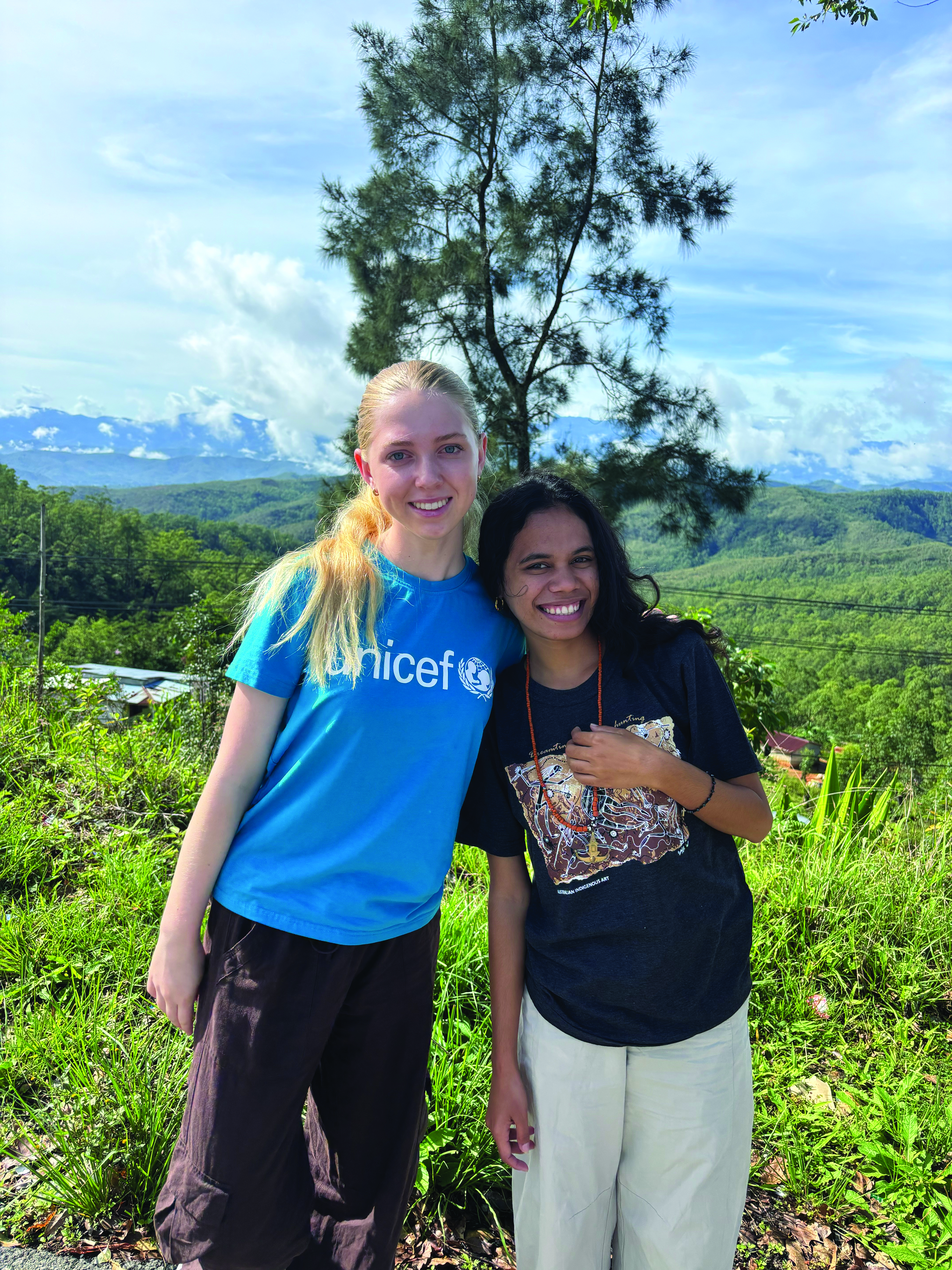
Mary McCusker and Berta visiting a UNICEF-supported water conservation project in Aileu, Timor-Leste, in December 2025. Photo: Nicolette Casella
I also saw the impact of UNICEF’s work when I visited schools and an integrated health and malnutrition clinic at Mukuru informal settlement, one of the biggest slums in Nairobi, Kenya, in 2024.
And late last year, I travelled to Timor-Leste to see some of the projects that UNICEF was delivering with the support of Australian donors.
Throughout 2025, UNICEF Australia Young Ambassadors and I had quarterly Teams calls with five young Timorese students, sharing insights into our respective education systems, youth justice issues, and health programs. Importantly, we also spoke about our aspirations for the future – for ourselves and our countries.
When I arrived in Dili in December, I was overwhelmed by the friendly welcome from my online Timorese friends. Despite having never met in person, we embraced immediately, hugging like old friends. The warmth of that moment was overwhelming.
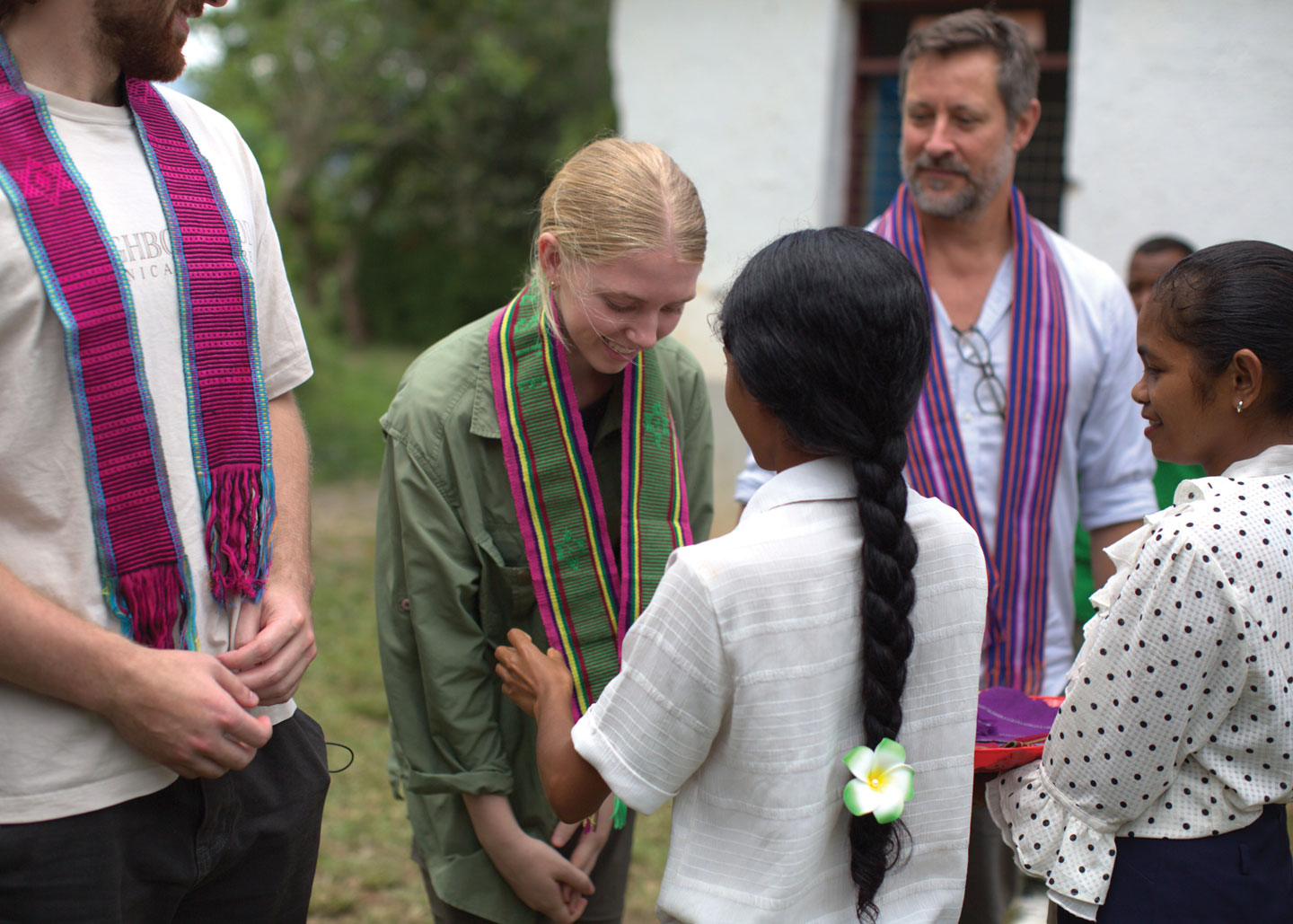
Over the next few days, I visited a range of UNICEF-supported programs, always welcomed with traditional woven tais (scarves) and big smiles. Local pre-school children sang, laughed and expressed uninhibited joy despite having minimal resources; people with disabilities described life-changing opportunities to start and successfully run small businesses; and young people spoke proudly of their innovative solutions to issues facing their generation.
Talking to expert staff and local partners, I realised these programs were transforming lives because local Timorese communities are always at the centre of UNICEF’s work. UNICEF doesn’t just parachute in solutions but works respectfully alongside teachers, other professionals, families and young people to bring community engagement from within. As a result, it has an outstanding reputation and is a trusted partner of governments around the world, although always maintaining an apolitical stance.
Timor-Leste is one of the world’s youngest nations – 42 per cent of the population is under 18 years of age, and almost half are living in poverty, facing a challenging future with limited access to education and employment.
UNICEF’s range of multi-year programs include innovative and inclusive programs such as providing a platform for young people to co-create and prototype solutions for real community challenges. They are making a difference.
We travelled inland to Ermera, a mountainous region renowned for its coffee farms and lush landscapes where we met young people involved in a UNICEF-supported mentorship program with local partner Ba Futuru. Listening to these young people, it was clear how structured mentorship can create change in areas where opportunities are limited.
Another bumpy mountainous journey took us to regional Hera to see how community-led, nature-based water catchment practices are improving water supply in rural villages.
We met with adolescent girls participating in a UNICEF-supported child protection program. They spoke with remarkable confidence about resisting early marriage, staying in school, and advocating for their own futures.
One of the most shocking moments for me was learning that for the entire country of 1.4 million people, there is only one psychologist and only one psychiatrist! The shock was replaced by admiration for a group of young people who had set up their own popular mental health podcast, GenZTalkforTimor.
I flew back to Perth, my mind a pastiche of colourful memories and conflicting thoughts. Most prominent was the warmth and hospitality
shown by my Timorese friends and their hopes and dreams of a better future for their young independent country. Whilst 2002 heralded a new beginning, subsequent growth has been slow and hampered by limited infrastructure, poor internet access and lack of funding.
What is clear to me is that the Timorese youth are the future of the country, but they cannot do it alone. Reputable international organisations like UNICEF that are backed by Australians are critical players if Timor-Leste is to flourish.
The work UNICEF is doing in Timor-Leste is not glamorous, nor is it easy. It is slow, complex, and at times frustrating. UNICEF’s approach is not about charity or rescue; it is about listening, respect, and partnership. It is about education, healthcare, clean water, child protection, and – critically – youth leadership. It is about creating space for young people to lead in a country that urgently needs their voices.
My journey to Timor-Leste profoundly reshaped the way I understand privilege, resilience, and what meaningful service truly looks like.
It reinforced that genuine service does not come from arriving with solutions or assumptions. Instead, it comes from standing beside others, listening carefully, respecting lived experience, and trusting the people to shape their own futures.
Timor-Leste does not need saving. It needs a helping hand. It needs continued international support that empowers rather than controls, and partnerships that prioritise local leadership and long-term sustainability.
This journey has left an enduring impact on me and how I see my role in the world. I return to Australia not only with new friendships and wonderful memories, but with a deeper sense of responsibility, gratitude and purpose.
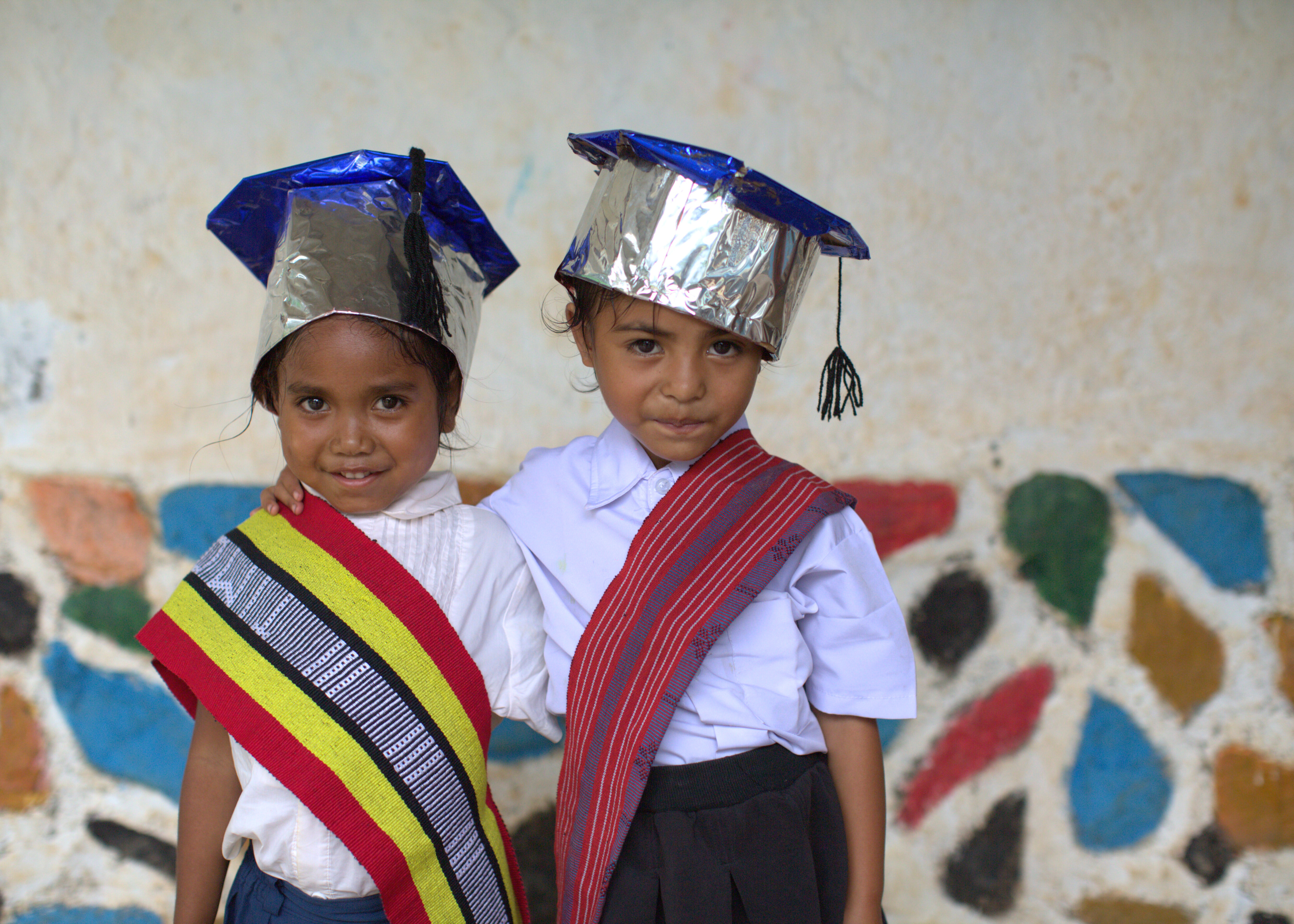
Preschool students at Ermera, Timor-Leste. Photo: ©UNICEF Timor-Leste/2025/NSoares
Family engagement opportunities with UNICEF
• Bespoke updates and reporting from a dedicated relationship manager on the program you are supporting
• Virtual experiences: Connect with teams on the ground in emergency and development contexts around the world and ask questions
• Family philanthropy webinars: Tips from world-renowned experts
• UNICEF Innocenti and Supply Division tours, including family values workshops
• Family field visits: See the impact of UNICEF’s work with local partners
• UNICEF International Council: A global community of more than 170 leading philanthropists from 23 countries.
If you are interested to learn more, please contact Perth-based UNICEF Australia senior partnerships manager Nicolette Casella at ncasella@unicef.org.au

