Urban infrastructure is often discussed in the language of efficiency compliance and safety metrics. Rarely is it spoken about as a leadership decision or as a strategic investment in social capital. Yet a recent placemaking initiative in Cloverdale, Western Australia, suggests that when cities trust young people to shape shared spaces, the returns extend well beyond aesthetics.
Wright Street is not a flagship boulevard. It is a functional pedestrian crossing connecting a shopping precinct, public transport and a civic hub. For years, it performed its task adequately and anonymously. But between October and December, that changed not through a major capital works program, but through a deliberate decision to hand creative authority to the next generation.
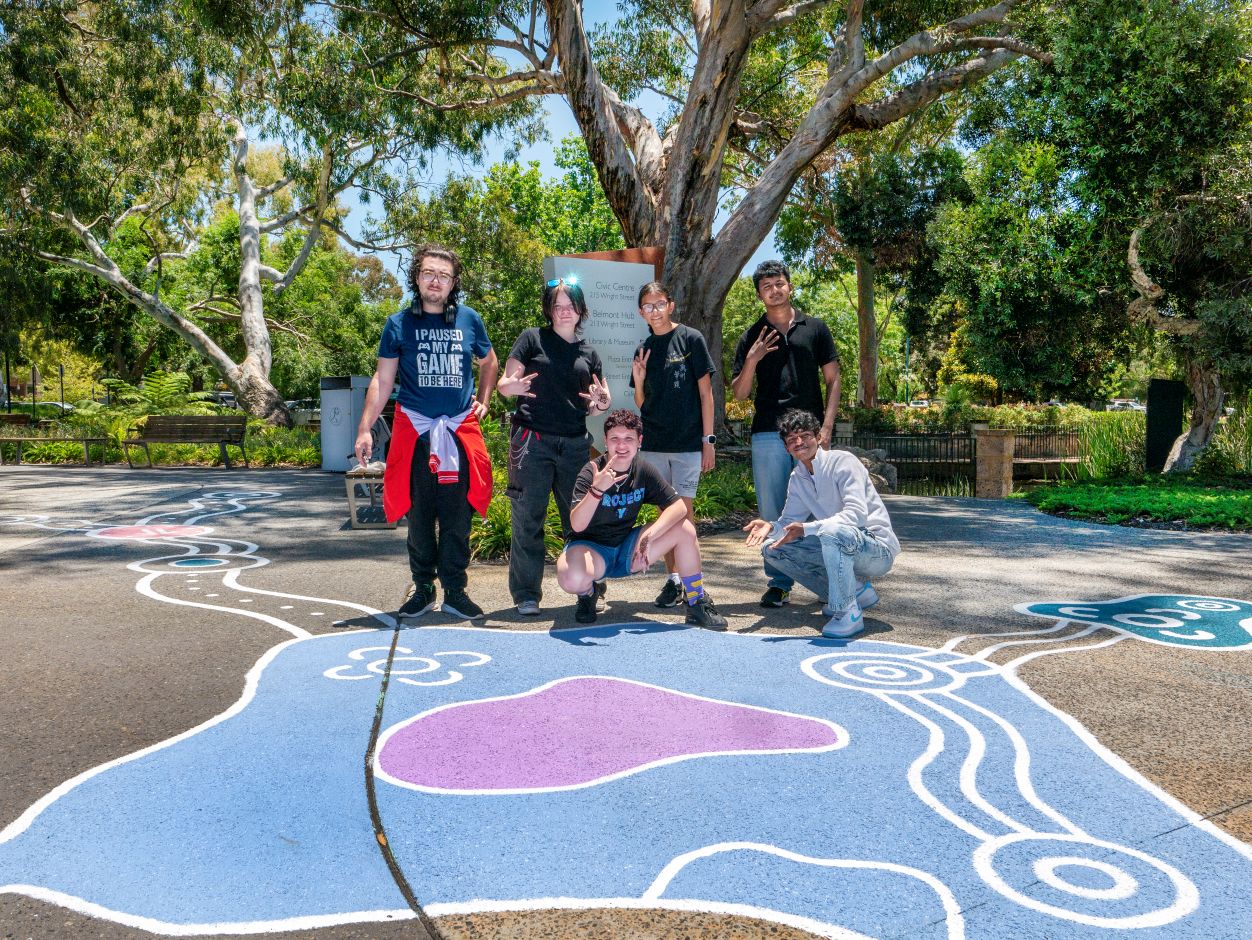
Supported by RAC Ignite, the Y WA and the City of Belmont, around 30 young people were invited to reimagine the crossing through a series of structured workshops and an intensive Build Week. Crucially, the project was not youth-themed, it was youth-led. The framework was set collaboratively with relevant departments, but the design, symbolism and execution were driven by the participants themselves.
For senior leaders accustomed to managing risk, this approach may appear counterintuitive. Yet it is precisely this recalibration of control that underpinned the project’s success. By positioning young people not as consultees but as decision-makers, the initiative delivered outcomes that align with multiple executive priorities, improved safety, stronger community ownership, cultural recognition and long-term place stewardship.
The project’s creative direction was guided by First Nations artist Harley Richards, a Noongar man living and working on Whadjuk Country. Richards brought a professional practice grounded in storytelling, symbolism and place-based design, alongside an understanding that culture is not decorative, but instructive.
“Creativity becomes powerful when people feel heard and included,” Richards observed during the project. Under his mentorship, participants explored how visual language can influence behaviour and belonging. Kangaroo tracks were integrated into the design to subtly guide pedestrians toward the crossing. Circular motifs representing meeting places and landmarks in Indigenous culture were distributed across the artwork, marking significant sites identified by the group during their mapping of Belmont.
These are not arbitrary artistic choices. They are design interventions that influence movement, attention and perception, the very factors city planners and transport authorities seek to address through far more expensive means.
Build Week, which was held in late November, translated concept into action. Young people painted murals, decorated bollards and planted greenery, transforming Wright Street into a coherent visual narrative reflecting local identity and connection. The result is a space that signals care, slows traffic psychology and encourages safer pedestrian behaviour while also fostering pride among those who helped create it.
From a governance perspective, the project offers a compelling case study in cross-sector collaboration. The RAC Ignite program contributed $12,500 in funding, complemented by support from the City of Belmont and delivery by the Y WA an organisation with more than a century of experience in youth development. Each partner brought a distinct capability, yet the project avoided bureaucratic drag by aligning around a shared outcome rather than siloed objectives.
The initiative concluded with a community launch planned by the young participants themselves, a symbolic but significant act. Ownership did not end at delivery, it extended into how the project was introduced and celebrated.
For executives grappling with questions of social licence, workforce engagement and long-term community trust, Wright Street offers a useful reframing. This was not a discretionary community arts project. It was a strategic investment in safer infrastructure, cultural inclusion and future leadership delivered at a fraction of the cost of traditional interventions.
At a time when organisations are under increasing pressure to demonstrate genuine ESG outcomes, the lesson here is clear, meaningful impact is not always driven by scale, but by agency. When young people are trusted with responsibility not just representation public spaces become more resilient, more human and more reflective of the communities they serve.
Wright Street may be a single crossing, but the leadership principle it illustrates is far broader. Cities that listen to young people do more than improve their streets. They invest in the long-term health, legitimacy and cohesion of the systems they govern.
https://www.ymcawa.org.au/what-we-do


 By Hearts and Minds