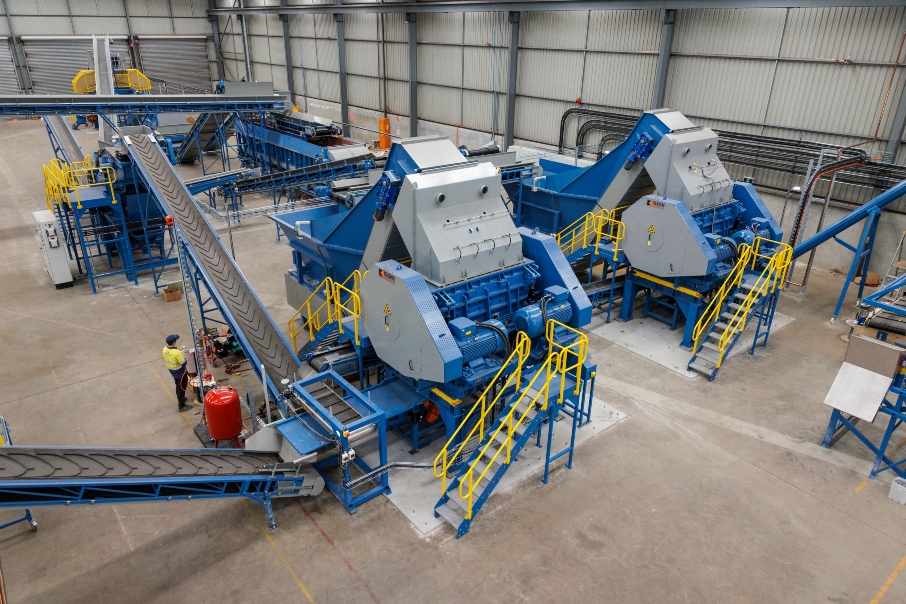


Tyre recyclers have joined a leading advocacy group in calling for changes to regulations in Western Australia around the disposal of used tyres.
The issue is particularly prevalent in the state’s resources sector, which buries thousands of tonnes of used rubber annually, despite a surplus of processing capacity across the recycling industry.
Across the country, an estimated 109,300 tonnes of used mining tyres were buried at mine sites in 2023-24, according to a report by national industry group Tyre Stewardship Australia (TSA).
Off-the-road (OTR) tyres – fitted to dump trucks, loaders and excavators – have a recovery rate of less than 5 per cent, with the majority destined for burial or stockpiling.
The resources-rich Pilbara generated an estimated 43,890t of used mining tyres in 2023-24, largely from the open-pit iron ore operations run by the region’s big four miners.
It makes the Pilbara the biggest generator of used OTR tyres in the nation, accounting for 49 per cent, ahead of the Hunter Valley and Northern regions of NSW with 12 per cent.
Those heavyweight tyres, which can weigh up to six tonnes apiece, are also used in the agriculture and construction industries, but miners are the leading consumers.
Under the current regulatory framework, WA miners can be granted licences for landfill activities allowing for the stockpiling or burial of tyres as waste on site. Only companies outside the tyre landfill exclusion zone – covering the Perth metropolitan region – can apply for that licence.
TSA describes it as a “regulatory double standard” that exempts the mining industry from waste disposal requirements applied elsewhere.
The TSA manages a national voluntary product stewardship scheme but has been advocating for a mandatory scheme similar to those operating in Denmark, France, Canada and South Africa.
The industry body says its hands are tied under the current framework and, alongside sector players, is urging legislative reform to unblock the tyre recycling sector.

Buried opportunity
An estimated $50 million in lost resource value is being buried or stockpiled each year from mining tyres across the country, according to TSA’s findings.
Established tyre recycles in the state, such as RubberGem and Tyrecycle, process used OTR, passenger and truck tyres into refined rubber that can be manufactured into by-products such as road-base, agricultural flooring, and playground or sport surfaces.
The tyres can be shredded mechanically or processed chemically into varying sizes depending on their end-product application, such as for export for tyre-derived fuel.
But with limited regulatory enforcement, minimal social or shareholder pressure and little-to-no costs involved with burial or stockpiling used tyres, the national mining tyre recovery and recycling rates remain subdued.
The small percentage of mining tyres and conveyor belts recovered and recycled have higher rates of circular outcomes, meaning they are manufactured into by-products, according to TSA.
The cost of the logistics to transport used mining tyres from the Pilbara mine sites to the recycling plants is one of the prohibitive factors to recycling.
TSA estimates of the most expensive economic case – remote area mines – put costs between $1,285 and $3,100 to collect and process a three-tonne mining tyre.
Both RubberGem and Tyrecycle have invested tens of millions of dollars in new processing facilities in recent years, including strategically located logistics and pre-processing hubs in Port Hedland to be closer to the Pilbara iron ore miners.
TSA chief executive Lina Goodman said recyclers had invested in the infrastructure and it was now up to government and miners to step up and ensure supply.
She said supply, not capacity, was the biggest barrier.
“I can tell you, categorically, there is not only the capacity, there’s overcapacity [among recyclers],” Ms Goodman told Business News.
“That’s a good thing. Overcapacity is not a bad thing, because we still have legacy tyres that have been buried in-pit year-on-year.”
Ms Goodman said the tyre recycling sector ran the risk of a serious supply shortfall.
“Particularly in WA, where you have several significant organisations that have invested in OTR tyre recycling and circular solutions,” she said.
“[They] run the risk of their businesses being mothballed because they don’t have critical feedstock to use the technology they’ve put in place for all these giant mining tyres.”
RubberGem chief executive Corey Matters said the business had a steady flow of conveyer belts, passenger and truck tyres, but capacity for significantly more mining tyres.
“We have the capacity to process 12,000 tonnes a year [of OTR tyres], and we could easily expand to take on three times that much if the volume was available,” he said.
“To take on extra volume we need to invest more, but we’re not going to do that until we know the materials are available.
“Overall, in WA at the moment, the capacity is there not just for us, but others as well to take that material.”

Missing mining
BHP, Rio Tinto, Fortescue and Hancock Prospecting are estimated to collectively generate the lion’s share of the 44,000t annual stockpile of used mining tyres in the Pilbara.
BHP and Rio Tinto bury or stockpile mining tyres at their operations, as permitted under their licences.
Both have taken part in trials and projects for mining tyre recycling solutions.
RubberGem’s Mr Matters said the mining industry generally wanted to see miners’ used tyres go to circular outcomes but, in many cases, the companies weren’t prepared to invest.
He said there was substantial interest in RubberGem’s research and development in circular by-products, such as conveyor belts or tyres made from old, processed rubber.
“[The mining industry’s] comments to me are, because the government allows them to bury, they cannot justify any expense associated with recycling,” Mr Matters told Business News.
“So, until that changes, they will continue to bury.”
As a national tyre recycler with a strong presence in WA, Tyrecycle opened a dedicated and strategically located mining tyre recycling facility in Port Hedland earlier this year.
The facility has a 30,000t per annum capacity for used OTR tyres, which are then trucked down to Tyrecycle’s East Rockingham facility for further processing.
Tyrecycle head of trading, mining and strategic development Ashley Battilana said the company was utilising reverse logistics with its mining clients in the region.
He said it was proving a more cost-effective approach to the logistical challenge.
“Mining companies that import tyres directly into Port Hedland or Dampier can utilise reverse logistics on specialised cradles that transport the new tyres,” Mr Battilana said.
“They were traditionally always coming back from the mine empty, so they can now use those cradles to transport back old tyres for the recycling.”
He said the uptake of mining tyre recycling had been slower than preferred at Port Hedland.
“It’s new for the miners, too, so we’ve got to be mindful of that,” Mr Battilana told Business News.
“It has been unbudgeted previously, so they do have to budget for the cost of recycling.
“We’ve got plenty of capacity in that Port Hedland facility, and we’ve also built it quite modular so that we can expand our capacity really quickly.
“We’ve got a lot of room for growth up there.”

Ashley Battilana says WA tyres are going back into WA roads. Photo: Tyrecycle
Mr Battilana said increasing recycling rates of used mining tyres would require budgeting and a phased approach through new legislation.
“We need to get those rates up and unlock this valuable resource so we’re diversifying the industry and hitting our waste strategy goals,” he said.
Tyrecycle, alongside sector peers RubberGem, Complete Tyre Solutions, 4M Waste, D&M Waste Management and Elan Energy Matrix, have previously received government grants to further their recycling plants or for research and development.
Those funds came from the federal government’s Recycling Modernisation Fund amid broader waste reduction targets.
“Government, which has invested in these tyre recycling plants through grant money on the back of Recycling Modernisation Fund, is going to want some return on investment, and they’ve got waste strategies to hit as well,” Mr Battilana said.
“Capacity in the market is there, [government is] trying to get to their 80 per cent waste strategy. It’s probably pretty low-hanging fruit for them.”
A recent state government report identified a range of issues with end-of-life tyres and assessed policy solutions, including the possibility of a regulated product stewardship scheme.
A spokesperson for the Department of Water and Environmental Regulation said options to improve environmental outcomes for end-of-life tyres were being investigated.
“The department is exploring opportunities for greater alignment, as tyres are distributed into a national market and different approaches across jurisdictions can impact businesses operating in multiple states and territories,” the spokesperson said.
The TSA’s Ms Goodman has been advocating for a mandatory stewardship scheme and government reassessment of licensing conditions.
RubberGem
RubberGem was established in 2002 as a conveyor belt recycler and manufacturer of rubber by-products out of its Naval Base facility.
At first, it struggled to find a market for the rubber flooring and matting (suitable for dairy farms) it was producing.
About a decade ago, Mr Matters said, the company faced two options: close down or undertake a big expansion.
The latter direction was taken and RubberGem moved into tyre recycling. It is now in the final stages of commissioning a $65 million state-of-the-art recycling facility in East Rockingham.
The 13,600 square metre factory – featuring two processing plants – sits on 55,000sqm of industrial land and can handle passenger, truck and OTR tyres, and conveyer belts.
RubberGem has what it describes as the country’s first commercial-grade devulcanisation plant, which uses a chemical process to convert waste rubber back into a raw material again.
Devulcanised rubber can be used in the production of road-bases and cement mixtures and is being tested for the manufacturing of new tyres and conveyer belts.
RubberGem has been working with its 20 per cent shareholder and partner, Wuxi Boton, a global tyre and conveyor belt manufacturer and major supplier to Pilbara miners.
The partners have been researching and developing the use of devulcanised rubber in the manufacture of new conveyor belts, with one ready for installation at a Chinese port.
Mr Matters said it took years of research and development to establish the plant, leaning on Malaysian technology processes and experts who are still on site.
Securing approvals for the devulcanised plant was an additional challenge, he added.

Tyrecycle has seven dedicated tyre processing plants nationally. Photo: Tyrecycle
Tyrecycle
Tyrecycle’s East Rockingham facility has the capacity to process more than 40,000t of end-of-life tyres per annum, the majority being from passenger vehicles and trucks.
One of its key capabilities is the production of up to 7,000tpa of rubber crumb: tyres that have been processed into fine granules to be added to asphalt.
Tyrecycle also sends shredded tyres to overseas customers, namely Japan and South Korea, with the material used for tyre-derived fuel in cement kilns and power plants.
In developing a local market for crumb rubber, the recycling players and the TSA have been working closely with Main Roads WA for its inclusion in tender specifications.
Crumb rubber has been used in resurfacing parts of Kwinana Freeway, Leach Highway and Roe Highway, due to its durability as a road-base and the environmental benefits that come with it.
“There are some really good benefits by using crumb rubber in roads, like in California for instance, which has been the main user of this for a long time,” Mr Battilana said.
“Roads will last longer, the tyres on your car won’t wear out as fast, there’s less noise, improved raking distances, less cracking and less maintenance on the roads.
“We’ve got WA tyres going back into WA roads.”
Tyrecycle also has partnerships with bauxite miner and refiner Alcoa, and local conveyor belt manufacturer Fenner Conveyors.
Alcoa has been sending its used tyres to Tyrecycle for the past year and will be sending more than 30 kilometres of used conveyer belts for recycling in the coming months.
Tyrecycle is working with Fenner, located three kilometres down the road in East Rockingham, on getting recycled content back into locally manufactured conveyer belts.
“The dream has always been to get conveyor belts back into conveyor belts, or tyres back into tyres,” Mr Battilana said.
