


The 2026 CEO Summit examined 4 Pillars of Business – People and Culture, Risk, Productivity, and Technology. These are four essential areas business leaders need to constantly monitor to achieve success.
The key themes from the day were very clear. Losing focus on your people, the risks the business faces, the level of productivity and efficiency, or the use of technology, will lead to problems that may become beyond reach. We accept that these are not the only pillars of business, however, they are four of the essential areas requiring constant attention.
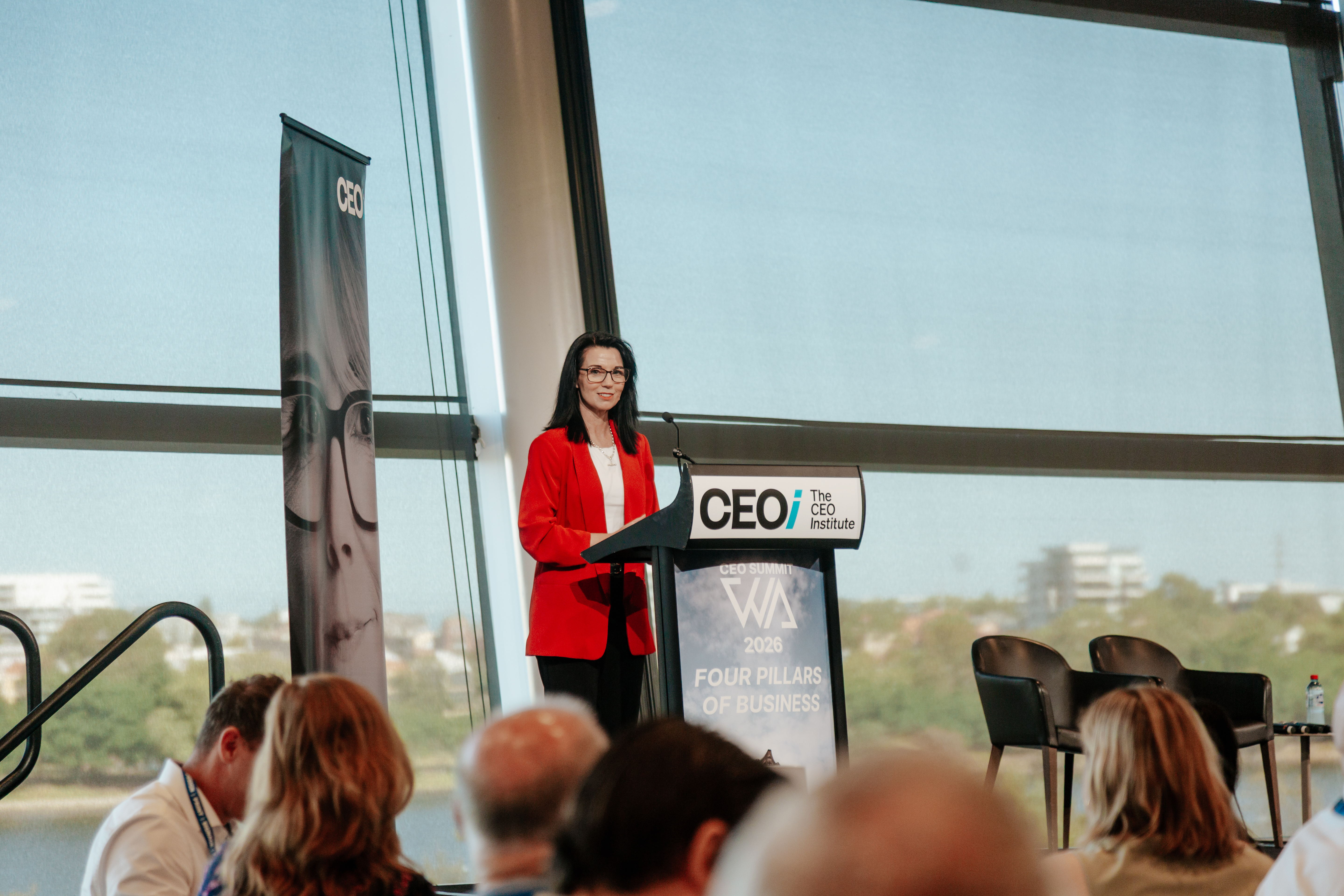
The Summit featured Dr Marny Lishman, People and Culture, Matthew Boyall, CEO, Cue Energy, looking at Risk, Sam Jackson, Beyond Limits Health, with Jim Winter, Attitude Adjustment, who jointly presented on Productivity, and Matt Mueller, Voleno Advisory, Technology and integrating AI purposefully.
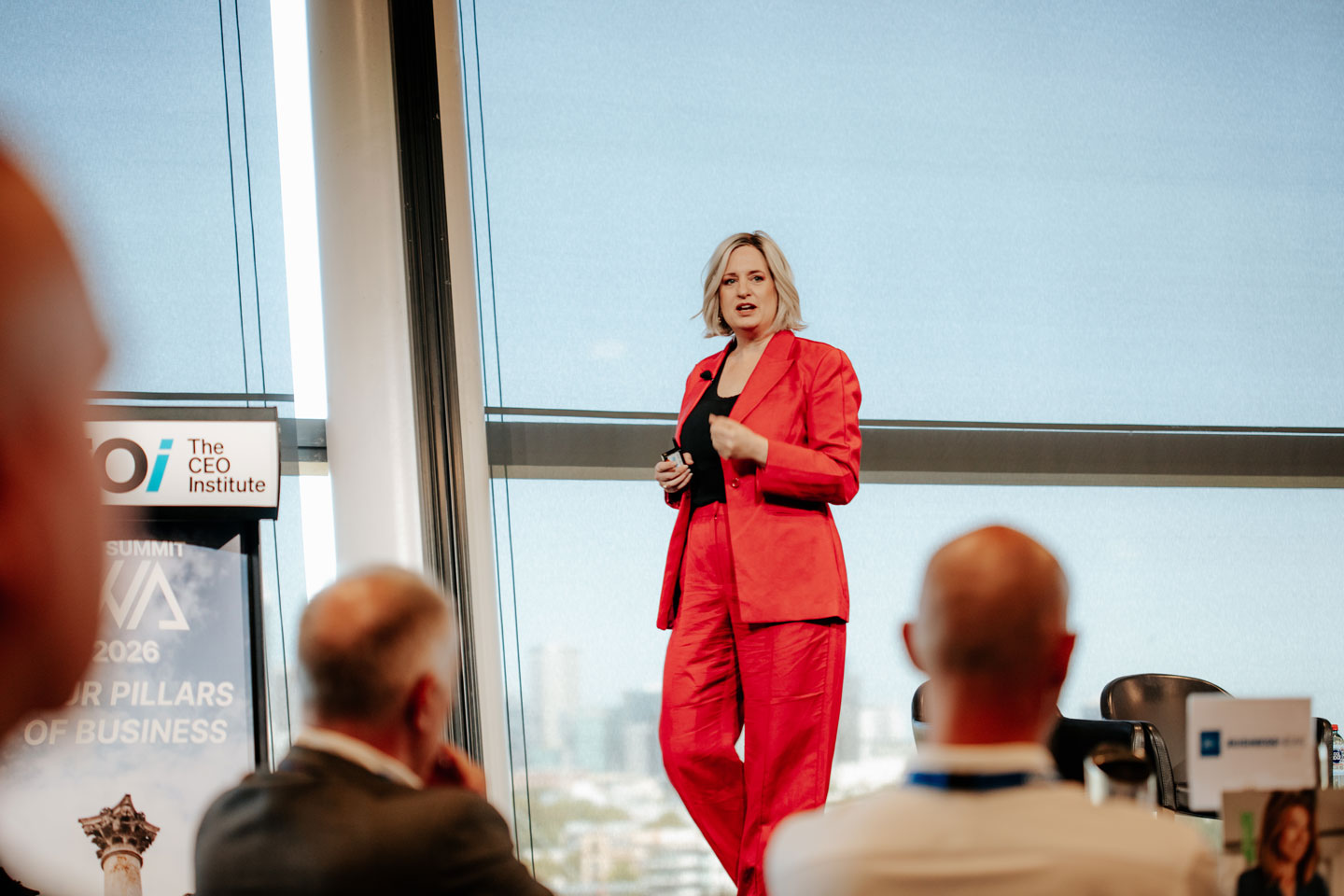
Dr Lishman started with a pertinent quote from Sheryl Sandberg, “Leadership is about making others better as a result of your presence and making sure this lasts in your absence.” Her message was that genuine empathy is the key to unlocking a happy, safe and productive environment. Empathy is not weakness. It should not be forced, but it should be genuine care and a real interest in your people.
To achieve empathy, leaders need to follow seven principles. Firstly, be present. When connecting with people in your organisation, give them your full attention, and the time they need. Talking with people, while checking your phone, does not measure up. Use your emotional intelligence when working with people. It is important to actively listen. This involves paying attention and responding to what is said, and asking questions to clarify.

The remainder of the essential skills are to show compassion and kindness. This does not equate to softness and being taken advantage of, it means that you are mindful of what others are going through, and assisting appropriately, when necessary. This flows into supportive accountability. Hold people responsible for their performance, but offer them the support they need to achieve their best. It is important to create a safe environment. This is not just physically safe, but psychologically safe. Expressing concerns must not be a difficult, or accusatory process. Finally, good leaders are seen as authentic. Be vulnerable when appropriate, so being human is not regarded as weakness.
Matthew Boyall, as CEO of Cue Energy, provided insights into the processes used to manage, mitigate, and make decisions around risk. As expected, the risks faced in the oil and gas space are many. In addition to the working environment, there is the investment risk associated with data, which is an indicator, not definitive. It is Matt’s belief that, generally, we do not assess risk well. Many organisations do not adequately assess their risks, plan to manage them, and develop contingencies. For those companies with a Board, there needs to be processes to present the information in a way that allows the Board to make informed decisions, and understand the implications. It is surprising how many businesses have not formally engaged in a process to assess and plan for the risks they face. No matter the size of the business, risk is part of the everyday. We adhere to OHS standards, and, ignore the other risks facing the business. Working through, and formalising the ‘what ifs’ in your business is a valuable, and essential, exercise.
Sam Jackson and Jim Winter conducted the session on productivity. After highlighting some very obvious examples of the lack of productivity, that most of the audience were able to identify with, they set to define the term. Productivity is a measure of the outputs of an enterprise, or a country, per unit of the inputs required to produce them. Sam demonstrated process mapping as used by Lean to show how a business can examine the processes in place and assess them for effectiveness and efficiency.
The work of Cory Doctorow was outlined. This describes the rapid decline in the quality of on-line platforms. It discusses the lack of interest in these platforms on customer satisfaction. There is a conscious three-stage process where platforms are first good to users, hooking customers onto a service. Streaming services is an example where you join to avoid advertisements. They then abuse users to benefit business customers. Advertising is then introduced, but few customers cancel their service as we are used to it. They finally degrade services for both, to maximise short-term profits. This pattern leads to unusable, yet indispensable services.
The result of their session was a diagram showing that business results are dependent on customer outcomes. In turn, customer outcomes are dependent on employee outcomes. The driver of all this are leadership practices, and executive decisions. The responsibility sits with leadership to impact the entire cycle for the benefit of all.
The fourth pillar to be addressed was that of technology, and the use of AI. Matt Mueller covered this topic. He pointed out that AI is not technology, it is capability. Due to the rapid advancements in AI, it is essential for businesses to have a clear plan as to what they wish to achieve using AI. Latching on to tools because they appear to make processes more manageable, or, they reduce the burden on mundane tasks, is only positive, if it fits within the plan that the business has for delivering their offering.
We must not lose sight of the objectives of the business. If your goal is to improve the customer experience, having customers talk with a bot, may not be the best outcome. If you wish to reduce the lag between an order and delivery, AI may well provide a solution not possible with only human input. The message is clear, the use of AI as a capability must be planned and fit with the organisations purpose and desired outcomes.
The message from the day was singular, even delivered through the lens of Four Pillars. Leadership is essential, and the responsibility for all areas lies within the purview of those at the top. Developing robust processes, and decision-making, makes the business operate more effectively, and provides clarity on the direction. Whether it’s managing your people and culture, assessing and planning for risks, improving productivity, or introducing capability through technology, the leadership team must take full responsibility.
What resulted from the CEO Summit were take-aways for those who attended. Each of the Four Pillars had more impact for some in the room. All four had an impact on each person. Hopefully, it will enable those in attendance to focus on areas that can make a difference in their organisations and lead to better results.