In business, speed is often celebrated as a competitive advantage – faster decisions, shorter sales cycles, quicker closes.
But according to sales strategist and professional negotiator Julia Ewert, the pressure to move quickly is one of the most common reasons deals fall apart.
“People play for speed and they kill the deal,” Ms Ewert told Business News ahead of the Business News 2026 Leaders Summit, a half-day event exploring the critical challenges, emerging trends and new opportunities shaping Western Australia’s business landscape.
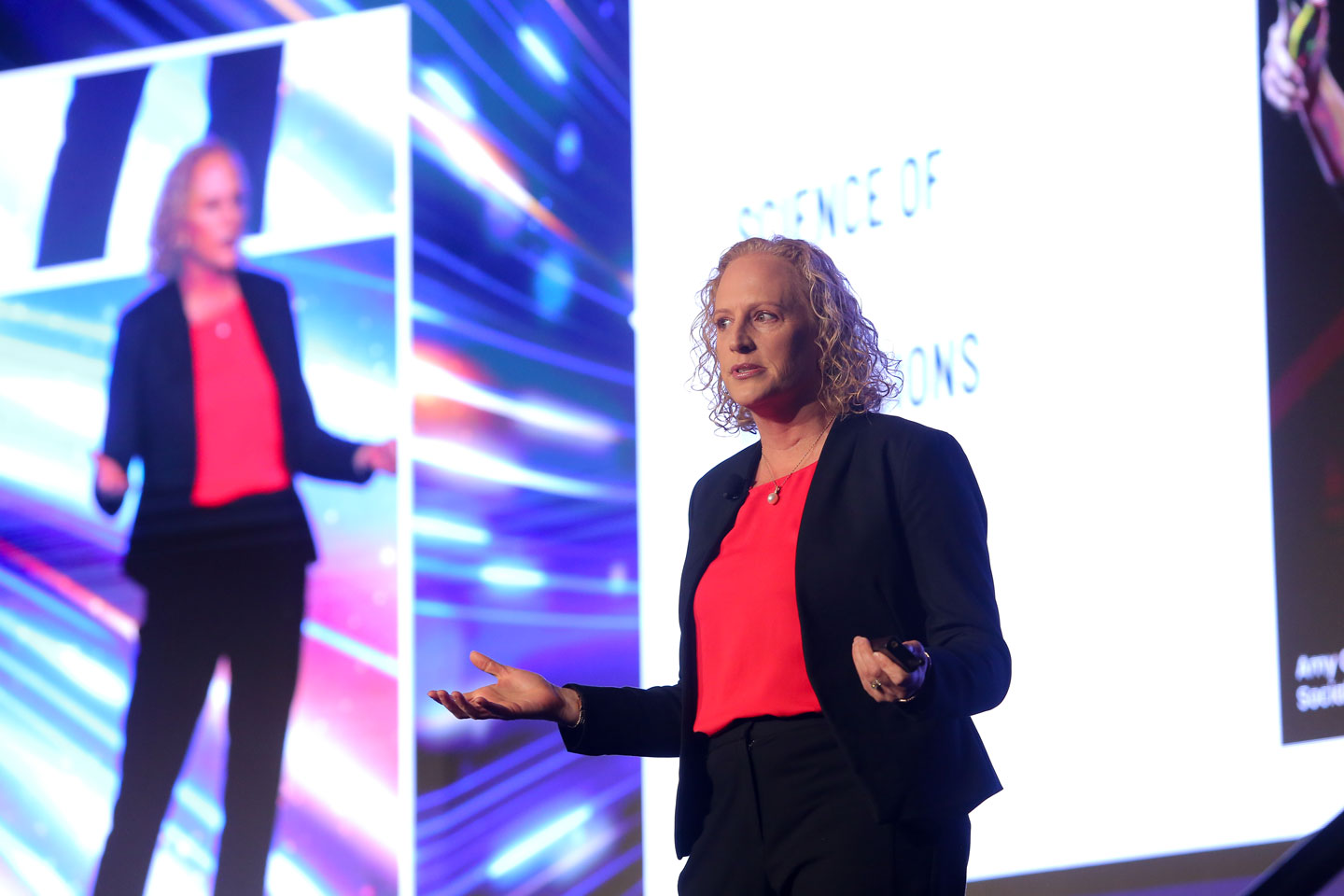
In February, Ms Ewert will present a keynote masterclass at the summit for senior executives, entrepreneurs and decision-makers, sharing how FBI negotiation techniques can be applied to business.
The insights draw on specialist training she undertook in the United States with FBI negotiation experts, whose methods were developed for high-stakes hostage situations.
The approach challenges the fast-paced, pitch-heavy sales tactics that dominate modern business culture. It sits at the core of Ms Ewert’s Infinite Sales System®, a methodology designed for professionals who do not see themselves as salespeople.
That includes engineers, accountants, consultants, advisers and executives who may resist the idea of “sales” – but the business model is ultimately about drawing in revenue.
“People tell me all the time, ‘We don’t do sales,’” she says, “and I say, ‘You don’t do sales – but you do revenue.’”
Businesses that have traditionally avoided the word ‘sales’ are now using her methodology to grow revenue without relying on outdated, transactional models.
“Sales is not about cheesy tips and tactics,” Ms Ewert says. “People are attached to thinking sales has to be done a certain way, but that’s not what modern sales is about.
“It’s not about haggling either. There is a way to take a modern-day approach to sales and negotiation where we play for time and win true partnership.”
A new take on sales
The Infinite Sales System is a sales framework for non-salespeople, designed for organisations seeking repeatable revenue without relying on short-term, transactional approaches.
Central to the methodology is the principle of ‘slow down to speed up’.
To explain it, Ms Ewert draws on one of the most studied and publicised negotiation failures in FBI history: the 1993 Waco siege in Texas. The 51-day standoff involved 80 federal agents and more than 900 law enforcement officers.
For 51 days, hostage negotiators focused on building rapport, trust and connection. “On the 52nd day, the tactical team said, ‘We’re sick of waiting – we’re going to go in,’” Ms Ewert says.
The result was catastrophic. Seventy-five people were killed, including 25 children.
“The 51 days was not the problem – it was the measure of success,” she says. “In these negotiations, if people aren’t dying, you’re winning. In 51 days, no one died. On the 52nd day, they decided to play for speed. They rushed the building and everyone died in one day.”
While business negotiations aren’t a matter of life and death, Ms Ewert says the lesson translates directly to commercial conversations.
“I see this in sales and negotiation all the time. People rush, they push for the outcome, and the deal dies.”
Negotiation, not pitching
The problem, Ms Ewert argues, is that many businesses still operate with an outdated understanding of what sales is.
Selling is often treated as pitching. “By definition, selling is an exchange of goods or services for currency,” she says. “Negotiation is a discussion aimed at reaching agreement.”
The Infinite Sales System is an end-to-end communication and revenue framework made up of a comprehensive framework of 81 elements, structured around three core principles – qualify, convert and follow up – guiding professionals from first conversation through to long-term partnership.
“In a sales or negotiation conversation, we’re trying to persuade and influence. That means helping someone shift behaviour or make a buying decision,” Ms Ewert says.
“Selling is transactional and one-sided – it’s about me. Negotiation is about partnership and us – it’s strategic.”
Trust from the first conversation
A key pillar of the methodology is trust – and how early it is established.
Drawing on research by social psychologist Amy Cuddy, Ms Ewert explains that when people meet for the first time, they are subconsciously asking two questions: Can I trust this person? And, are they competent?
“The order matters,” she says. “If you lead with competence – pitching, explaining how great you are – the science shows it puts people off. If you lead with trust, you get confidence for free.”
In her system, trust is measurable: credibility plus reliability plus intimacy, divided by self-orientation.
“You can be credible and reliable and even have things in common,” she says. “But if the other person feels you’re mostly interested in yourself, trust drops.”
That requires a shift in how conversations are conducted – less talking, more listening; fewer closed questions, more open ones. “The right questions are who, what, when, where, why, how – and ‘tell me’,” Ms Ewert says.
The idea mirrors industries where communication is treated as mission-critical. Ms Ewert points to aviation and emergency services, where extensive training is required before employees interact with customers.
“Singapore Airlines puts cabin crew through four months of communication training,” she says.
“In hostage negotiation units, their mottos are ‘talk to me’ and ‘we listen’.”
In business, the stakes are different – but no less real. “Usually lives aren’t at stake,” Ms Ewert says, “but revenue is.”






 26 Nov 2025
 30 Nov 2023