Today, with Perth’s median house price forecast to surpass $1 million and housing supply at historic lows, the conversation has shifted. The question is no longer whether Perth will grow, but how.
Perth is experiencing the growing pains of a strong post-COVID economy. Increased migration is supporting employment growth, yet housing supply has struggled to keep pace. The ability to bring new housing supply online is also being constrained by the absence of coordinated service infrastructure planning and funding.
“Infill and higher density housing alone cannot address current shortages,” says Rod Dixon, Director at Rowe Group. “While the State Government should be commended for accelerating housing around key METRONET station precincts, large masterplanned communities that deliver 2,000 to 3,000 dwellings and above remain a critical part of the solution.”
The tension between higher-density infill and greenfield expansion is often framed as a binary debate. In reality, Perth requires both.
The city’s elongated coastal form and relatively low-density development pattern present challenges, yet well-planned greenfield communities continue to play an important role in delivering housing diversity at scale. When coordinated with transport corridors, schools, centres and open space, these communities can support population growth while establishing liveable neighbourhoods from the outset.
Experience from earlier projects continues to inform how new communities are planned today. Developments such as Honeywood in Wandi demonstrate how environmental constraints, infrastructure corridors and water management can be integrated into strong place-based design.
At Honeywood, wetlands, groundwater protection areas and powerline corridors were transformed into defining features of the landscape, helping to shape public open space networks and community amenity. These approaches have since become standard practice across many new masterplanned communities.
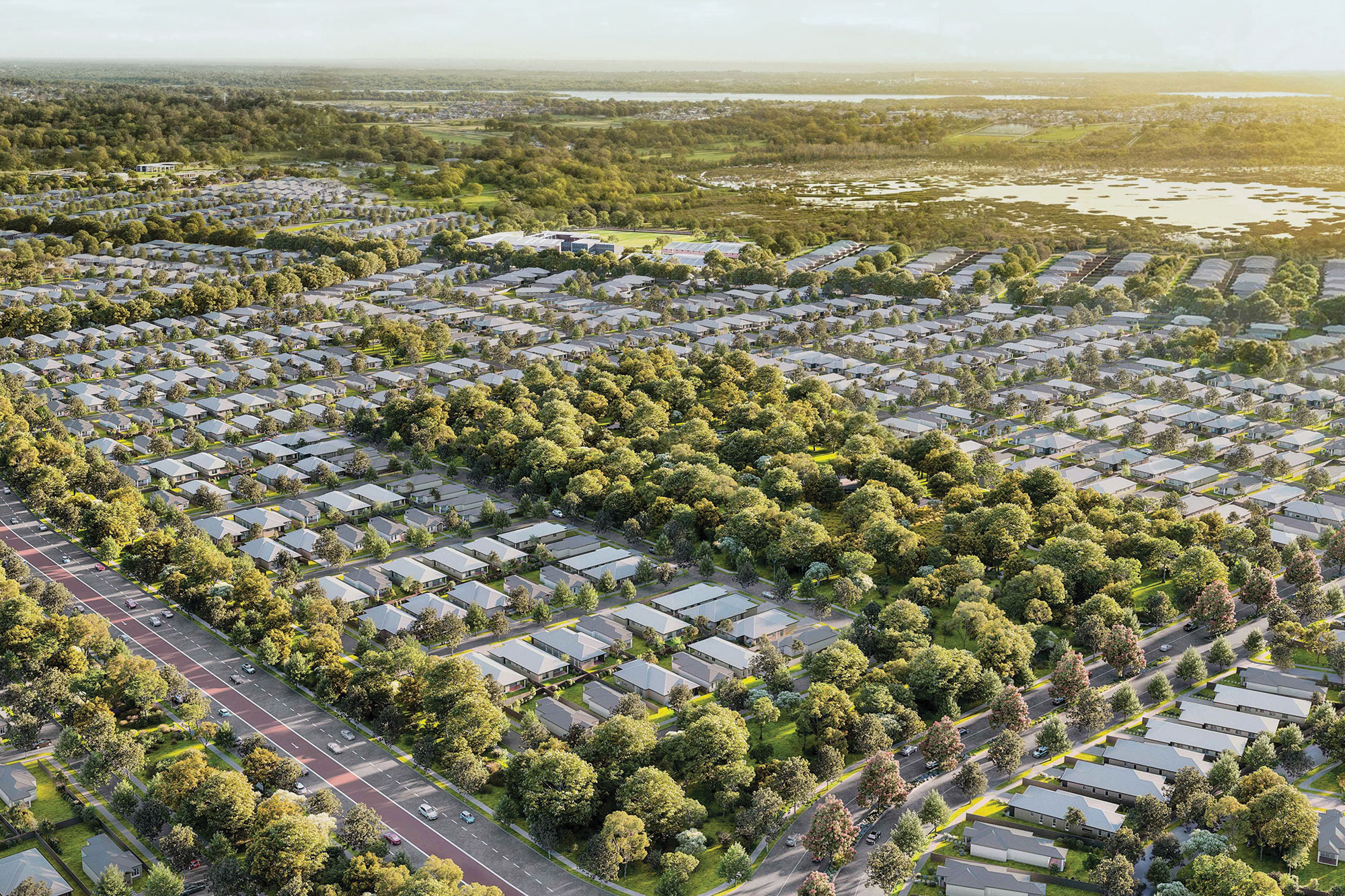
Botania Park – Hesperia
Those lessons are now being applied to emerging growth areas such as Botania Park in East Wanneroo and North Ellenbrook West.
East Wanneroo represents one of Perth’s most significant long-term growth areas, with potential to accommodate up to 50,000 new homes and around 150,000 residents over coming decades. Planning for the area has included the identification of a key future transport corridor that could support high-frequency bus services or other mid-tier transport solutions as the population grows. Environmental rehabilitation, including areas around Lake Mariginiup, will play a central role in establishing a unique identity for the precinct.
North Ellenbrook West provides a different but equally significant opportunity. With an interchange on Tonkin Highway supporting connectivity to the Ellenbrook Station and the wider METRONET rail network, the project allows residential areas east and west of the highway to integrate with the broader metropolitan transport system.
The scale of the project also provides a rare opportunity for coordinated masterplanning across a largely unified landholding. Plans for the community include several thousand new homes, environmental conservation areas, schools and a district centre. Early infrastructure delivery, including sporting facilities and public open space, is expected to help establish community life from the outset.
“Behaviours are established early,” Dixon explains. “Delivering transport access, centres, schools and public realm upfront shapes how a community functions for decades.”
One of the defining challenges facing Perth today is the alignment of service infrastructure, water, power, sewer and transport, with planning approvals. Without certainty around these essential services, the delivery of new housing can be delayed, contributing to supply shortages and affordability pressures.
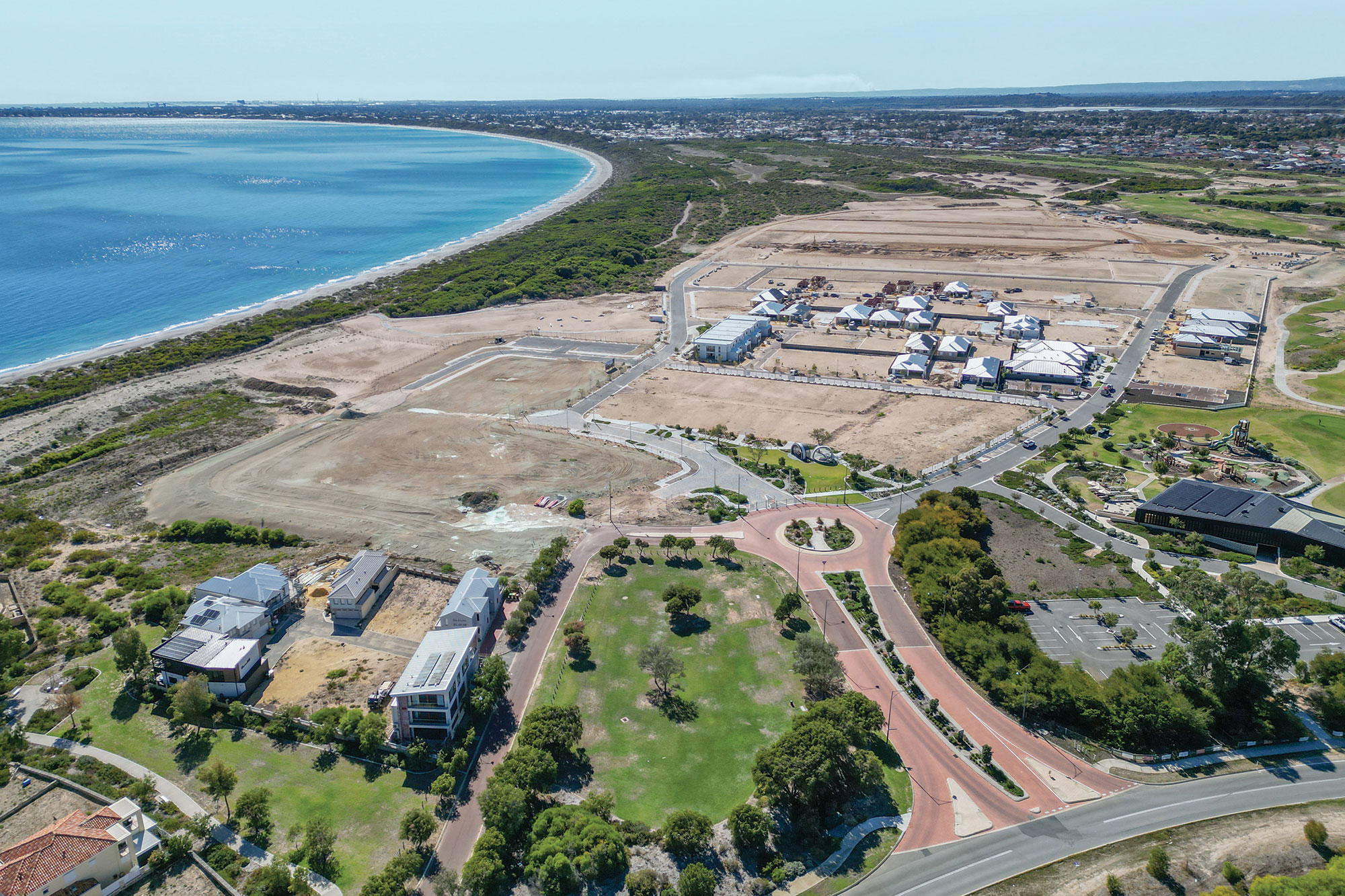
Kennedy Bay - Place Development
District and local structure planning continues to play a critical role in sequencing development, securing agency coordination and ensuring infrastructure planning keeps pace with population growth.
Over three and a half decades, the planning of new communities has become more sophisticated and, in many respects, more complex. Environmental management, bushfire response, water-sensitive urban design and community expectations have raised the bar for what new developments must deliver.
At the same time, the pathway to approvals has also grown more demanding, with increasing policy requirements and detailed technical investigations often required well before development certainty is achieved.
Institutional knowledge therefore remains critical. Delivering masterplanned communities requires balancing design outcomes, market demand, staging logistics, regulatory frameworks and long-term place identity, often simultaneously.
Looking ahead, success for Perth’s next generation of communities will take many forms. Improved infrastructure coordination, greater housing diversity, stronger environmental outcomes and the early delivery of community facilities will all play an important role.
As Western Australia continues to grow, the focus must remain on certainty, collaboration and long-term thinking. The responsibility is not simply to accommodate growth, but to shape it carefully so that today’s growth corridors evolve into tomorrow’s thriving communities.
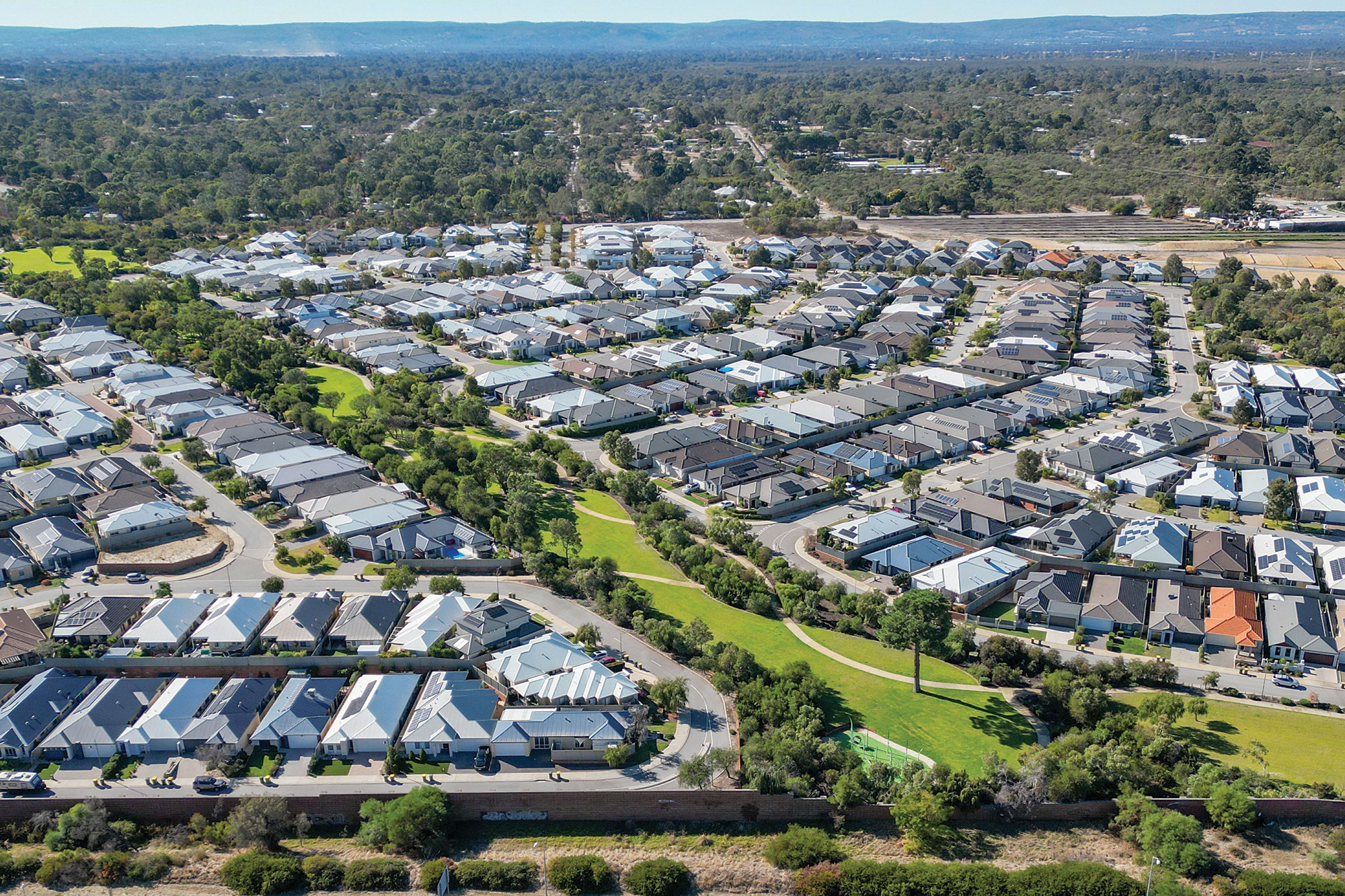
Honeywood - Satterley Property Group


 By Rowe Group