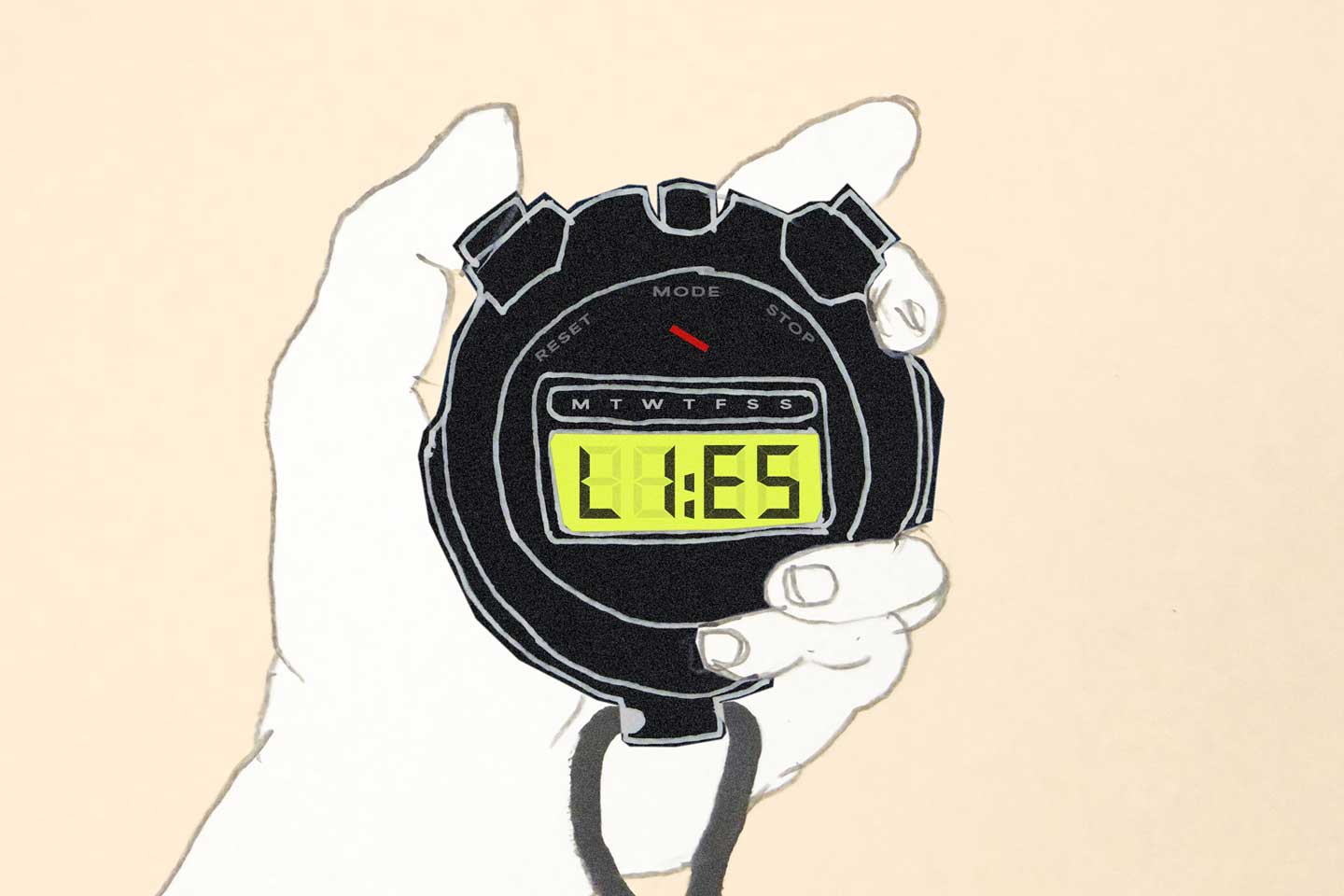
There’s no sugarcoating it. Your agency has been lying to you. Not maliciously. But systematically. And here’s the kicker — partly at your insistence.
It’s an uncomfortable truth. But it is an honest one. And honesty, it turns out, is where the next generation of agency models must begin.
But first, let’s look back at where we’ve been.
As advertising moved out of the commission-based system of the Mad Men era — when time didn’t exist (another martini, anyone?) because you were paid on media spend — and into the business consulting age, agencies decided what was required was to build the way professionals like lawyers and business consultants did. Billable hours. Utilisation targets. Time-tracking as the core operating system. It felt rigorous. It felt professional. It felt measurable. So grown up.
It was a decision that would shape everything that followed. And it was the original sin that made the timesheet fiction inevitable.
The theory goes something like this: the timesheet is a precise record of how your agency spent its time on your behalf. In practice, it is an act of collective imagination. The most creative output most agencies produce.
Ask anyone who has spent any time in a creative agency and is being truthful. They will tell you the same story with minor variations. Timesheets are submitted late. Submitted grudgingly. Submitted in a state of heroic approximation. Rarely weekly. Barely monthly. And only when the accounts department threatens to get legal on the creator’s arse.
By that point, the team is reconstructing months of work from memory, calendar fragments, and educated guesses. With the accuracy of a tabloid horoscope. Six hours here. Half a day there. That three-week campaign that consumed everything quietly becomes forty hours — because that’s all account service told you you could put to it. Time distributed across line items in a way that looks, if you squint, like it might have possibly, in some alternative reality, happened.
Don’t blame the timesheet scribes. The system did this. Insights do not happen in billable increments. They happen in a conversation in a car park. In the twilight between awake and asleep. In the shower on a Tuesday. The idea that arrives fully formed while walking the dog — there’s no line item for that. There’s no code for the week of unconscious processing that led to the breakthrough. So agencies do what any rational actor does when asked to report on something unmeasurable: they make it up.
The only question worth asking now is: why did anyone pretend otherwise?
The answer, uncomfortably, is that the system suited everyone well enough to perpetuate. Agencies could charge for time without necessarily proving its value. Clients could feel in control of a process they couldn’t actually audit. And procurement departments could benchmark against other agencies using the same fictional units. It was a shared hallucination maintained by mutual interest.
Progressive agencies saw through it earlier than most. Block abandoned hourly billing years ago. Timesheets were filed under ‘I’ for irrelevant and replaced with a set fee to deliver a defined scope. The incentive shifted from billing more hours to doing better work. Hundreds of hours previously spent recreating timesheets were freed to be spent better for clients and our business.
And then AI walked into reception.
Here is what AI is actually doing to the creative economy. Tasks that took time and added very little value are being exposed. The churn, the busywork, the activity mistaken for progress — it’s all lit up now. Because a machine can do it in minutes.
But the real value was never in the input. It was in the thinking. The editing. The rethinking. The judgement call that only someone who has done this a thousand times can make quickly. A system built on hourly billing penalises speed and rewards slowness. Solve it brilliantly in half the time and you’ve just slashed your own invoice. That is a system that rewards mediocrity over excellence. And it has been doing so for decades.
UnBlock is our answer to that broken system — and the most honest commercial model we’ve built yet. Not a retainer, which reserves time regardless of what actually needs doing. Not a project quote, which opens a wasteful negotiation before the work has even begun. A subscription operating system built for the way business actually moves — which is to say, not in a straight line.
Every outcome — big or small, brand strategy, campaign development, a week of a Creative Director’s attention — is directly comparable without spiralling into quote-renegotiation hell. The commercial decision is made once, upfront, properly. When priorities shift — and they will — work can be accelerated, paused, or redirected without renegotiation. No scope creep conversations. No defensive estimating. No creative energy spent justifying costs rather than making decisions.
This model was co-created with a client — Simon Lamplough, Chief Customer Officer of Kitchen Warehouse — which is how you know it emerged from real operational pain rather than an agency’s commercial wishful thinking. It was named a significant factor in Block being named Agency of the Year by Campaign Brief this month. Not because it’s clever, but because it’s honest.
Remuneration isn’t just a billing mechanism — it’s the architecture of a relationship. And this one is built for partnership.
Those who survive the AI era won’t be the ones who use AI most aggressively. They’ll be the ones who used the disruption as permission to stop pretending. To build commercial models that reflect how creative work actually happens, rather than how it was once convenient to invoice.
The timesheet had a good run.
It’s done.