In today’s infrastructure environment, milestones have taken on a significance that extends well beyond project schedules. For governments, investors and communities alike, they are among the clearest indicators of delivery certainty in an increasingly complex landscape.
When major projects reach defining points, whether it is tunneling, across a rail corridor or at key interfaces, it is not simply progress being marked; it is capability being demonstrated.
At a time when scrutiny of major infrastructure projects is high, these moments of delivery take on added importance. They provide a factual counterpoint to the inevitable challenges and public debate that accompany projects of scale and complexity.
Recent achievements across our projects in Western Australia illustrate this clearly. They show that consistent, disciplined execution, backed by engineering depth and a strong safety culture, is what ultimately underpins confidence in our industry’s ability to deliver the next generation of infrastructure.
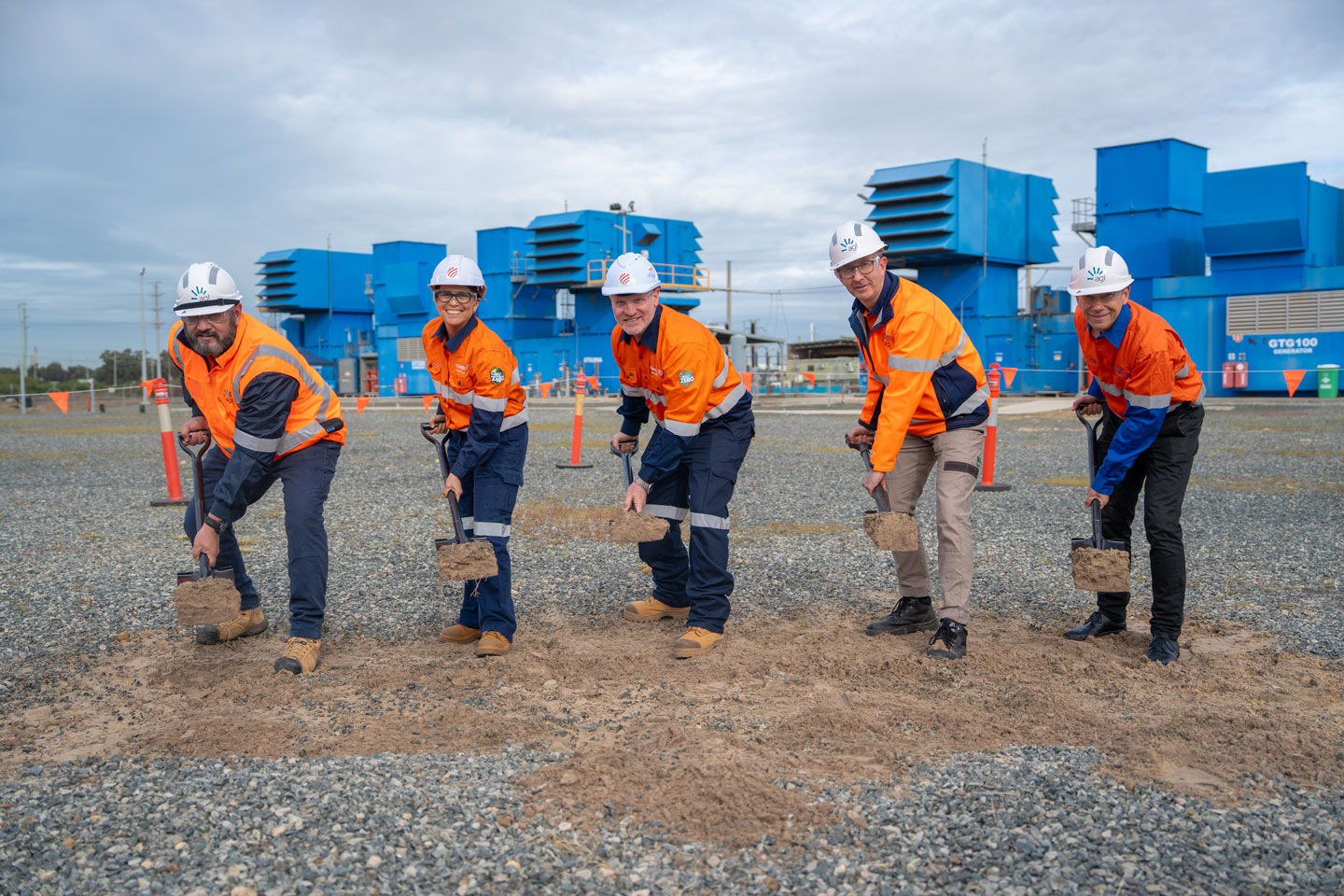
A clear example is the commencement of construction at the Kwinana Power Project (K2). Following the award earlier this year of the design and construct contract for the 220-megawatt (MW) open-cycle, dual-fuel gas turbine power station, co-located with AGL’s existing Kwinana Swift facility, the project represents a significant step forward in enhancing the reliability of the South West Interconnected System (SWIS) while supporting Western Australia’s energy transition.
K2 will deliver fast-start, flexible generation, providing critical backup capacity to support the growing share of renewable energy in the state’s power system. It strengthens AGL’s energy portfolio and aligns with the Western Australian Government’s commitment to retire all state owned coal-fired power generation by 2030.
The project will also supply power during periods of peak demand, offering a lower-emissions alternative within the evolving energy mix. Importantly, it is expected to create around 200 construction jobs, strengthening local employment, supply chains and regional capability, with operations set to commence by the end of 2027.
Also in Western Australia, the recent first major concrete pour at the new Women and Babies Hospital in Murdoch points to the same underlying trend. Delivering approximately 2,200 cubic metres of concrete over a 12-hour continuous operation, this milestone does more than mark construction progress, it reflects the increasing sophistication of project delivery in Australia’s health infrastructure sector.
The scale, coordination and precision required, alongside the use of fully electric tower cranes to reduce emissions and noise, demonstrate how engineering excellence and sustainability are being integrated from the earliest stages of delivery. Foundational milestones such as this not only enable the physical structure of a 12-storey hospital to rise but also signal how the industry is evolving to meet community expectations for faster, smarter and more responsible infrastructure outcomes.
Taken together, these milestones highlight a broader shift in how innovation is expressed in our sector. While innovation is often associated with new technologies, the reality is that it is just as evident in how projects are executed. It is reflected in the systems that coordinate thousands of activities, the methodologies that enable precision at scale, and the cultures that prioritise safety while maintaining productivity.
For industry stakeholders, this has important implications. Governments and private clients are increasingly seeking delivery partners who can manage complexity with certainty. Investors are looking for clear signals that projects will be delivered as planned, with risk effectively managed. Communities expect infrastructure that delivers long-term value, not just immediate outcomes.
Importantly, experience shows that projects will face challenges along the way. What distinguishes successful delivery is not the absence of these challenges, but the capability, resilience and systems in place to address them and continue progressing. In this context, consistent milestone achievement provides a transparent and measurable indicator of performance over time.
Milestones such as these provide that reassurance. They demonstrate that the industry can deliver technically complex infrastructure in a way that is repeatable, disciplined and safe. They show that capability is not theoretical, it is evidenced through performance.
Looking ahead, this matters greatly for Australia. The pipeline of infrastructure required to support population growth, economic development, energy transition and urban mobility is substantial. Delivering it will require more than ambition; it will require experience, scale, and the ability to execute consistently across diverse project environments.
This is where experienced contractors have a defining role to play. By combining global expertise with local capability, and by applying lessons learned across projects, the industry can continue to lift the standard of delivery. Each milestone achieved becomes part of a broader body of knowledge that strengthens future projects.
Ultimately, milestone delivery is not an endpoint; it is a signal. It speaks to the systems, people and processes behind it. When delivered well, it builds confidence, not just in a single project, but in the sector as a whole.