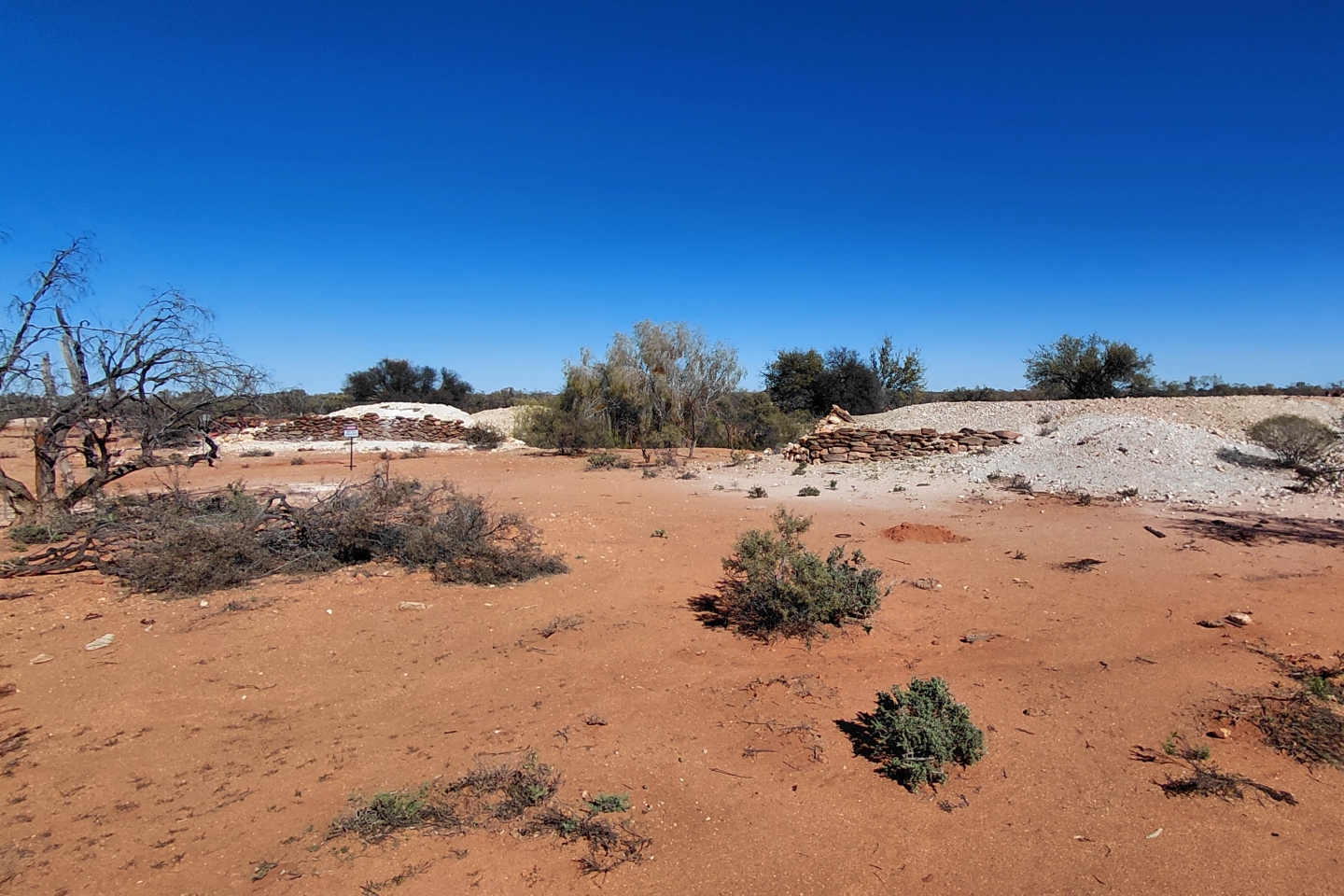
Neometals Limited has nailed a significant gold intercept in recent diamond drilling at its Barrambie project, 75 kilometres north of Sandstone in Western Australia’s Mid West region, extending the known mineralised strike at its Ironclad deposit by 50 metres to 450m.
The company’s assays returned a headline intercept of 22.87 metres at a solid 2.73 grams per tonne (g/t) gold from a downhole depth of 136.54m. The intercept included two higher-grade internal zones: one 2.82-metre section grading a healthy 7.54g/t gold from 136.54m and another 7.23-metre slice going 4.81g/t gold from 152.18m.
Notably, the latest hit has confirmed the continuation of gold mineralisation north of the existing resource boundary, with the higher-grade zones remaining open both up- and down-dip, presenting a clear opportunity to add further ounces to the existing resource.
The drilling was designed to test for extensions to an interpreted higher-grade mineralised zone that plunges northward, well below and along strike from the current Ironclad gold resource envelope.
A second diamond hole - collared next to the headline hole, although oriented at 23 degrees instead of the 60-degree azimuth of the headline hole - did not return significant gold grades. The company says the intense shearing and alteration encountered in the second hole suggest it may have passed close to a previously interpreted feeder structure, which may help define the deposit's northern extent.
Neometals Limited managing director Chris Reed said: "The latest diamond drilling results are another encouraging step in building our understanding of the Ironclad gold deposit. The intersection of 22.87 metres at 2.73g/t gold, including two higher-grade zones, extends the known mineralisation a further 50 metres north and reinforces the continuity of the higher-grade gold system beyond the current Mineral Resource.”
Neometal's fully-owned Barrambie project lies within a historic high-grade gold-producing area within the Barrambie Greenstone Belt and has seen very limited modern exploration. Neometals has previously highlighted potential for “camp-scale brownfields gold discoveries” across the ground.
The latest drilling results build on the company's March 2026 combined indicated and inferred gold resource estimate for Ironclad of 285,000 tonnes at 1.6g/t gold for 15,000 ounces. Notably, Neometals has already entered into a Letter of Intent with a mining contractor for a 50:50 production joint venture on the deposit, which it says provides a “potentially funded pathway to near-term development”.
Ironclad sits amid a string of historic high-grade gold mines, including Kismet, Mystery and Inheritance, alongside the Sugarstone mine, which produced 3880 ounces at a hefty average grade of 22.9g/t gold and Errolls Centre, which yielded 6200 ounces at 19.01g/t. Just south of Ironclad, the historic Barrambie gold centre also delivered an impressive 15,390 ounces at a whopping average grade of 28.96g/t gold.
To showcase Barrambie's potential, Neometals has compiled an impressive exploration target that embraces those old shows and a handful of others, for a total exploration target of between 335,000 and 775,000 ounces of gold.
While gold is the current focus at Barrambie, the broader project also hosts the company's massive Barrambie titanium and vanadium deposit, which Neometals is currently looking to divest as it refines its portfolio. The deposit is home to a total vanadiferous-titanomagnetite (VTM) mineral resource of 280.1 million tonnes, grading 9.18 per cent titanium dioxide and 0.44 per cent vanadium pentoxide and is considered one of the world’s highest-grade hard-rock titanium assets, containing a richer core of 53.6 million tonnes at 21.17 per cent titanium dioxide and 0.63 per cent vanadium pentoxide.
The company is also planning its next moves at Barrambie, with a detailed drone magnetic survey and a geochemical soil survey recently completed over the Rinaldi copper prospect, 25km south-southeast of Ironclad. The data from those surveys will be used to design a reverse circulation (RC) drilling program to test the Rinaldi copper anomaly and associated geological targets.
While the rods keep spinning at Barrambie, Neometals is progressing its broader diverse portfolio of critical minerals assets and clean-energy technologies. In the United States, it holds a 51 per cent interest in the Utah Brine project, where historic data has shown lithium grades up to 147 milligrams per litre.
The company also holds a 70 per cent stake in its patented “ELi Process” for lithium chemical production, which is the subject of a memorandum of understanding with global mining giant Rio Tinto.
With the drill bit confirming extensions to the high-grade gold at Ironclad and a potential production partner already waiting in the wings, Neometals is steadily progressing its Murchison gold play towards a development decision. With the deposit showing high-grade zones that remain open for growth, the company's next round of drilling could get very interesting.
Is your ASX-listed company doing something interesting? Contact: matt.birney@businessnews.com.au






 24 Sep 2026
 04 Sep 2026
 17 Aug 2026
 17 Jul 2026
 12 Jun 2026
 19 May 2026