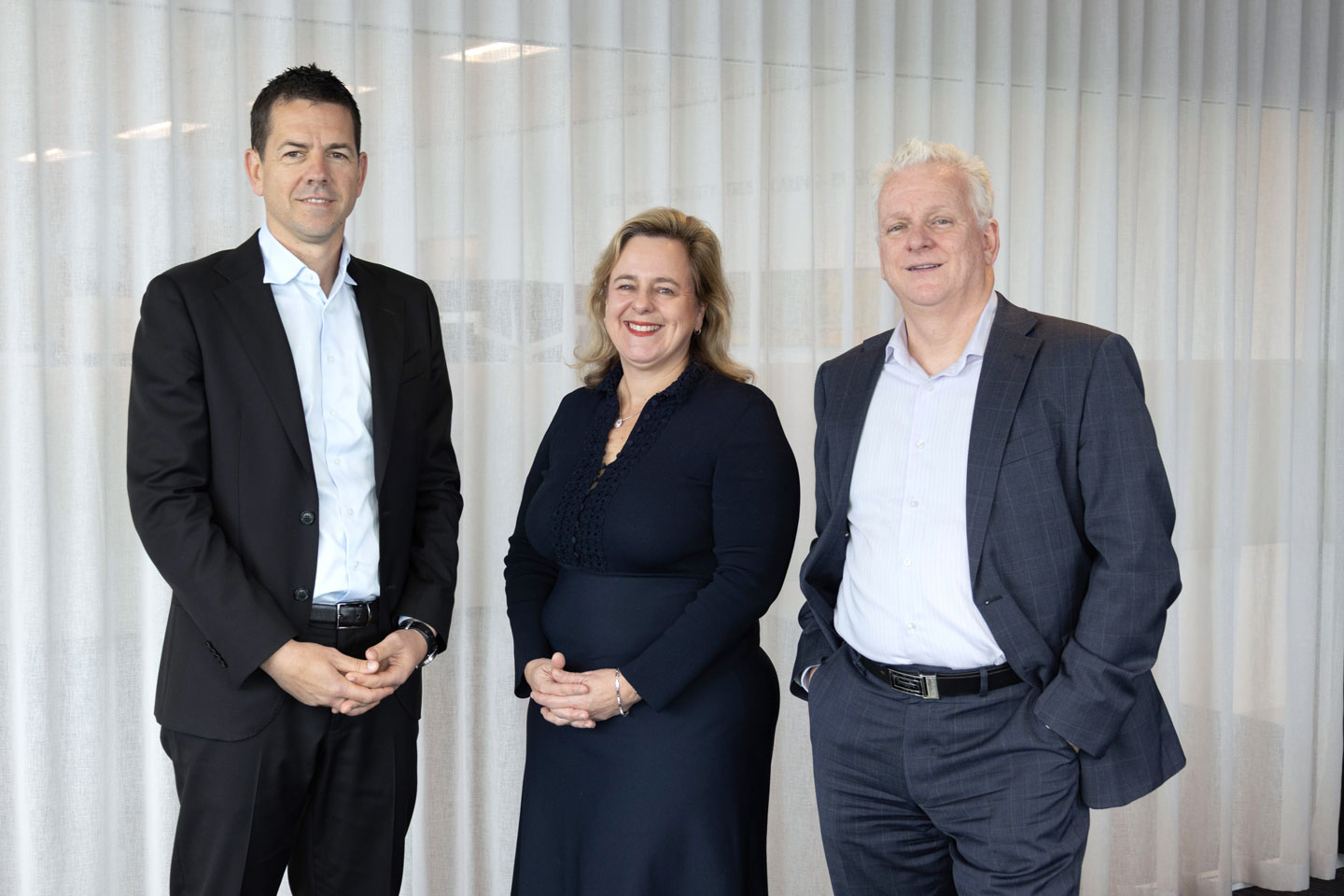
As algorithms increasingly influence how organisations identify and assess talent, executive search firm Gerard Daniels believes there are limits to what technology can determine when recruiting at the highest levels.
For a chief executive, board member or senior leader, experience and technical capability are only part of the equation.
How a person leads, whether they fit an organisation’s culture, their ability to work with a board and executive team, and whether they are the right leader for where an organisation is heading can be considerably harder to assess.
“It sounds really tempting to pop things into an algorithm, but at the highest levels it just doesn’t translate because ultimately you’re hiring a person, you’re not hiring a bot,” Gerard Daniels partner Jennifer Grove said.
“There are lots of variations within companies and organisations at particular points in time where particular skills and experience are needed, a particular style is required, a particular link between a chair and a CEO.”
It is why Gerard Daniels believes executive search remains fundamentally a human-centred process.
Ms Grove said technology could identify candidates with particular skills or experience, but that was different from understanding whether those attributes would translate successfully into a particular organisation.
“The difference between understanding whether those skills and experience will fit that organisation at that time, with this group of executives, with that board, is a human skill,” she said.
A leadership style that suits an organisation today may not necessarily have worked five years ago or be what it needs five years from now.
That makes understanding the organisation, its people and its direction as important as understanding the candidate.
Looking beyond the obvious
Perth-founded Gerard Daniels, which recently celebrated its 40th year in business, works across a broad range of industries, with mining, resources and energy a significant part of its WA and international practice.
Its work also extends across infrastructure, industrials, health, government, financial services, community and membership organisations, with searches spanning board and C-suite positions through to senior functional and technical leadership roles.
Gerard Daniels managing partner (Perth) Ivan Zuvela said senior leadership appointments were not confined to a chief executive and their direct reports.
In larger organisations, critical leadership and technical roles could sit several levels below the CEO while carrying substantial responsibility for people, projects and organisational performance.
Some of Gerard Daniels’ more unusual assignments demonstrate why executive search can be more complex than simply looking for candidates who have previously held an equivalent title.
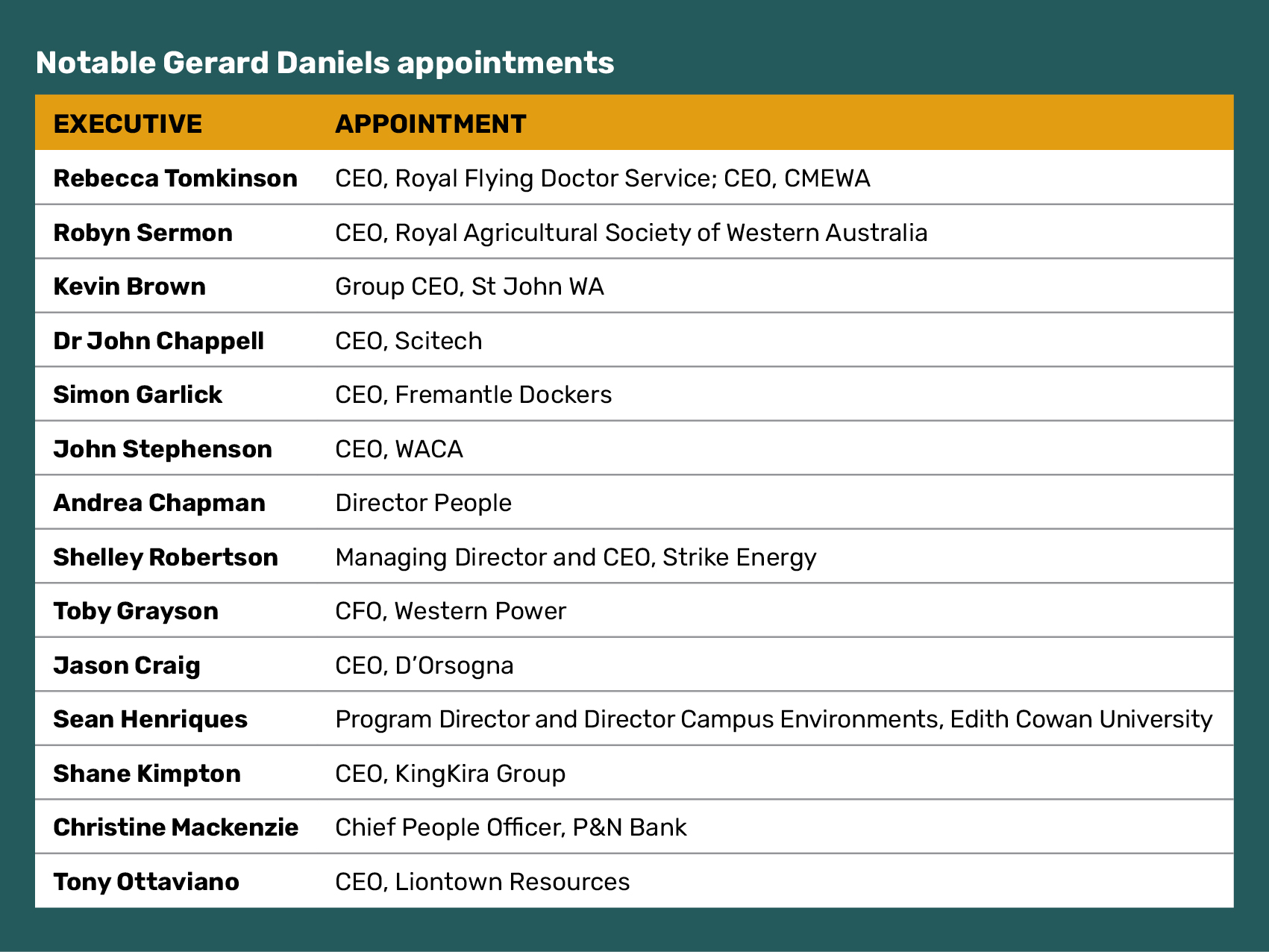
The firm has worked on executive-level appointments for organisations including Scitech, the Royal Agricultural Society of Western Australia and the Royal Flying Doctor Service, where recruiting for executive leadership positions can be highly specific and there may be no obvious pool of candidates.
Ms Grove said these searches required the ability to think laterally about what an organisation actually needed from its next leader.
“I’ve made lateral appointments for people that don’t look obvious by really working well with the board to understand, what do they really need at this point and why would this person possibly be able to meet the brief,” she said.
The process can involve looking beyond job titles and conventional career paths to identify transferable leadership capabilities and how a candidate’s experience might translate into a different environment.
An algorithm may identify people whose career histories closely correspond with a brief. Human judgement can consider whether someone who has not followed the obvious career path may nevertheless be the right person for the job.
Time as an investment
The consequences of getting a senior appointment wrong can extend well beyond the individual, with senior leaders able to influence organisational strategy, culture and performance. Mr Zuvela said the time involved in a rigorous executive search should therefore be viewed in the context of managing that risk.
“Finding the right person does take time,” he said. “Having a structured and timely executive search process is there to mitigate risk, so your client gets the best person for the role at that time.”
“Leadership appointments are very important and therefore inherently risky. It can be an opportunity lost or at worst, have a materially adverse impact on the organisation.”
Ms Grove said organisations needed to invest sufficient time in meeting and assessing candidates. At senior levels, that can involve multiple interviews and significant involvement from boards and selection panels.
“You need to invest in that time to meet people because you will know if you meet them if they definitely don’t fit,” she said.
“You can design very good interview structures around testing that aspect of it because that’s where your instinct has to come in.”
The objective was not to make the process unnecessarily lengthy, Ms Grove said, but to properly understand the person being considered for a critical leadership role.
“It’s time to invest in making the right decision,” she said. “It doesn’t mean it has to be four days of interviews, but a well-designed interview process and knowing what you’re really looking for is a really important investment at this level.”
Technical capability may establish whether somebody can perform in a role, but executive appointments also require judgement about how a person will lead when circumstances become difficult.
Ms Grove said the relationship between a chief executive and board was one example, with both parties needing to be capable of robust discussions when significant decisions arise or during periods of change or crisis.
“As good as technology is, it can’t take away the actual time you need to invest in understanding [someone] from a person-to-person [perspective],” she said.
A two-way decision
The human element applies equally to the candidate.
Senior executives considering a new position may be weighing the opportunity against their longer term ambitions, the organisation’s direction and the people with whom they will work.
Ms Grove said senior candidates generally wanted to speak directly with somebody who could explain the nuances of a role.
“Most human beings at senior levels want to connect with another human to understand exactly the nuances of a role,” she said. “They want a conversation because they’re careful, as a general rule, about their next opportunity.”
Mr Zuvela said the dynamic had increasingly become a two-way assessment.
“More and more, candidates are interviewing the client as much as the client is interviewing the candidate,” he said. “They need to make sure it’s the right fit for them as well, not just the client.”
For organisations seeking candidates already established in senior positions, the process therefore involves understanding what might motivate that person to consider an opportunity and giving them enough insight to determine whether it is right for them.
Hiring for tomorrow
Gerard Daniels global sector leader for mining Paul Howard said cultural fit was a key factor that could not easily be established from a candidate’s experience alone.
For Mr Howard, who works on senior mining appointments in Australia and internationally, the process begins with understanding the client.
That involves speaking with boards, hiring managers and others within an organisation to understand its culture and assess how a prospective leader’s values and approach might fit.
“I think that’s our advantage, understanding the culture and then aligning people’s values with our clients and the culture of the organisation,” Mr Howard said.
“It’s ensuring people do fit into an organisation.”
But fit does not mean simply finding someone who resembles the person who previously held the position.
Mr Howard said executive appointments also needed to consider where an organisation was heading and the capabilities it would need from its leadership in coming years.
“We’re often hiring people for the future state of an organisation,” he said.
“We’re not hiring just for today, but we’re hiring for what the future state of the business is going to be, we’re hiring for tomorrow.”
That requires understanding a candidate’s ambitions and career trajectory and whether those align with the organisation’s strategy and future direction.
It can also mean recognising when a candidate with deep technical expertise has the capacity and ambition to move into broader leadership, rather than limiting the search to people who have already held an equivalent position.
Understanding what drives a person and where they want their career to go can reveal potential that may not be apparent from their career history alone.
The human factor
The rise of AI has sharpened questions about which elements of recruitment can be automated, but for Gerard Daniels the central challenge at the executive level remains unchanged.
Finding a senior leader involves assessing what somebody has done, but also how they lead, what motivates them, how they relate to others and whether their capabilities fit the organisation they are being asked to lead.
For Mr Zuvela, a structured search process is ultimately about reducing the risk of getting that decision wrong, while candidates need to understand the organisation, its culture and where an opportunity could take them.
Mr Zuvela explained the reason a humancentred approach remains important is relatively straightforward. “Leadership’s still about leading people and leading teams and taking them on specific journeys or projects,” he said. “It’s still the people that deliver.”
At the executive level, the search is therefore not simply for the person whose CV most closely matches a brief.
It is for the person capable of leading a particular organisation, with a particular group of people, at a particular point in its evolution – a judgement Gerard Daniels believes still requires people to make.