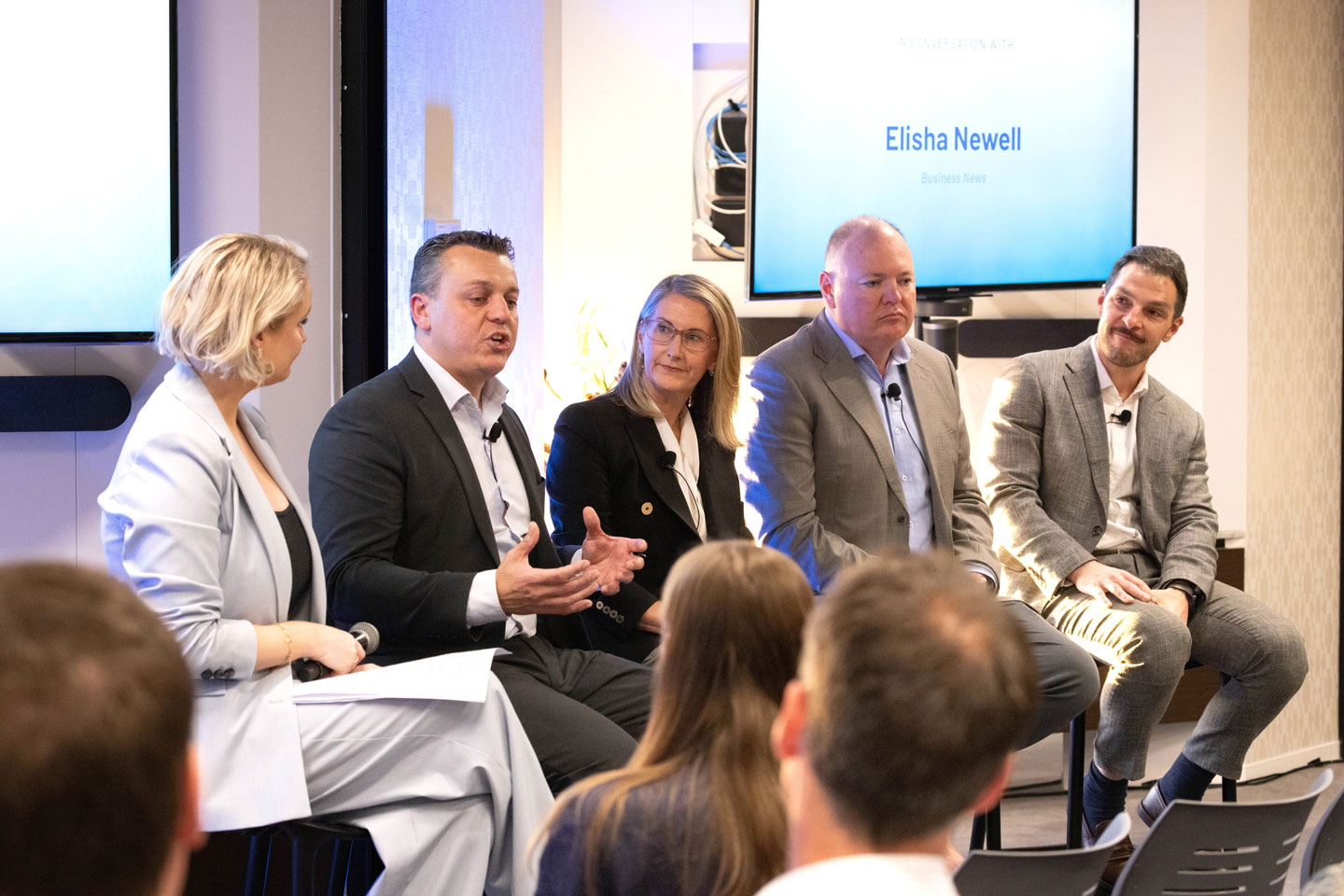
The state’s major project pipeline could take more than a decade to deliver, with industry leaders calling for better long-term planning and workforce development to meet growing demand.
The challenges were discussed at a Business News and HopgoodGanim Lawyers event in Perth on October 27, Built to Boom: Can WA Deliver Its Major Project Pipeline?, which examined the state's capacity to deliver projects across the resources, defence and infrastructure sectors.
Speaking on the panel, BMD Constructions WA General Manager Leon Fogliani cautioned against delaying major projects in response to perceived capacity constraints.
"We’re currently seeing a significant number of ambitious project timeframes, but those still in development are not practically going to be delivered in five years," Mr Fogliani said.
"By the time some projects are fully developed it could take up to a decade before considerable progress is made and workforce is engaged."
Mr Fogliani said maintaining investment momentum was essential, given the time required to plan and develop major projects.
"Consideration is required before decisions are made to pause project development. The answer can't be let's just push everything out into the horizon, because nothing progresses from concept to delivery overnight," he said.
"These projects can take decades to procure, process and program."
"Pausing major project development creates potential lulls in the future and missed opportunities."
Mr Fogliani said WA's construction industry had historically operated in a boom-and-bust environment, requiring contractors to adapt to changing market conditions.
"WA has always been a boom-bust environment," he said.
"Having the right people in your team that are able to adjust to different environmental conditions is critical in fluctuating market conditions."
He said the emerging defence sector would place further demands on the state's workforce and resources, alongside major projects in mining, energy and transport infrastructure.
However, previous resources investment booms had demonstrated that workforce capacity could be expanded through innovation, flexible rosters, competitive remuneration and attracting workers from interstate.
Similar approaches would be needed to deliver the next generation of major projects, particularly in regional WA.
"Projects just need to think differently. They've got to be more self-sufficient," he said.
"You're not going to get everyone from Perth to build major infrastructure in the Mid-West. You're going to have to empower the local communities, industries, make yourself self-sufficient, and create something from what is there."
Long-term planning
Tellus chief executive Anna Dartnell said better long-term planning was essential to delivering major projects, particularly when considering their operational requirements beyond construction.
"Not a lot of people are putting the back end into their front-end thinking," she said.
"We need to think about both our project pipeline and individual projects as a whole ecosystem plan."
Ms Dartnell said access to capital and labour was important, but developers also needed to consider how infrastructure would operate and be managed over its lifetime.
"New projects, as anyone who's been connected to them, is more than the ribbon cutting for opening," she said.
"That's a very exciting day, but invariably that's when the work really just starts."
She also called for greater consideration of project sequencing, particularly given the tendency for major infrastructure announcements to be influenced by political cycles.
"That mentality around planning slow so that you can build fast could really help," she said.
Constraints
HopgoodGanim Lawyers partner Andrew Vinciullo said workforce capacity remained a significant challenge, but the issue extended well beyond WA.
"The capacity constraints are real. That's not an Australia problem, it's not a WA problem, it's an international problem," Mr Vinciullo said.
He said the construction industry was facing an international skills shortage, with migration not necessarily providing the solution many had hoped for.
However, he remained optimistic about WA's ability to deliver its major projects, provided sufficient attention was given to planning and project readiness.
"Provided that is followed through, there's no reason why it can't be achieved," he said.
Mr Vinciullo said capacity constraints in the construction industry are typically linked to workforce shortages, subcontractor availability and supply chain issues.
"We start to see the impacts manifest through an increase in delay and extension of time claims or variation claims," he said.
He said payment disputes could also indicate financial pressures on project owners.
Regional growth
Mid West Ports chief executive officer Damian Tully said making better use of existing infrastructure while planning for future growth was critical to regional development.
The port is undertaking the Port Maximisation Project, which aims to increase the capacity of Geraldton Port.
Mr Tully said the port had significantly increased its throughput over the past two decades.
"If you look at 20 years ago, we had around about five million tonnes going through the port, and in the next year or two we'll have 25 million tonnes going through the Port," he said.
He said decisions about infrastructure investment needed to consider the broader economic and community benefits, rather than focusing solely on financial returns.
"If we were just going to get a return on the dollars invested, that's not enough," he said.
"We are competing against the dollars that are being invested in hospitals and schools and roads and police forces."