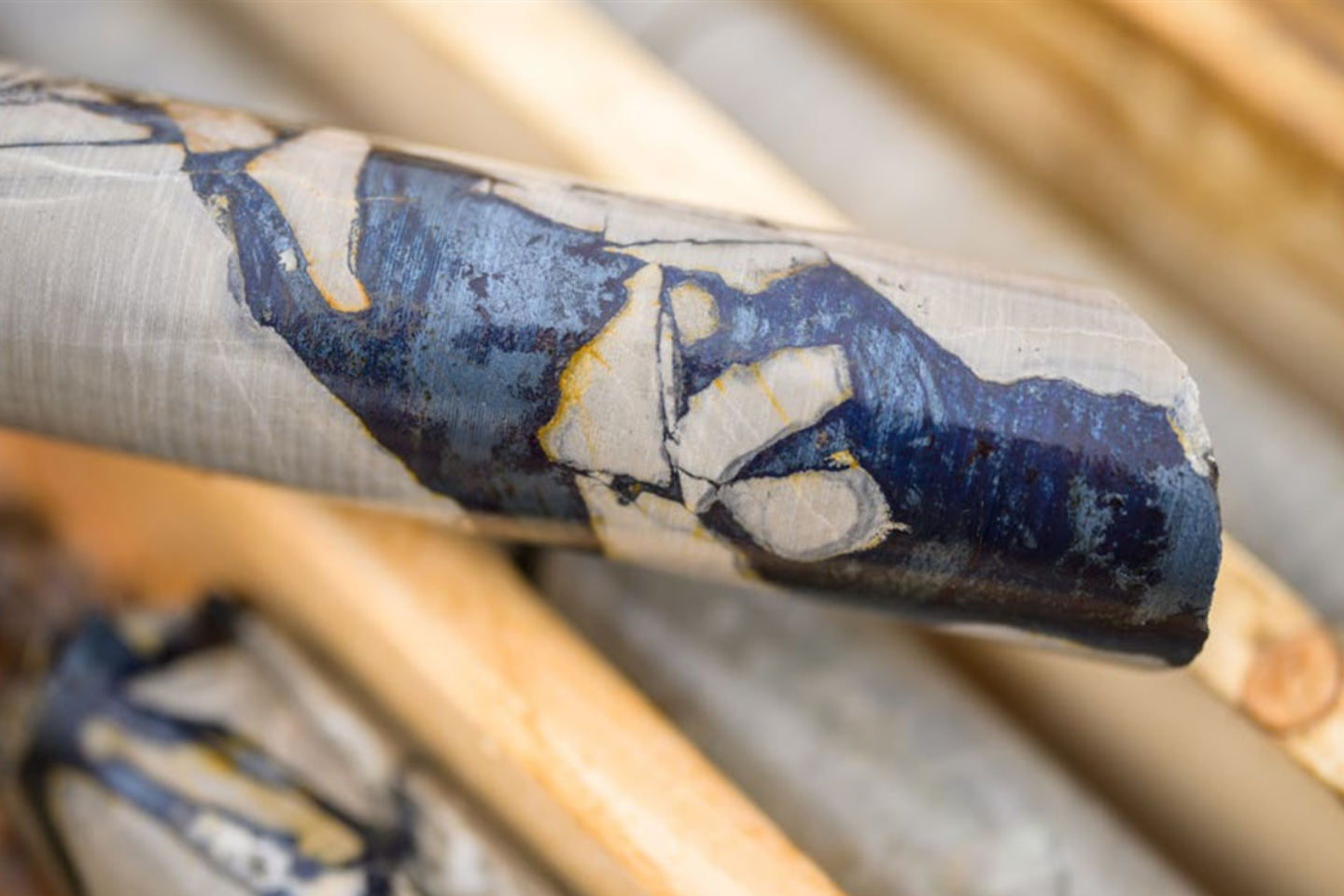
American West Metals has laid out a low-cost path to production for its Storm copper mine in Canada, delivering a robust prefeasibility study (PFS) for the Nunavut project. The company has also tabled a maiden ore reserve of 12.58 million tonnes grading 1.2 per cent copper and 3.7 grams per tonne silver for 151,000 tonnes of contained copper and 1.5 million ounces of silver.
The appraisal lays out an 11-year mine life, with a straightforward open-pit operation set to churn out up to 14,000 tonnes of copper annually. The numbers point to a post-tax net present value (NPV) of US$119 million (A$170 million) and a healthy internal rate of return (IRR) of 32.8 per cent, a payback period of just 3.6 years, based on a conservative copper price assumption of US$5.30 per pound.
The project is forecast to generate US$1.2 billion (A$1.71 billion) in life-of-mine revenue against an initial capital outlay of just US$81 million.
However, the numbers improve significantly when plugging in the current copper spot price. The study notes that at a spot price of US$6.53 per pound, the NPV nearly doubles to US$233 million (A$332 million) and the IRR soars to an impressive 55.1 per cent, with a total of US$1.5 billion (A$2.15 billion) in total revenues.
The PFS has significantly de-risked the project and marks a major step toward development, leaving plenty of exploration upside across its largely untested 110km of prospective strike. Although the initial economic assessment demonstrated the project’s potential from a direct shipping ore (DSO) scenario, the latest findings have taken things up a notch.
Updated metallurgical work has instead favoured producing a 15 per cent copper concentrate. Testing revealed that crushing the ore released valuable copper into finer particles that conventional ore sorters often missed. By adding gravity separation and a small flotation circuit, the company can recover more of that copper, producing a clean, marketable product without the expense and complexity of a full-scale processing plant. Better still, the concentrate retained next to no extra nasties, making it a highly marketable product.
American West Metals managing director Dave O’Neill said: “With an initial 11-year mine life, annual copper production of up to 14,000 tonnes and strong leverage to potential increases in the copper price, the PFS highlights the strong fundamentals and attractive development potential of Storm.”
While the prefeasibility study focuses on the initial 11-year mine plan, American West believes there is plenty more to come from the vast and underexplored project area. The current mineral resource of 28.2 million tonnes at one per cent copper and 3.3g/t silver remains open; however, the company says less than five per cent of the massive 110-kilometre-long prospective copper belt has been properly drill-tested. The project tenure hosts seven defined copper deposits, with a pipeline of advanced exploration targets ready for drill testing.
Elsewhere, the company's West Desert indium project in the US has increasingly taken centre stage in its exploration and expansion plans throughout the year.
With an impressive resource of 33.7 million tonnes containing zinc, copper, silver, gold and a significant inferred resource of 670,000kg of indium at 20g/t, West Desert is widely touted as the biggest undeveloped indium resource in the United States - a promising prospect in today's geopolitical climate.
With two substantial North American mining plays in its stable, American West appears to be hitting its stride. A maiden ore reserve and compelling economics have put Storm firmly on the road towards a final investment decision and first production, while West Desert offers a second strategic growth opportunity.
As copper demand gathers momentum and critical minerals climb the geopolitical agenda, the company looks increasingly well placed to ride both waves.
Is your ASX-listed company doing something interesting? Contact: matt.birney@businessnews.com.au