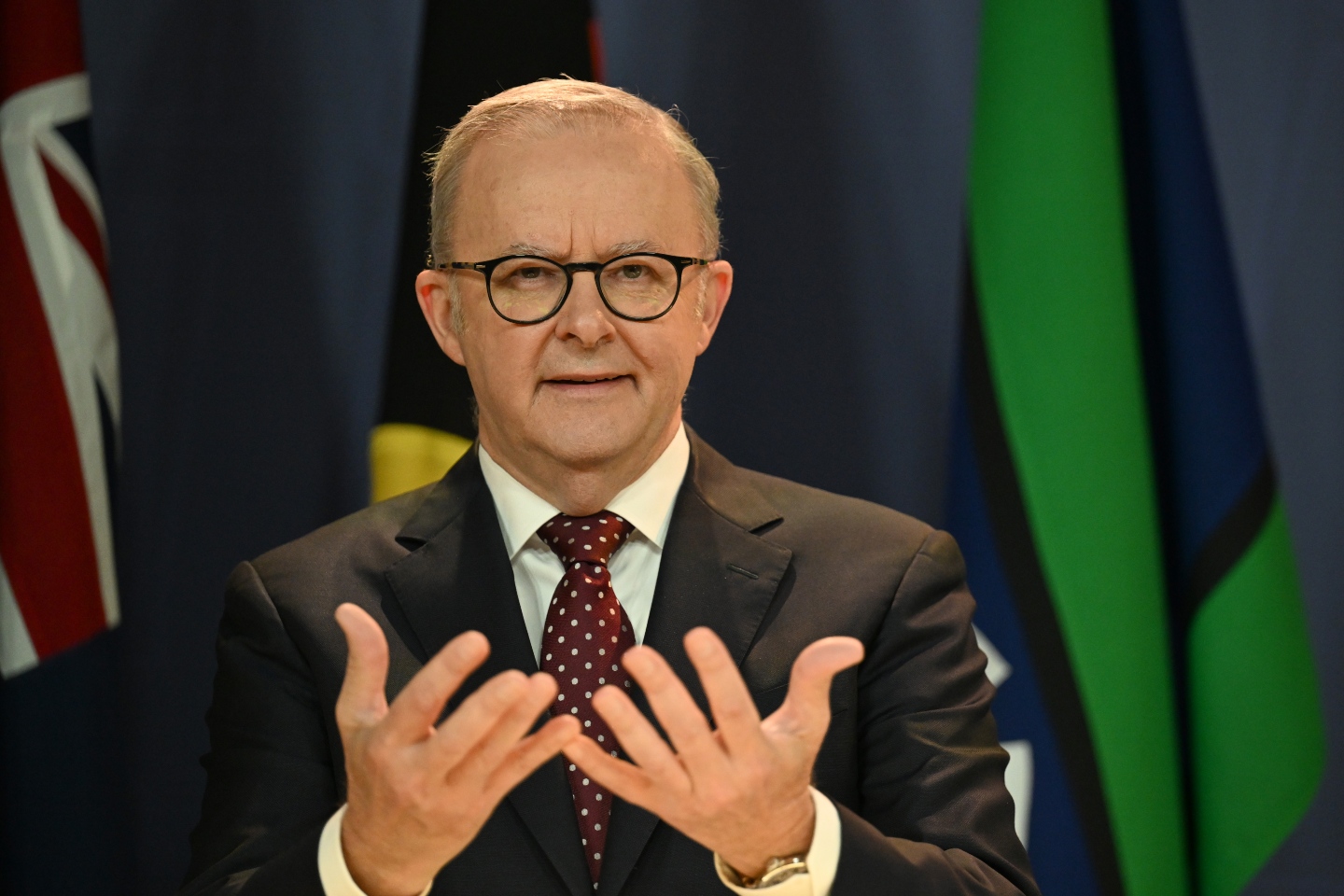
Prime Minister Anthony Albanese has called the US tariffs on Australian steel and aluminium “entirely unjustified”, while confirming retaliatory tariffs would not be imposed on US imports.
Late last night the White House confirmed an exemption to the 25 per cent global tariff on steel and aluminium imports to the US, which will take effect today, would not be granted to Australia.
US president Donald Trump had previously said he would consider an exemption for Australia, however White House Press Secretary Karoline Leavitt said overnight President Trump had “considered it and considered against it”.
“There will be no exemptions,” she said.
“If they want to be exempted, they should consider moving steel manufacturing here.”
In a press conference this morning following that revelation, Prime Minister Anthony Albanese said was “against the spirit” of US-Australia relations.
“The United States’ decision to impose tariffs on Australian steel and aluminium as part of a global decision are concerning,” he said.
“It has been foreshadowed that no country, regardless of its relationship with the United States, has been granted an exemption.
“It is a decision by the Trump administration that is entirely unjustified. It is against the spirit of our two nations enduring relationship, and fundamentally at odds with the benefits that our economic partnership has delivered over more than 70 years.”
Mr Albanese went on to say Australia would not impose retaliatory tariffs, as has been the response from other US-allied nations, including Canada and Mexico.
“Our government will continue to put forward a very strong case for an exemption, noting that the last time this occurred it took months for that exemption to be granted,” he said.
“Tariffs and escalating trade tensions are a form of economic self-harm and a recipe for slower growth and higher inflation.
“They are paid by the consumers, this is why Australia will not be imposing reciprocal tariffs on the US, such a course of action would only push up prices for Australian consumers and increase inflation.”
Foreign Affairs Minister Penny Wong also weighed in, saying the decision was unprovoked and unjustified – but not entirely unexpected.
“You only need to look at the president’s advisor Peter Navarro who has said the lesson from the last administration was that exemptions don’t work,” she said.
“They had made clear there would be no exemptions, this is a global tariff.
“We are a good ally and trusted friend, and we, like many other allies, do not believe this is the way friends and allies should be treated.”
Mr Navarro – Trump’s top trade advisor – told ABC Australia ‘abused’ the exemptions granted during similar tariffs in 2018.
“In 2018, we imposed tariffs on steel and aluminium, and they worked beautifully,” he said.
“Over time, there were many country exemptions given, not just to Australia but to many other countries, and every single country abused those exemptions, and the collective result was to weaken the tariffs to the point that they simply didn’t provide any protection anymore.
“So what the lesson from the first Trump tariffs has been is that exemptions to anybody are counterproductive. They don't work for the American people.”
Prominent Australian resource figures have already begun to weigh in on the news, with Fortescue executive director Elizabeth Gaines telling a Business News Success and Leadership breakfast this morning producers must strive to be a low-cost producer.
“There’s plenty of uncertainty out there at the moment; prices will be volatile in the years ahead,” she said.
“I think the one thing that is absolutely critical in the sector is to be the low-cost producer, because the market will go through some volatility, there's a lot of volatility in the world.”
Opposition leader Peter Dutton has quickly placed blame for the failed attempt at a tariff carve-out at Mr Albanese and Kevin Rudd's feet.
"It's obvious that Anthony Albanese and Kevin Rudd have had a shocker The Prime Minister can't secure a phone call, let alone a meeting with the president of the United States," he said.
"This is a bad day for Australia, a bad day because of the decision that our ally in America has made, but even worse, because the Prime Minister is on his knees and can't even get a phone call or meeting with the United States, our closest ally."
Mr Dutton went on to say there was "no question" the coalition would have been able to get a deal done.
"Yes, I absolutely believe we can get a deal done with the Trump administration because we will be a strong government that stands up for the national interest, that fights for the national interest and stands up for Australians, jobs and industry and economic growth in our country," he said.