Environmental management is an important part of operating Geraldton Port, where commercial shipping and cargo handling take place alongside the city’s coastline and public spaces.
Geraldton Port plays a significant role in the Mid West economy, handling grain, minerals and other cargo for businesses and industries across the region. Unlike ports located away from urban centres, Geraldton operates alongside residential areas, beaches, fishing activities and some of the city’s most popular public spaces.
This location brings important environmental responsibilities. For Mid West Ports, managing the impacts of port operations on the surrounding environment and community is an ongoing priority. Environmental considerations influence how equipment is operated, maintenance is undertaken and new infrastructure is designed.
Practical improvements on the waterfront
Dust management remains an important focus for bulk cargo operations. Mid West Ports and port users have invested in a range of measures to minimise emissions, including fogging systems, wind barriers, dust extraction and upgrades to cargo-handling infrastructure.
Air quality is monitored at locations around the Port, with validated results reported to the Department of Water and Environmental Regulation and published for the community.
Monitoring and improvements to dust controls remain part of ongoing operations.
Water efficiency is another area where operational improvements have delivered measurable results. In 2026, Mid West Ports was named Western Australia’s Platinum Waterwise Business of the Year following a 33 per cent reduction in water consumption over 12 months.
Dry-fog technology installed on the Berth 5 iron ore loading circuit has contributed to improved water efficiency. The system helps control dust while using less water than conventional methods, demonstrating how changes to operating practices can deliver environmental benefits.
A port within a coastal city
Environmental responsibilities extend beyond cargo handling to the surrounding marine and coastal environment.
Champion Bay supports commercial fishing, recreational boating and tourism, while its waters and coastline provide important habitat for marine life.
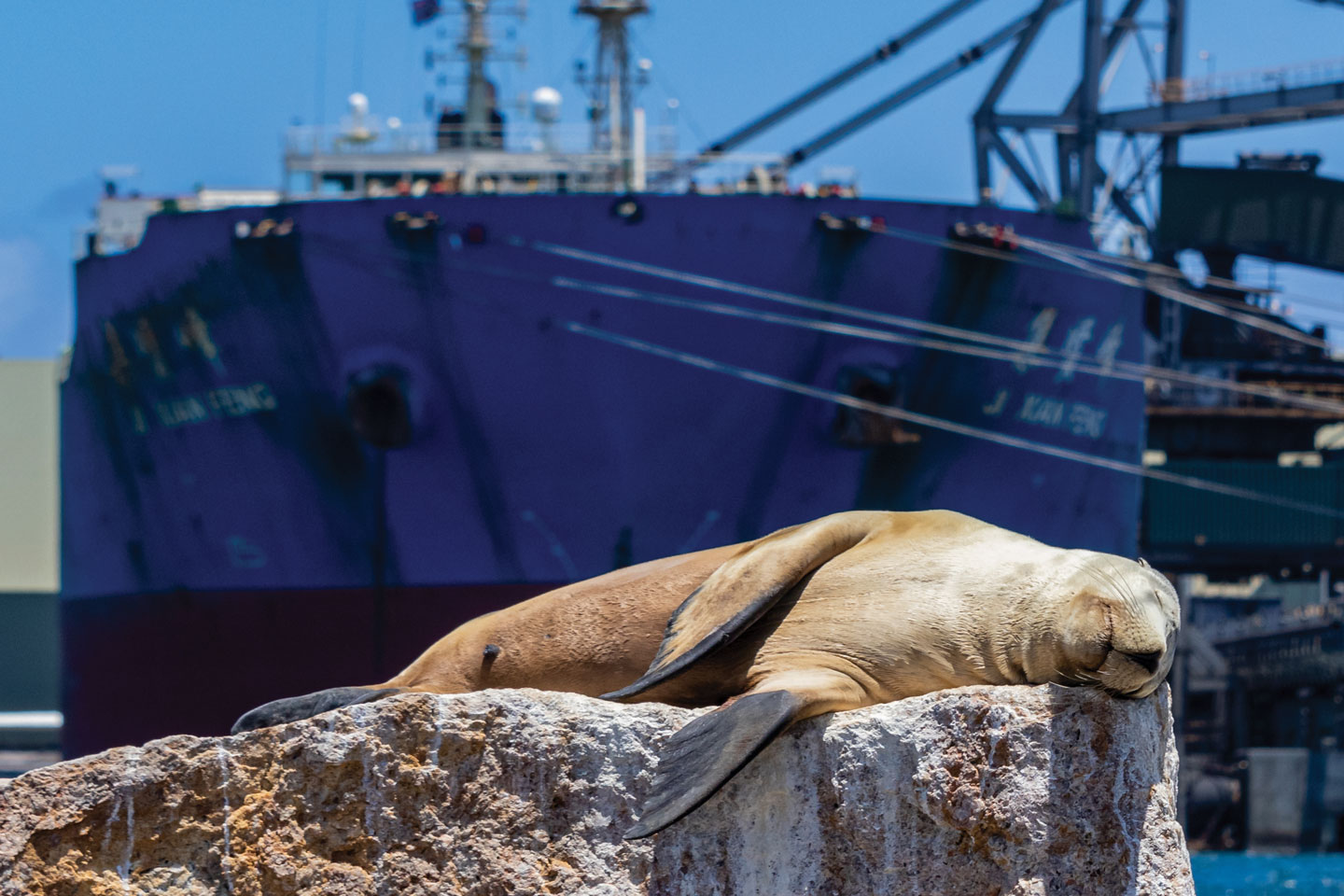
Environmental monitoring includes daily counts of Australian sea lions at Seal Rocks, with information shared with the Department of Biodiversity, Conservation and Attractions. Marine fauna observers are also engaged during activities such as dredging to minimise potential interactions with wildlife.
Coastal management is another important part of port operations. Sand bypassing is undertaken twice a year, transferring sand from Pages Beach to locations further north to help manage natural sand movement along the coastline.
Coastal studies have also informed a 30-metre extension to the Francis Street groyne. The works are intended to manage potential changes in sand movement and maintain access to the boat ramp.
Building with the environment in mind
Environmental planning is particularly important during the delivery of major infrastructure projects.
The $350 million Geraldton Port Maximisation Project received environmental approval in May 2026, following several years of investigations into marine habitats, water quality, coastal processes and marine fauna.
These investigations have informed project design and the environmental management measures required during construction. Ongoing monitoring across Champion Bay also provides information to support future planning and infrastructure development.
For port customers, effective environmental planning is an important part of project delivery. Meeting regulatory requirements, managing environmental risks and minimising disruption are essential considerations when delivering major infrastructure within an operating port.
Environmental management also requires an ongoing commitment to monitoring and improvement as port operations, community expectations and environmental conditions evolve.
Maintaining efficient port operations while managing environmental impacts will remain a priority as Geraldton Port continues to serve the industries and communities of the Mid West.