Westpac Bank Brings Perth Business Leaders Together to Examine AI’s Impact on Professional Services
 By Westpac



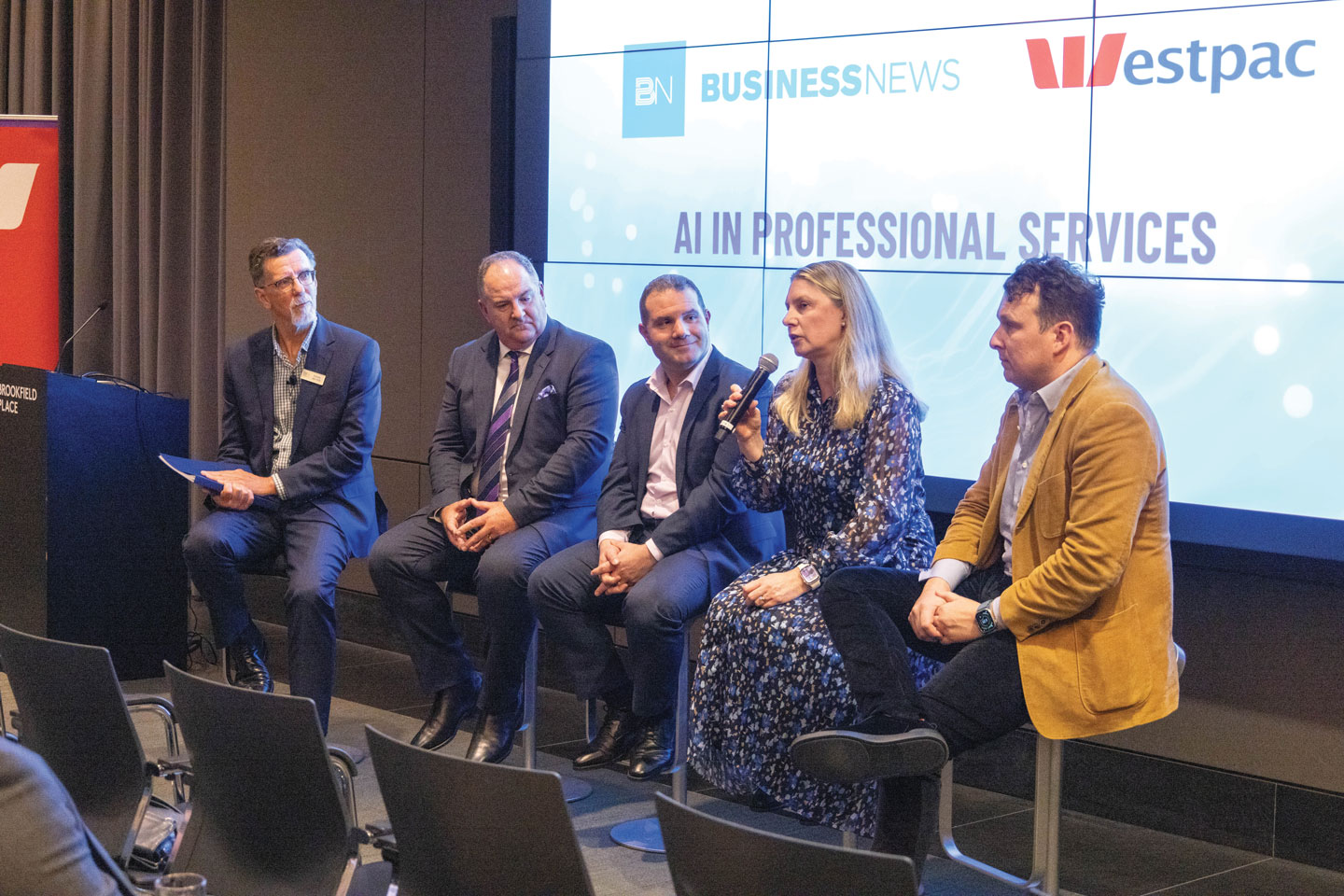
Westpac Bank recently brought together more than 60 members of Perth’s business community to examine how artificial intelligence is changing the way professional services firms operate, develop their people and deliver value to clients.
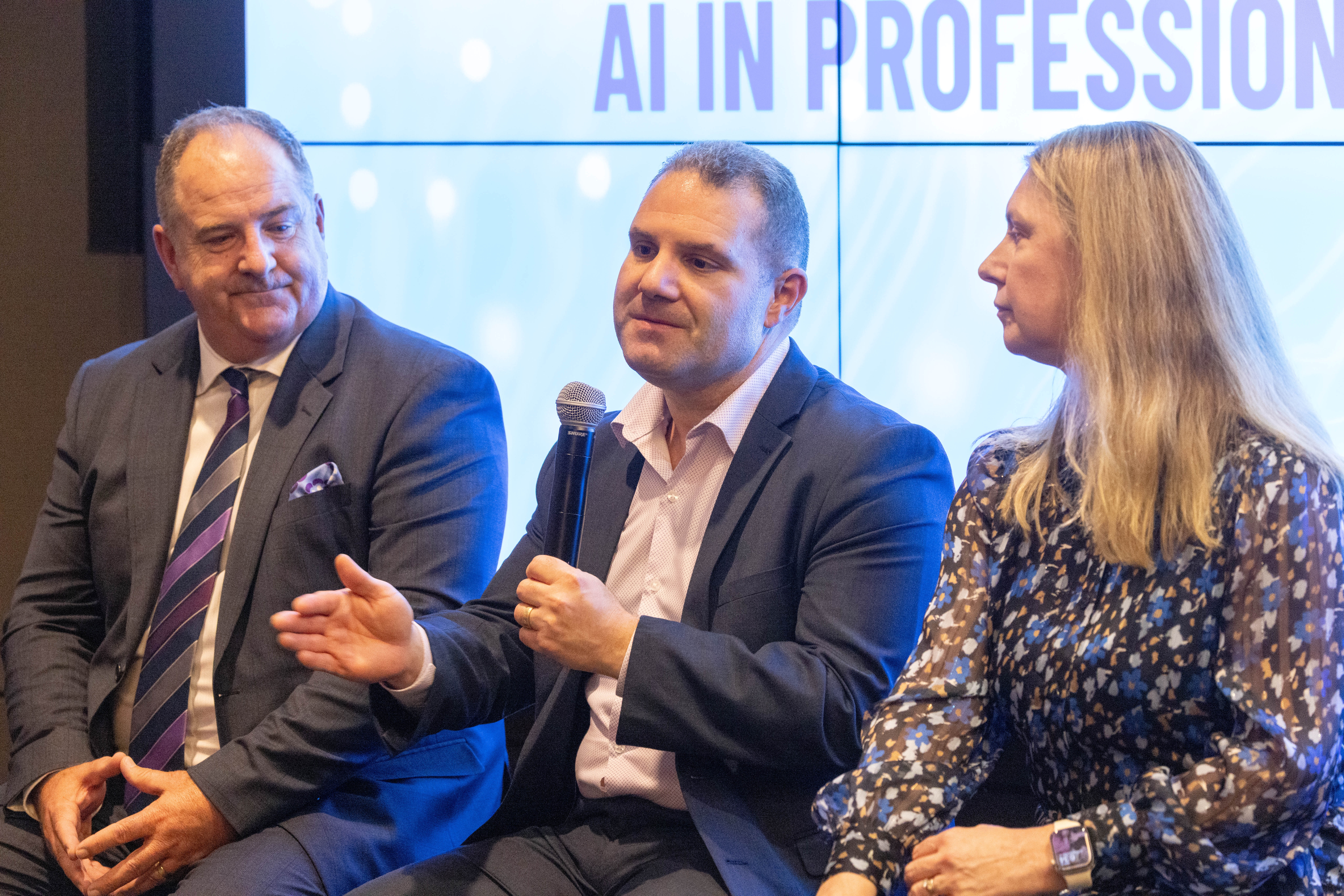
Moderated by Business News Senior Editor Mark Beyer, the panel featured Davide Costanzo, Partner at Moore Australia WA; Elizabeth Tylich, Chairperson at Jackson McDonald; Norman Neill, Managing Partner at HLB Mann Judd; and Aaron McDonald, Managing Director of Pragma Lawyers.
The discussion highlighted AI’s capacity to improve productivity, accelerate complex work and reduce repetitive processes. It also reinforced that the technology remains imperfect, raising questions about accuracy, data protection, professional development and the commercial return on investment.
Across law, accounting and advisory firms, AI is already moving into everyday workflows. It is reviewing documents, summarising complex material, assisting with contract preparation, analysing data and completing work that previously required hours of professional time.
For Jackson McDonald, the opportunity extends across both legal work and the firm’s internal operations.
“We are using different AI products within our business services to identify efficiencies in process flows,” Tylich said. “In our legal work, we are using tools such as Copilot and CoCounsel for document reviews, summaries, chronologies and other AI tools for contract creation and legal research. What we are seeing is opportunity.”
Professional services have traditionally operated around two valuable but finite resources: expertise and time. AI can extend the second by allowing professionals to complete certain tasks more quickly and redirect their time towards complex advice, strategy and client relationships.
Costanzo said productivity and efficiency were among AI’s greatest benefits, but firms could not allow those gains to come at the expense of professional judgement.
“Productivity and efficiency are definitely two of the greatest benefits,” he said. “But the biggest issue is critical thinking and judgement. With junior staff, we are trying to instil those critical-thinking skills and ensure their professional development continues.”
Costanzo pointed to financial modelling as an area where AI was already producing measurable efficiencies. In one example, his team needed to prepare 12 different financial scenarios.
“We built the model in an hour,” he said. “Traditionally, it would have taken seven to 10 hours.”
While the time saving was significant, professionals still needed to understand how the model was constructed and determine whether its assumptions and outputs could be trusted.
“AI can produce information that isn’t correct, so I remain cautious,” Costanzo said. “We are getting value from Copilot and other collaborative AI tools. They are great, but there is also a significant cost.”
Moore Australia WA has rolled out the premium version of Microsoft Copilot, with data security and confidentiality central to its approach. Other tools are also being trialled, reflecting a measured approach to adoption.
At Pragma Lawyers, selecting an AI platform involved assessing whether it was suitable for the specific requirements of a legal practice.
“As a law firm, you need to have something law-firm specific, and we did an analysis of which one to get,” McDonald said. “We looked at the data considerations and wanted to make sure our staff would use it.”
The firm ultimately adopted Harvey, an AI platform developed for professional services, which McDonald described as an effective tool for processing large volumes of information.
“It’s a great sparring partner. It gets you 80 per cent of the way there,” he said. “That can be a massive value-add for clients.”
That 80 per cent captures both the attraction of AI and the central challenge facing professional services. If technology can complete much of the initial research, analysis or drafting faster, firms can improve turnaround times and redirect professionals towards more valuable work.
However, the remaining 20 per cent matters enormously.
AI can generate convincing responses, but it cannot replicate the experience, accountability and independent judgement of a qualified adviser. It can produce incorrect information with confidence, misunderstand context or overlook nuances an experienced professional would recognise.
McDonald highlighted an important tension between generative AI and professional advice.
“I think AI wants to be your friend, it is naturally sycophantic,” he said. AI may lean towards validating the assumptions contained in a prompt, but trusted advisers are not engaged simply to agree, “they need to provide open and frank advice”, McDonald said. A lawyer may need to advise a client not to pursue a case, just as an accountant may need to challenge a financial assumption or preferred commercial strategy.
For Neill, the opportunity lies in identifying repetitive work that can be automated while reducing the risk of human error. “The challenge is finding ways to remove the repetitive nature of the work,” he said. “How can we use these tools to reduce human error?”
HLB Mann Judd is using technology to cross-reference financial systems and identify inconsistencies that might otherwise require extensive manual checking. However, Neill cautioned that automated outputs must still be scrutinised. “It can still be wrong,” he said.
The firm is also experimenting with Copilot, while assessing where it can deliver a measurable benefit.
“It comes down to quality, time and cost,” Neill said.
Cost was a common thread throughout the panel discussion. While AI can produce productivity gains, enterprise platforms, cybersecurity, implementation and employee training require significant investment.
Tylich said firms remained relatively early in understanding the commercial return.
“The process is expensive, and we are definitely on a learning curve,” she said, pointing to greater commoditisation and segmentation of services emerging across professional services.
Return on investment is more complex than the number of hours saved. Clients may expect faster delivery to be reflected in pricing, while firms may instead use the additional capacity to undertake more work or move employees towards higher-value services.
The commercial winners may ultimately be those that use AI not simply to make existing work cheaper, but to reconsider where professional time is best invested.
AI is also raising questions about graduate development. Research, summarisation, document review and drafting have traditionally helped junior professionals build knowledge and judgement through repetition.
Neill said AI had not yet materially changed HLB Mann Judd’s staffing requirements, although some roles could evolve.
“You still need people,” he said. “It is about the skill set and how we upskill people more quickly.”
At Moore Australia WA, graduate recruitment is continuing, but training is changing.
“We are still recruiting, but the way we are training people has changed,” Costanzo said. “We are upskilling graduates so they can understand what AI is producing.”
The immediate impact may therefore be less about eliminating jobs and more about changing the skills professionals need. If AI performs more repetitive tasks, firms must ensure graduates still develop the ability to recognise inaccurate information, challenge assumptions and understand the reasoning behind professional advice.
Data security adds another layer of complexity. Employees may use publicly available AI tools without authorisation, creating risks if confidential client information is entered into an unsecured platform.
“Our (IT) team is looking at unauthorised (use) of software,” Neill said. “All of our audit files have checklists, and there needs to be a similar thought process around how these tools are used.”
AI adoption is therefore as much a leadership and cultural challenge as it is a technology project. Leaders must encourage innovation while maintaining appropriate controls and protecting the trust on which professional services are built.
This made Westpac’s decision to facilitate the discussion particularly relevant. Banks sit at the intersection of technology, regulation, data, customer trust and workforce transformation, confronting many of the same leadership questions as the firms they support.
AI can accelerate analysis, reduce repetitive work and increase capacity, but it can also hallucinate, expose sensitive information and disrupt established professional-development pathways.
The firms that successfully navigate this transition will not necessarily be those adopting the greatest number of tools. They will be those that use the technology thoughtfully, invest in their people and preserve the professional judgement and client trust AI cannot replicate.
AI may get professional services 80 per cent of the way there considerably faster than before. The real value will remain in the critical thinking, expertise and judgement required to manage the remaining 20 per cent.