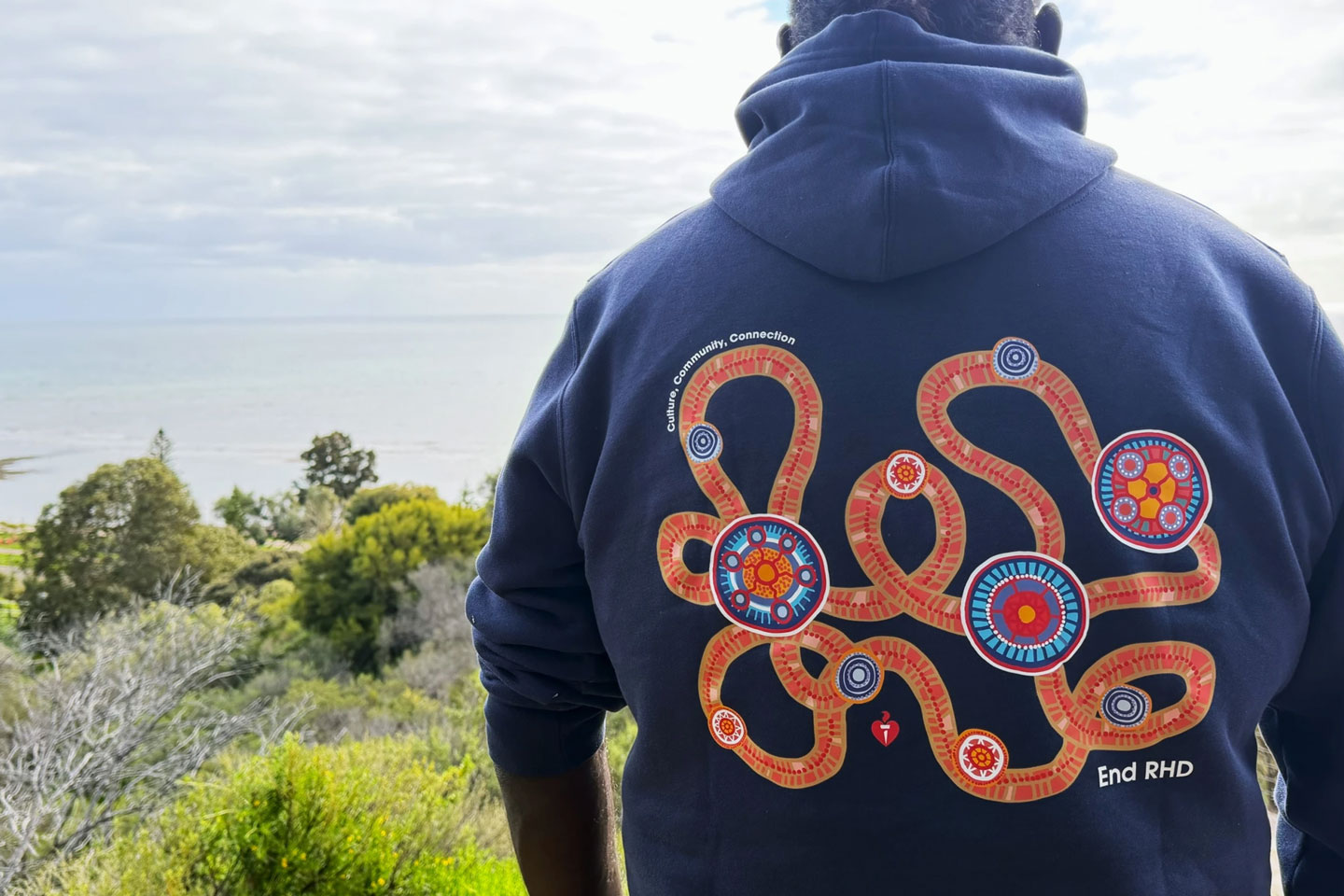
This November, the Heart Foundation is bringing the world to Western Australia with an urgent, ambitious goal: ending rheumatic heart disease for good.
From Wednesday, November 11 to Saturday, November 14, Perth will co-host the second World Congress on Rheumatic Heart Disease with the World Heart Federation, an event the Heart Foundation secured through a successful international bid. The Congress is being brought to Australia for the first time.
It’s a significant opportunity for Western Australia, and one the Heart Foundation is proud to deliver in the name of heart health equity.
Rheumatic heart disease, or RHD, has been virtually eliminated in many developed countries, yet it still devastates families around the world, and it falls hardest on First Nations peoples here in Australia.
Nearly 12,000 people in Australia are on disease registers with RHD or its precursor, acute rheumatic fever (ARF), and around 80 per cent are First Nations people.
Here in Western Australia, 1,937 people are living with ARF and/or RHD. Each one is a person, a family, a community, and a reason this global conversation matters so much in our state.
RHD is permanent heart valve damage caused by ARF, an autoimmune response to a Strep A infection of the throat or skin. Risk factors for Strep A infections include scabies, crowded housing and poor environmental infrastructure.
The Heart Foundation is tackling these risk factors directly. Alongside the Aboriginal Investment Group, we have advocated since 2023 for community laundries, and recently welcomed Australian Government funding to deliver new and upgraded remote laundries, including at Mulan and Fitzroy Crossing in WA’s Kimberley.
Put simply, RHD is preventable. Children and young people are living with damaged hearts that never needed to be damaged. Earlier recognition and culturally safe care can change their lives.
The Congress will bring together researchers, clinicians, policymakers, advocates, community leaders and importantly, people living with and affected by RHD, to drive information sharing and build momentum towards eliminating a preventable disease.
The program will span areas from pathogenesis and vaccine development to clinical care, surgery, public health and policy change. But what makes this Congress particularly powerful is that scientific evidence will not stand alone.
Lived experience is being deliberately embedded alongside research, policy and clinical expertise. People affected by RHD will have opportunities to contribute, connect and participate in Congress sessions and activities, with a dedicated lived-experience space providing further opportunities to share, listen and learn.
It reflects a simple truth: real progress happens when evidence, community knowledge and lived experience come together.
A global meeting with a distinctly WA setting
Hosting the Congress in Perth provides an opportunity to showcase Western Australia’s considerable RHD research and innovation capability, including expertise spanning epidemiology, community-based prevention and vaccine development. It also places WA’s experience of First Nations, regional and remote health within an international conversation about prevention, equity and translation of research into practice.
The Congress has attracted strong support here at home, reflecting the significance of bringing the global RHD community to Western Australia. The WA Government is supporting the Congress as a major partner, including through the Future Health Research and Innovation Fund Showcase WA program, with further support from Lotterywest, the City of Perth and Murdoch University.
From Perth to the world
Perhaps the most enduring outcome of the Congress will be the Perth Declaration.
A central output of the Congress, the Declaration is intended to provide a shared plan for RHD elimination worldwide, with Congress attendees, World Heart Federation members and the broader global RHD community having the opportunity to endorse it.
The opportunity is to turn evidence into action, strengthen collaboration across borders and build momentum towards eliminating a preventable disease that continues to cause profound inequity.
For the Heart Foundation, bringing the world’s RHD community to Western Australia is also an opportunity to demonstrate leadership: in research and innovation, in First Nations health, and in recognising that the voices of people with lived experience must sit alongside scientific expertise if we are to create meaningful and lasting change.
For a few days this November, the eyes of the world’s RHD community will be on Perth.
The Heart Foundation brought this Congress to Perth, and long after delegates leave, we want a shared commitment to turn conversation into action, so that no child grows up with a heart broken by a preventable disease.