

 17 Apr 2024
WA sporting organisations pulling out all stops




Three decades ago, sports men and women in Western Australia involved at national and state levels were part timers, working part time and training/playing part time.
Things had shifted substantially by the time the new millennium ticked over, however, with national league sporting clubs overwhelmingly professional, and players, coaches and staff contracted full time.
Sport has become big business in WA, but who runs these organisations and how do they navigate the differing needs of stakeholders?
Footy
Established in 1986, the West Coast Eagles Football Club has been a powerhouse of the Australian Football League for more than 30 years.
Not that the pathway to winning was smooth, with the Eagles having first to overcome adversity both on and off the field.
The public company created to bankroll the Eagles, Indian Pacific Limited, accumulated a $13.5 million loss at the end of the 1989 VFL season, which was bad news for the Eagles and WA football.
However, by the end of the year, the newly formed WA Football Commission led by Peter Tannock negotiated a deal to secure 75 per cent ownership of IPL, which effectively ensured the Eagles’ long-term future.
The club had 1,232 members during its inaugural season in 1987. At the end of the 2023 season this number hit 103,275.
During the 2023 financial year, the club generated $87.9 million in revenue, based on a solid income from its membership ($27.2 million) and more than $2.58 million in merchandise sales.
The Eagles also posted a net profit after tax of $1.97 million, which was down from $3.46 million during the prior corresponding period.
As with West Coast, the Fremantle Football Club’s AFL licence is controlled by the WAFC.
Established in 1994, the Dockers were viewed as an integral part of the AFL’s plan to grow the national competition.
During the 2023 financial year, the Dockers posted a statutory profit after tax of $1.63 million, down from $2.42 million for the prior corresponding period.
The club’s revenue reached $71.5 million, up from $66.1 million in 2022, primarily through $20.1 million in membership income.
Fremantle’s membership base at the end of last season was 62,245.
Willow and leather
The Western Australian Cricket Association has been the sport’s driving force in the state since it was established in 1885.
However, events of the past 15 years have arguably challenged the WACA more than any other during its almost 140-year history.
While Test and one-day international matches were played at the iconic WACA Ground in East Perth for decades, WA Cricket’s focus required a shift following the emergence of T20 cricket: a condensed format of cricket with matches completed in three hours.
Since the launch of the Big Bash League in 2011, the Perth Scorchers franchise has competed in eight of the BBL’s 13 finals to date, winning five titles.
During the 2022-23 season and 2023 financial year, WA Cricket generated more than $44.7 million in total revenue, which increased 35 per cent from the prior corresponding period.
With the 60,000-seat Optus Stadium available for use since 2018, WA Cricket benefited from ticket sales for Scorchers games, along with additional corporate hospitality interest.
From a management perspective, in 2022 WA Cricket became the first state cricket association to have two women – chief executive Christina Matthews and chair Avril Fahey – in key management positions.
Ms Matthews finished up her role at WA Cricket on March 28 after more than 12 years.
Hoops
The most successful team in National Basketball League history with 10 titles, the Perth Wildcats – owned by Craig Hutchison’s Sports Entertainment Group – is keen for more wins on and off the basketball court, according to SEG’s Teams CEO Richard Simkiss.
“Across media assets, our website, social media, viewership and attendance metrics have continued to grow and are a big contributor to revenue in their respective streams,” Mr Simkiss said.
“In terms of partnership and sponsorship revenue, we are incredibly lucky to have long-term rusted on partners.”
Sea of blue
Following its successful bid to join the Super 14 rugby competition in 2004, the Western Force played its first game in 2006 at a packed Subiaco Oval against the ACT Brumbies.
While the club had a strong finish to the 2017 season, the Force was controversially dumped from an expanded Super Rugby competition, despite passionate support from Australian mining magnate Andrew Forrest.
In 2020, the Force was readmitted into Super Rugby, with Mr Forrest’s company Tattarang financially backing the club to this day.
In the weeks before the 2024 Super Rugby Pacific campaign kicked off, the club appointed Niamh O’Connor as chief executive.
Ms O’Connor, who has an extensive background in the construction industry and years of volunteer and professional work in rugby union, has provided a fresh set of eyes in terms of the club’s operation.
“We did a huge piece of work at the end of last year to really understand the landscape and community,” Ms O’Connor told Business News.
“We explored what the barriers to entry were for people participating [in rugby union] or in our case, becoming Force members.
“A really important part of this was cost of living, as it was having a huge impact. Because it’s not cheap if you have a couple of kids and you want to play sports.”
Rather than a temporary fix, Ms O’Connor said the club was looking at ways to support its members and supporters long term.
In the nation’s other rugby code, rugby league, WA does not have a team in the National Rugby League competition.
It did, for a short time (1995-1997), when the Western/Perth Reds competed in both the Australian Rugby League and Super League competitions.
However, the club’s financial model was unsustainable, given the Reds had to pay the opposing side’s accommodation and flights to Perth for each home game.
The club was wound-up prior to the creation of the new NRL competition, with a debt of about $10 million.
NRL WA general manager John Sackson, who has overseen the game in the west for the past 14 years, believes establishing a new NRL team in Perth would provide a major boost for the code.
From an operational standpoint, the WA Rugby League rebranded to NRL WA in 2013, which provided plenty of benefits, according to Mr Sackson.
“We are the custodians of the game here, but obviously report to head office in Sydney,” Mr Sackson told Business News.
“This also enables us to tap into resources available there, be it human resources, legal, finance or game development departments.”
The current financial model has ensured more can be done to promote growth at a community level, along with NRL WA receiving approximately $500,000 annually through sponsorship revenue.
World game(s)
WA soccer fans have renewed hope in 2024 with the appointment of Ross Pelligra as chairman of Perth Glory in March.
The appointment followed a lengthy search to find a new owner, after the departure of Tony Sage last year.
Mr Pelligra, who has multiple sporting and property interests in Australia and Europe, is committed to helping ensure the good times return to the Glory for both the A-League Men and A-League Women’s competitions.
Glory chief executive Anthony Radich said the club had embraced analytics in a bid to increase positive revenue streams, which included focusing on people who were registered soccer participants.
“I think right across sport now, and business, is having your hands-on high-quality data that you can draw insights from, plug gaps and identify trends,” he said.
“So, the analytical side of things is really important. But we are no different to any business; the key drivers of the club are obviously around the membership, corporate and sponsorship space, as they are your major revenue earners.
“But the emphasis then is to grow your other arms.”
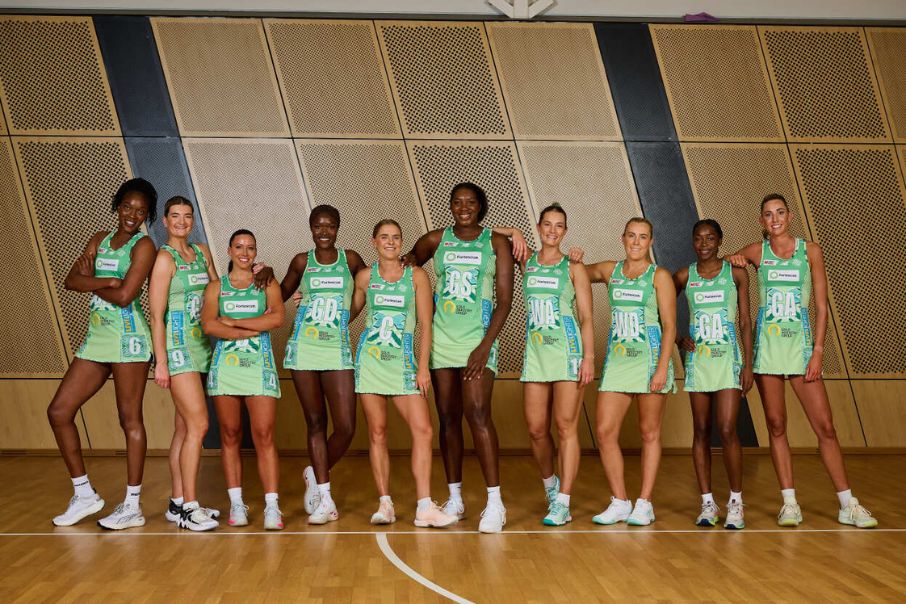
The focus on growth from within is also being harnessed by Simone Hansen, who oversees both Netball WA and the Suncorp Super Netball club West Coast Fever in her role as chief executive officer.
Ms Hansen said netball was funded from the bottom up due to its comparative lack of broadcast rights revenue compared to other sporting codes in Australia.
Aside from Netball WA receiving approximately 40 per cent of its income from its large participation membership base, sponsorship revenue also played a key role, she said.
“Sponsorship makes up thirty to thirty-five per cent of our revenue,” Ms Hansen told Business News.
“Our sponsors are paramount to the success of netball.”
Ms Hansen said netball enthusiasts traditionally had not signed up as members of a national club like the Fever, however, plenty of work was being done to increase membership and ticket sales for 2024 and beyond.
Sporting and Recreational Associations
| 28th | - | Baseball WA | $1.80m |
| 29th | - | Bowls WA | $1.63m |
| 30th | - | NRL WA | $1.02m |
| 31st | - | Rebound WA | $924.68k |
| 32nd | - | Perth Heat | NFP |

