Western Australia’s rental availability and affordability have decreased from last year, Anglicare WA’s latest report shows.
The annual Rental Affordability Snapshot released today showed the state had 3,314 private rentals available, 209 less than 2025.
The median rental price was up 10 per cent from 2025 to $747 per week.
Meanwhile JobSeeker, the Commonwealth Rent Assistance and the minimum wage only increased by 3.5 per cent.
Like last year, there was not one affordable rental property or room available to an individual on JobSeeker or youth, according to the 2026 snapshot.
The report found a household would need to earn an annual salary of almost $130,000, or $2,490 per week, to afford the media rent, assuming rent is 30 per cent of income.
“More and more people are falling through the cracks,” Anglicare WA chief executive Mark Glasson said.
“What we're seeing is people are paying all their income on rent and not being able to meet their other costs, and so increasingly, people come in for food and emergency assistance, assistance with the utility bills and other costs that have been foregone.”
Mr Glasson said he sees a growing number of employed families struggling to make ends meet.
“If you are a double minimum income family in Western Australia right now, you cannot afford the median rent property,” he said.
Less than 0.5 per cent of private rentals, or 13 properties, were affordable and appropriate for households on income support, the report found.
WA’s North West continued to soar above the rest of the state in median house prices at $1,025 per week.
And the South West and Great Southern regions were the only areas where the availability of rentals increased, going from 261 in 2025 to 271 in 2026.
However, rental affordability was still low with the median rent price at $680 per week.
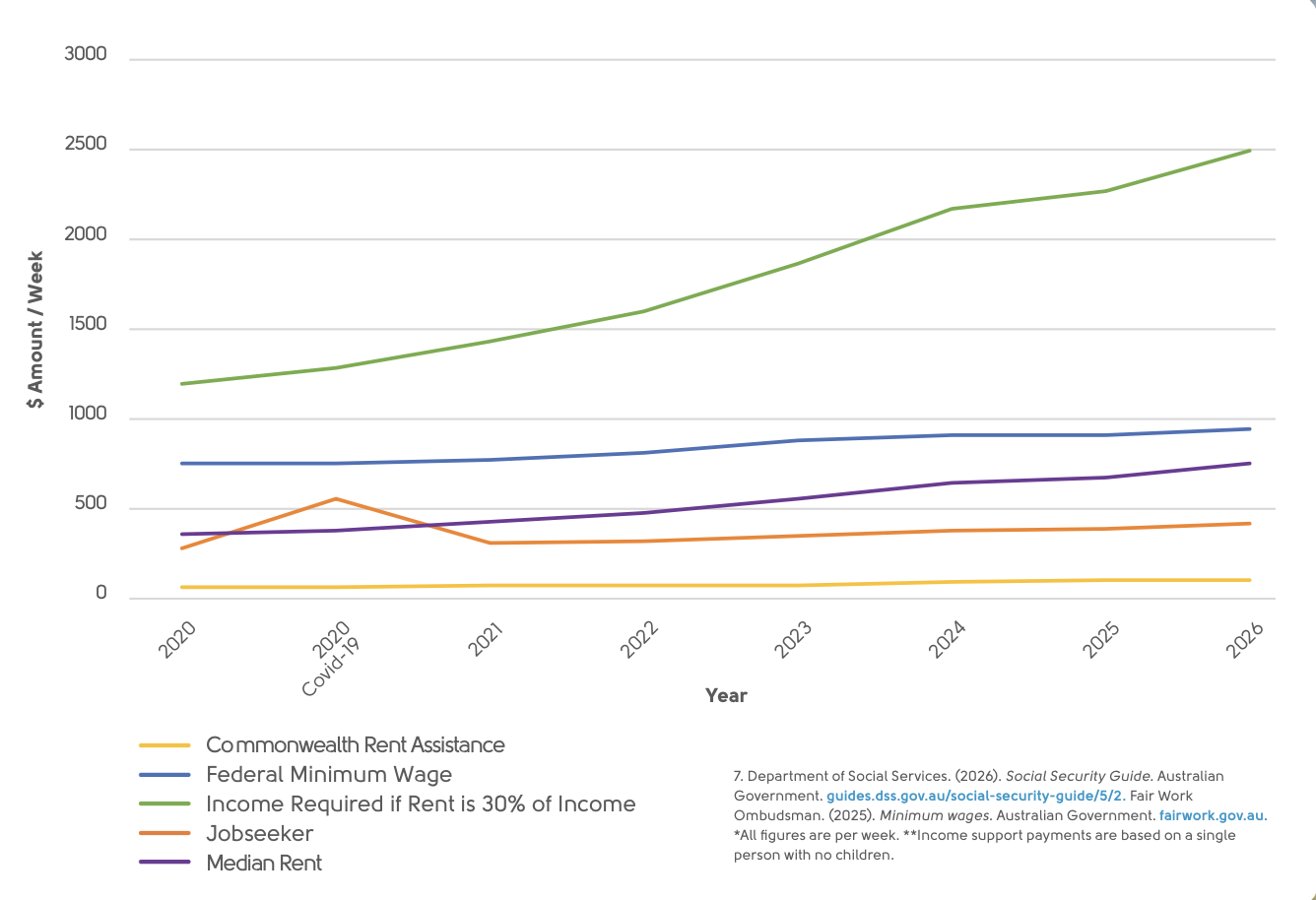
The income required if rent is 30 per cent of earnings. Source: Anglicare WA
Although more dwellings have been added to the market with the rise of granny flats and co-living spaces, Anglicare WA was concerned the new housing type would force households to compromise on privacy, suitability and security.
“The cause of this problem with our housing started more than 20 years ago when we decided that the private market could meet the need for housing in Australia,” Mr Glasson said.
“We introduced tax changes and benefits to investors, which drew housing into an investment market, and that was at the cost of affordability.”
Anglicare WA continues to advocate for an increase in income support to $82 per day and a rise in the minimum wage.
The Residential Tenancies Act is another area of under the spotlight, with Anglicare WA calling for an end no-ground evictions, rent caps, the extension of legal protection to boarders and lodgers and minimum standards.
“Western Australia is the second least affordable state in the country, and our situation is getting worse,” Mr Glasson said.
At the most recent count, Mr Glasson said 23,000 people were on the waitlists for state housing.
“The real consequence here is we have a waiting list for state housing which is 151 weeks,” he said.
“The people that should have access to those homes can't get them.”
Anglicare WA has also suggest a $1 billion WA Housing Future Fund to compliments the federal government’s initiative, and to set a social housing target of 6 per cent of the total housing stock.
Reforming capital gains by reducing the discount over the next decade and using negative gearing to promote social housing invest were other measures to alleviate circumstances flagged by Anglicare WA.